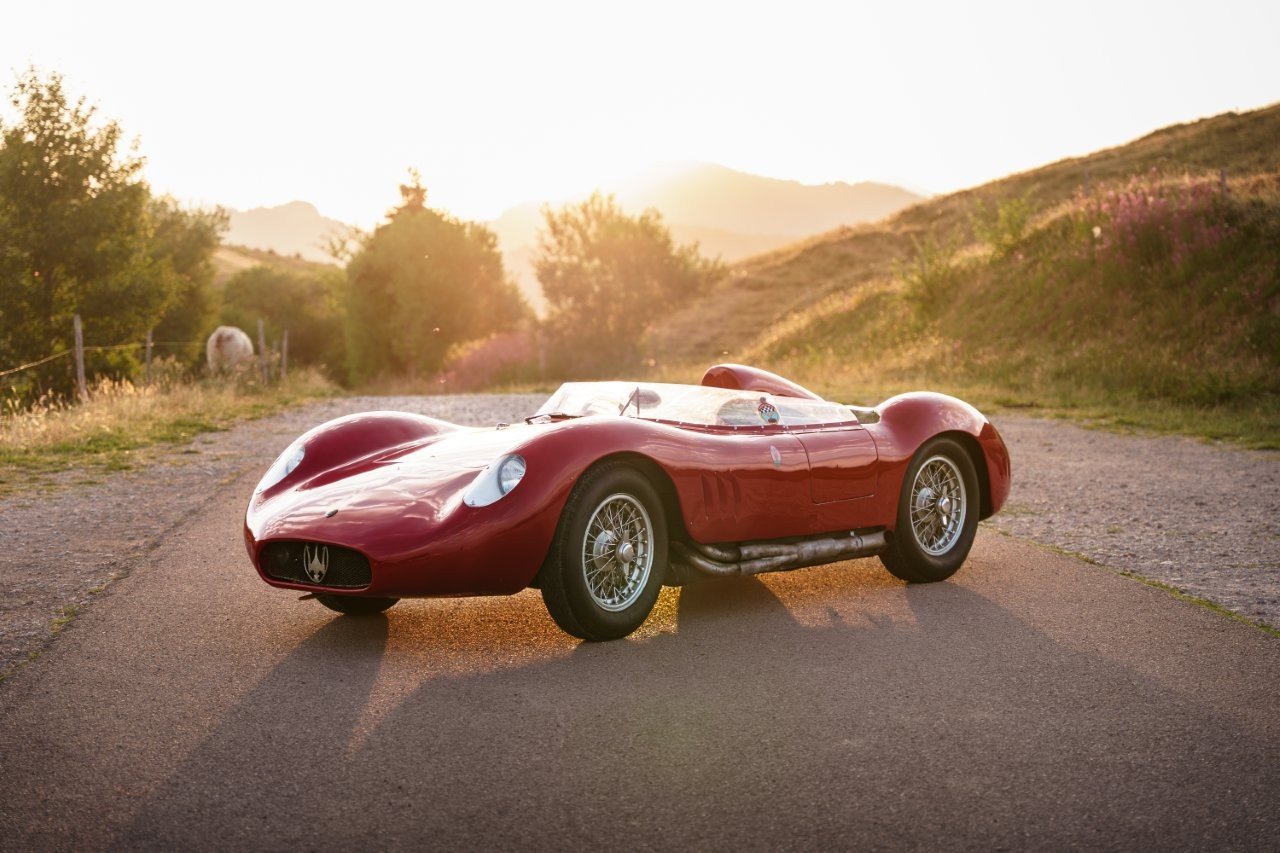
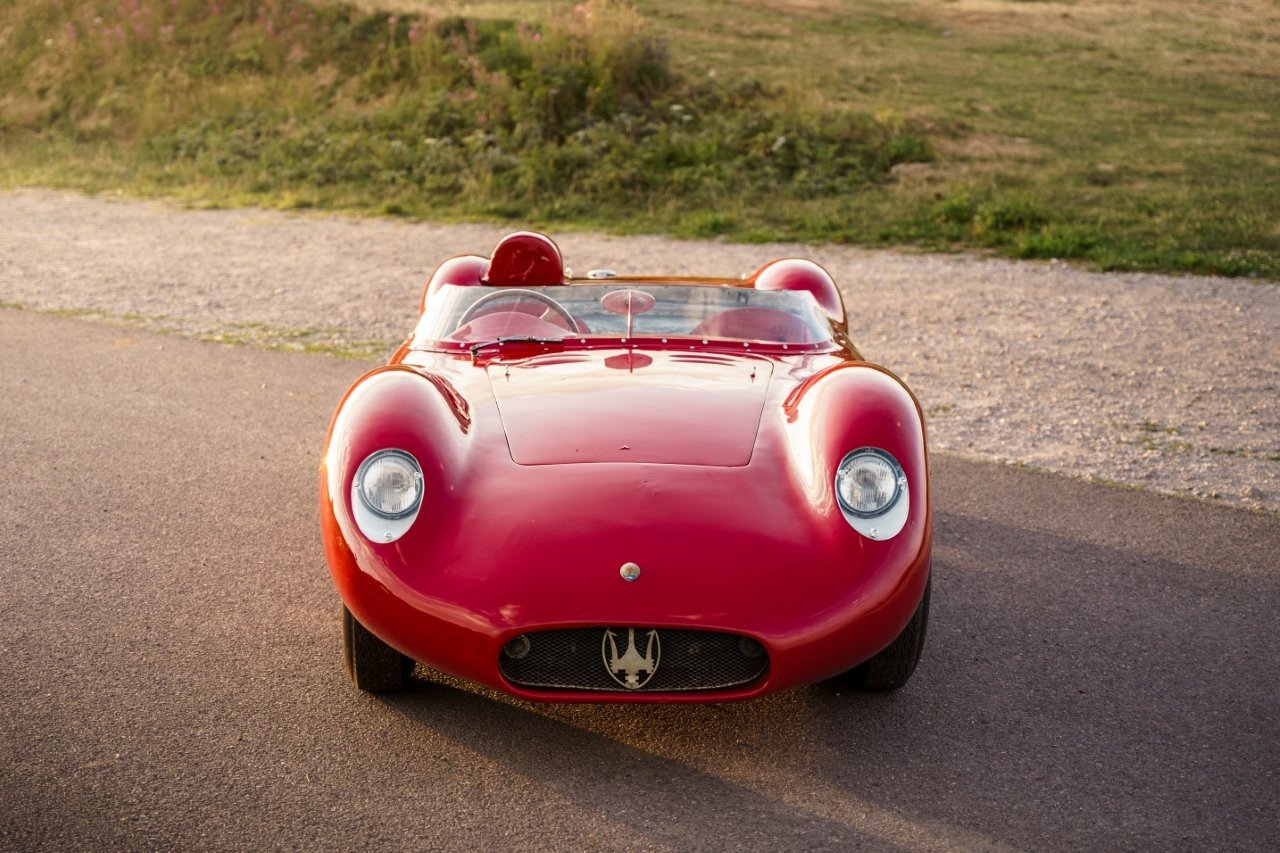
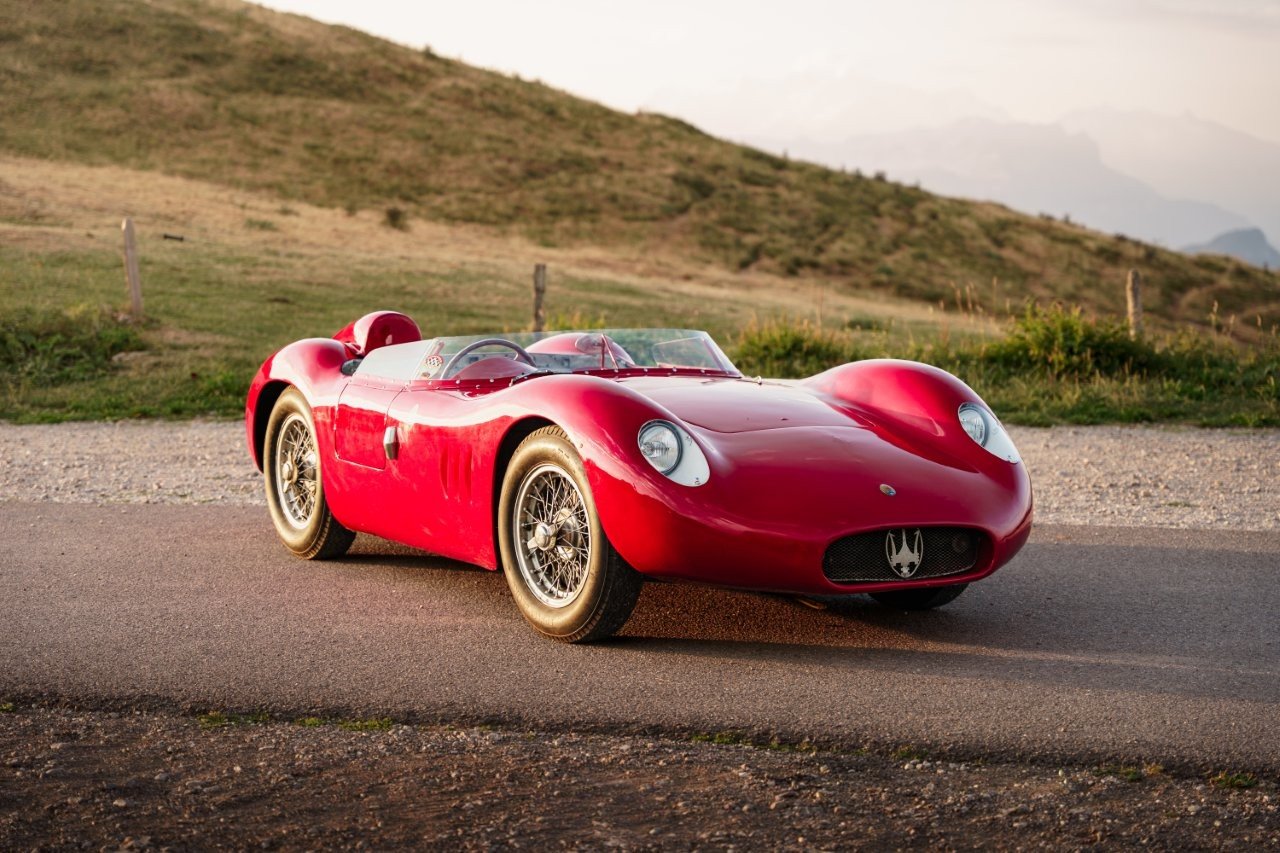
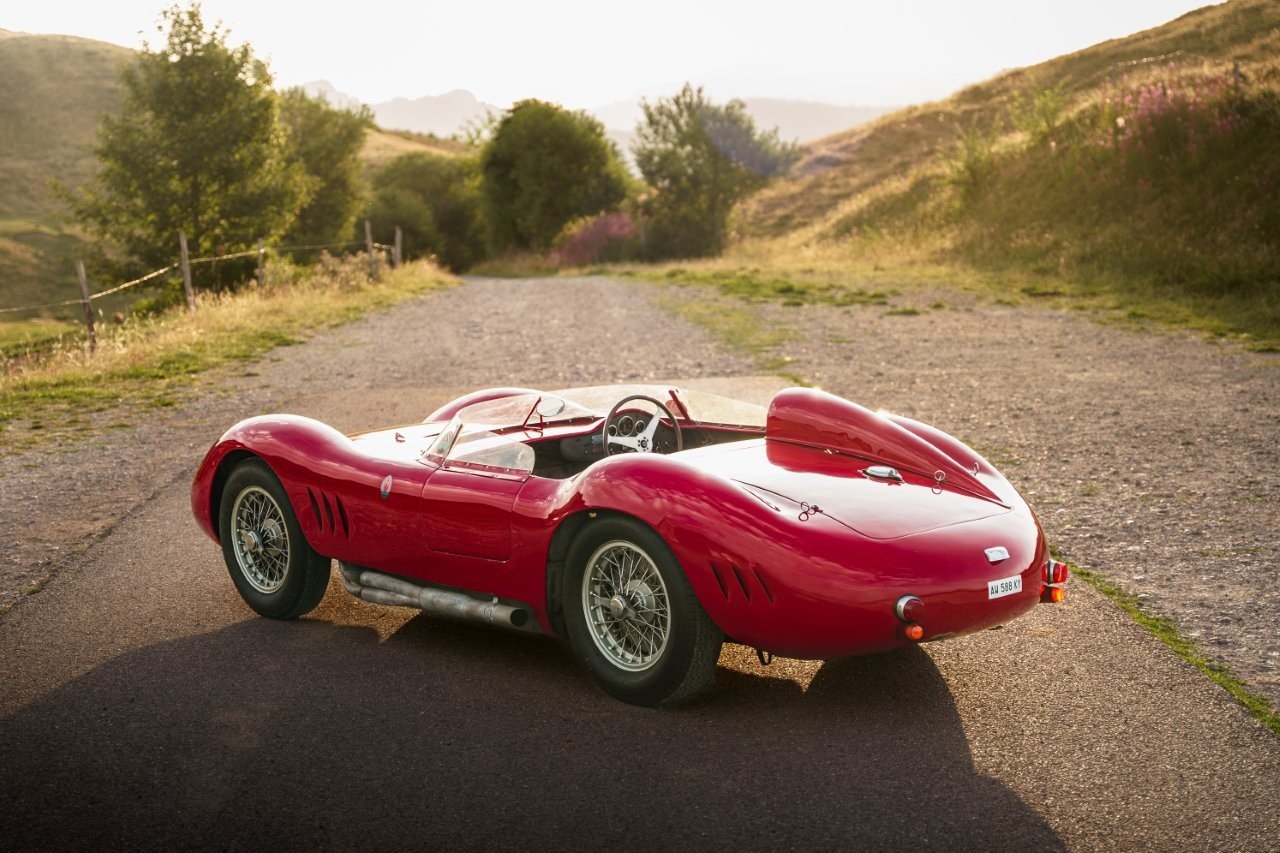
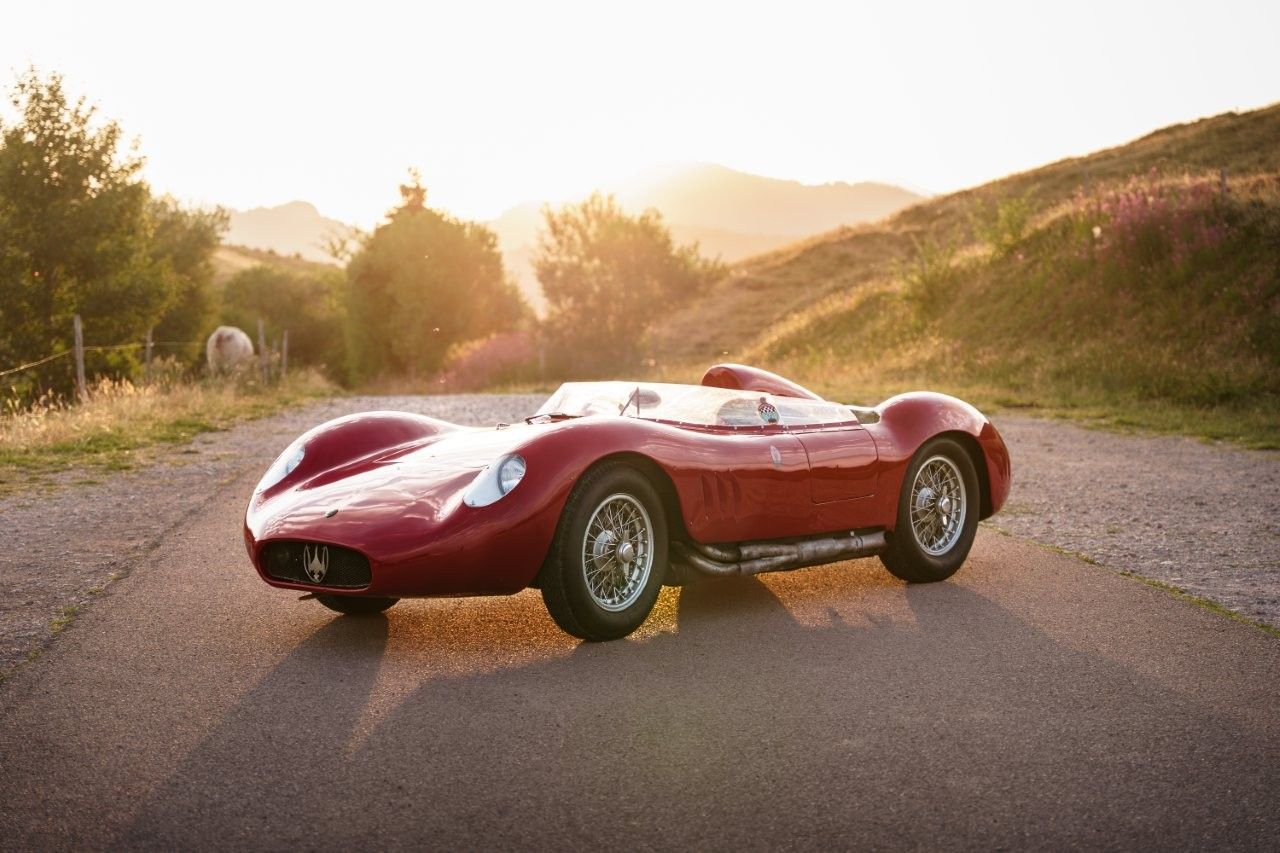
1957 Maserati 200Si
1957 · Geneva, Zwitserland · via Classic Driver
Bekijk op Classic Driver → Open in de app
Gegevens
| Merk | Maserati |
|---|---|
| Model | 200SI |
| Bouwjaar | 1957 |
| Carrosserie | Cabrio |
| Locatie | Geneva, Zwitserland |
| Verkoper | Kidston Motor Cars (handelaar) |
| Bron | Classic Driver |
| Op Oudjes.xyz sinds | 5 oktober 2026 |
| Laatst gezien | 7 oktober 2026, 06:18 |
Beschrijving
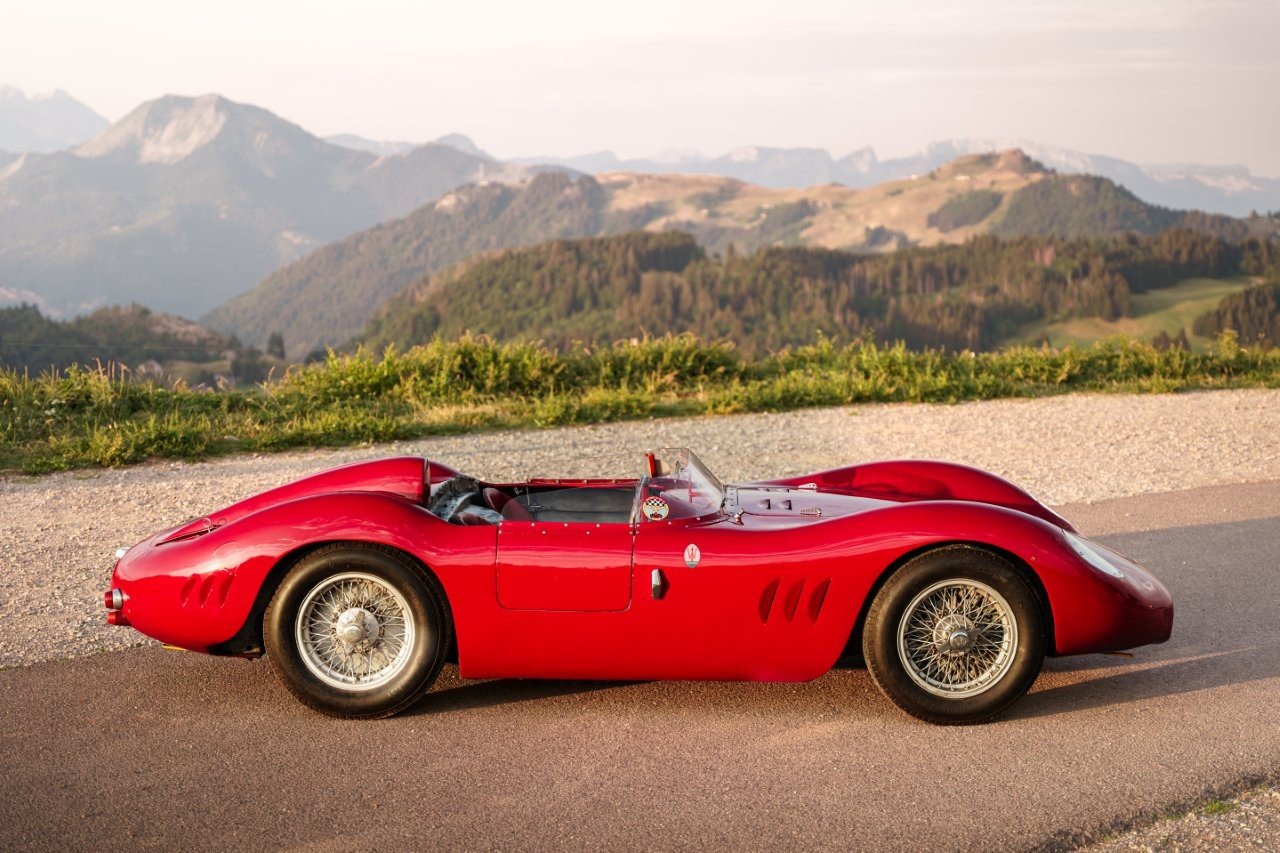
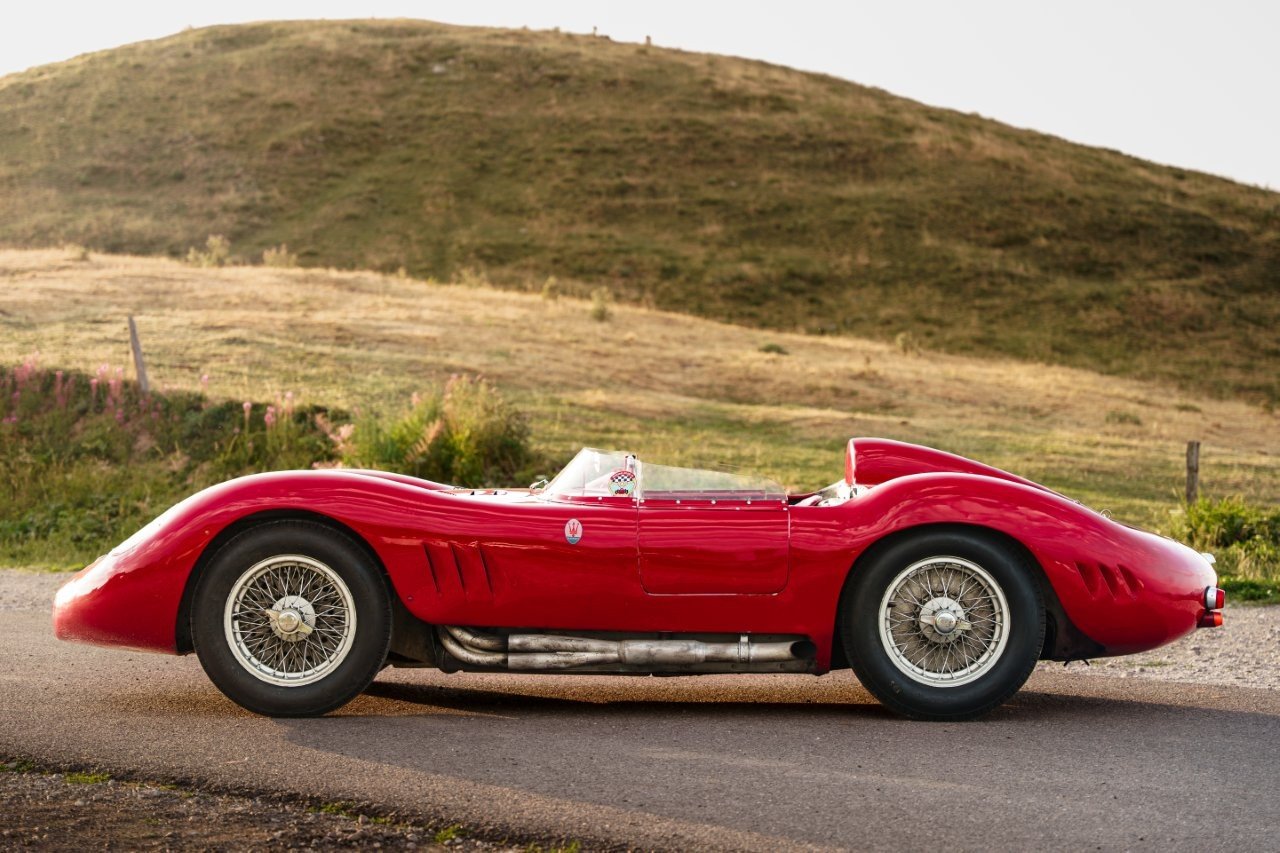
With extensive period racing history 1957-1960 including the 1958 Le Mans 24 Hours
1957 Maserati 200SI
Chassis no. 2428 Engine no. 2428
• Raced in France 1957-1960 including the 1958 Le Mans 24 Hours
• Displayed in the Musée de l'Automobiliste, Mougins, for 23 years
• Seven owners from new, including the current for 30 years
• Never fully restored and displaying superb patina yet ‘on the button’
• European registered
“The 2.0-litre Maserati was as quick on a twisty circuit as the 3.0-litre and really could handle very nicely…” Works Maserati long-distance driver Stirling Moss’s verdict on the 200S sports cars he raced twice, in 1956 and 1957.
‘Mr Motor Racing’ had briefly driven a 200S at the 1956 Monza Supercortemaggiore event – Europe’s richest race, the famous ‘Monza Lottery’ – setting fastest time in practice but the car’s propshaft broke on the opening lap. At the February 1957 Cuban Grand Prix in Havana, Moss and Fangio’s big 450S failed to turn up, so the Argentine switched to a 300S and Moss drove a 200S, both cars on loan from Scuderia Madunina, a Milan-based team with connections to South America. Naturally, Fangio was fastest overall in practice but Moss’s 200S was 15 seconds quicker than anything else in its class, the 2.0-litre category that included Ferrari 500 Testa Rossas driven by Peter Collins, Olivier Gendebien and Masten Gregory.
In the race, Moss ran second for 12 laps before Fangio overtook him, later taking over Harry Schell’s private 300S when the 200S motor cried enough. For comparison, driving the 200S Moss lapped in 2min 4.7sec; at the wheel of the 3.0-litre car he recorded a best of 2min 2.3sec.
The Maserati 200S and 200SI (‘I’ for International, meeting the latest World Championship regulations) was a highly competitive car in the white-hot cauldron of 2.0-litre racing in the mid-1950s. It was often a works entry piloted by Maserati’s star drivers, and a popular mount for privateers.
Marque experts consider that around 28 cars were built. This 200SI, chassis 2428, is late in the series, delivered new to André Loens of Lille, France, in July 1957. It has had only seven owners from new, our client purchasing it in 1996 from Adrien Maeght – who founded the Musée de l'Automobiliste in Mougins, Provence – in whose ownership it had been since 1973.
The Maserati 200SI
Mid-capacity sports-cars were the bedrock of racing throughout the 1950s. From Le Mans, the Targa Florio, Mexican Carrera Panamericana and the Mille Miglia, to airfield racing in the US, a strong performance by that year’s ‘must-have’ meant lucrative business for makers of bespoke racing cars. The demand for the latest Porsche, OSCA, Gordini, Ferrari, Lotus or Maserati eligible for 1,500c or 2,000cc honours was constant, allowing Ferrari and Maserati to race Grand Prix single-seaters and big-capacity sports cars on the back of customer teams fighting over class victories.
Some races, indeed, whole championships in Italy in particular, were devoted to sub-2,000cc cars.
The Trident had done well with the six-cylinder A6GCS/2000. Throughout 1955 the aging car had battled competitively with Ferrari 500 Mondials but on 16 October that year a new Maserati made a low-key appearance on the Targa Florio. Italian veteran Giovanni Bracco and Franco Bordini debuted the final, 2.0-litre version of the four-cylinder 150S. The car only completed one lap before Bracco’s extravagant driving led to a race-ending accident.
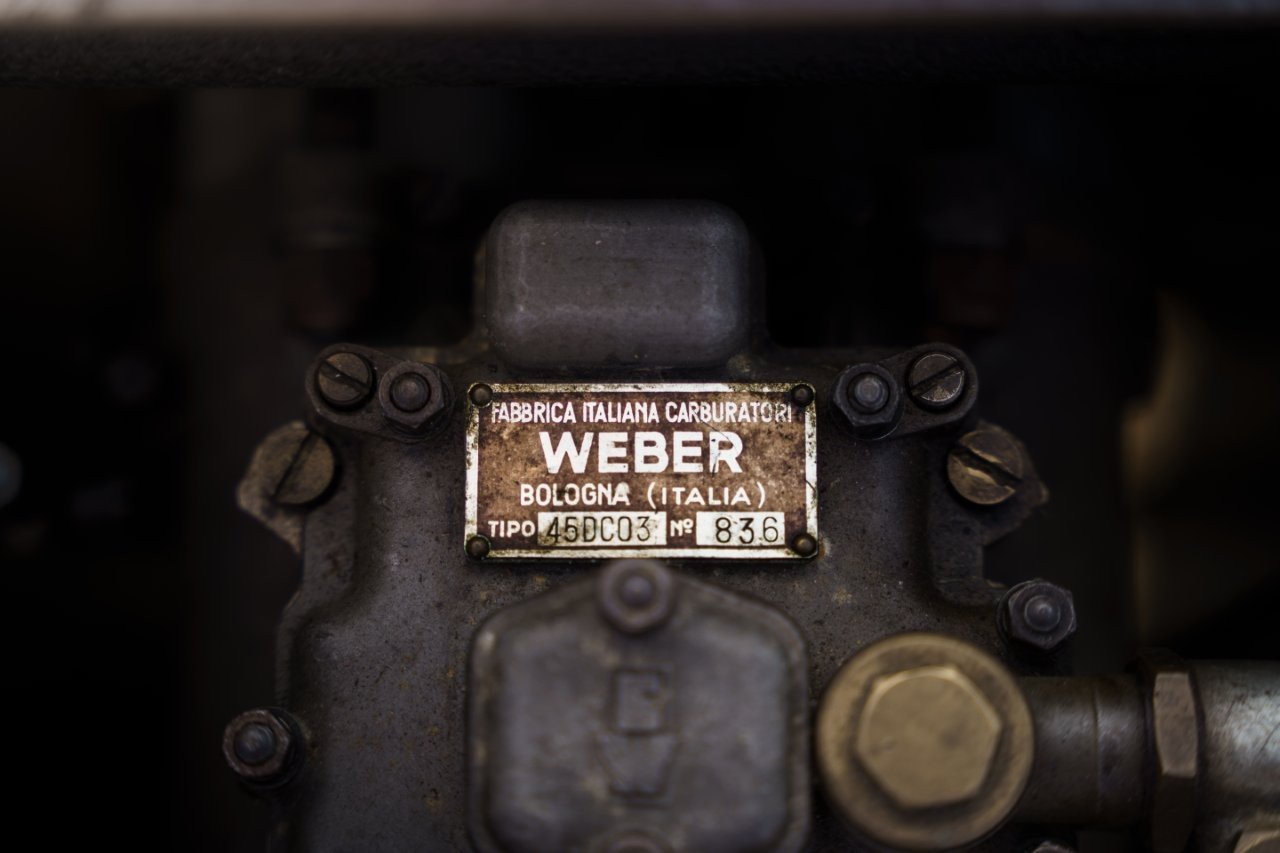
The 200S motor was designed by Maserati engineer Vittorio Bellantani. It was an all-alloy creation, featuring two valves per cylinder, a dry sump, twin camshafts, five main bearings, twin-plug ignition and twin Weber 45 DCO3 carburettors. It displaced 1,994cc and developed 186bhp at 7,000rpm; the final A6GCS/2000s produced 170bhp. Two different gearboxes were offered for the 200S: a four-speed or a five-speed, both bolted directly to the engine.
Valerio Colotti (formerly of Ferrari, where Bellantani would move at the end of 1955) designed the tubular chassis. It featured coil springs at the front and a de Dion rear axle – like that of the 1954 250F Formula 1 car – suspended by a transverse leaf spring. Braking was by large ventilated drums behind 16in Borrani wire wheels.
The 200S’s bodywork was by Medardo Fantuzzi in conjunction with the Milan Polytechnic whose wind-tunnel was used to develop its streamlined shape.
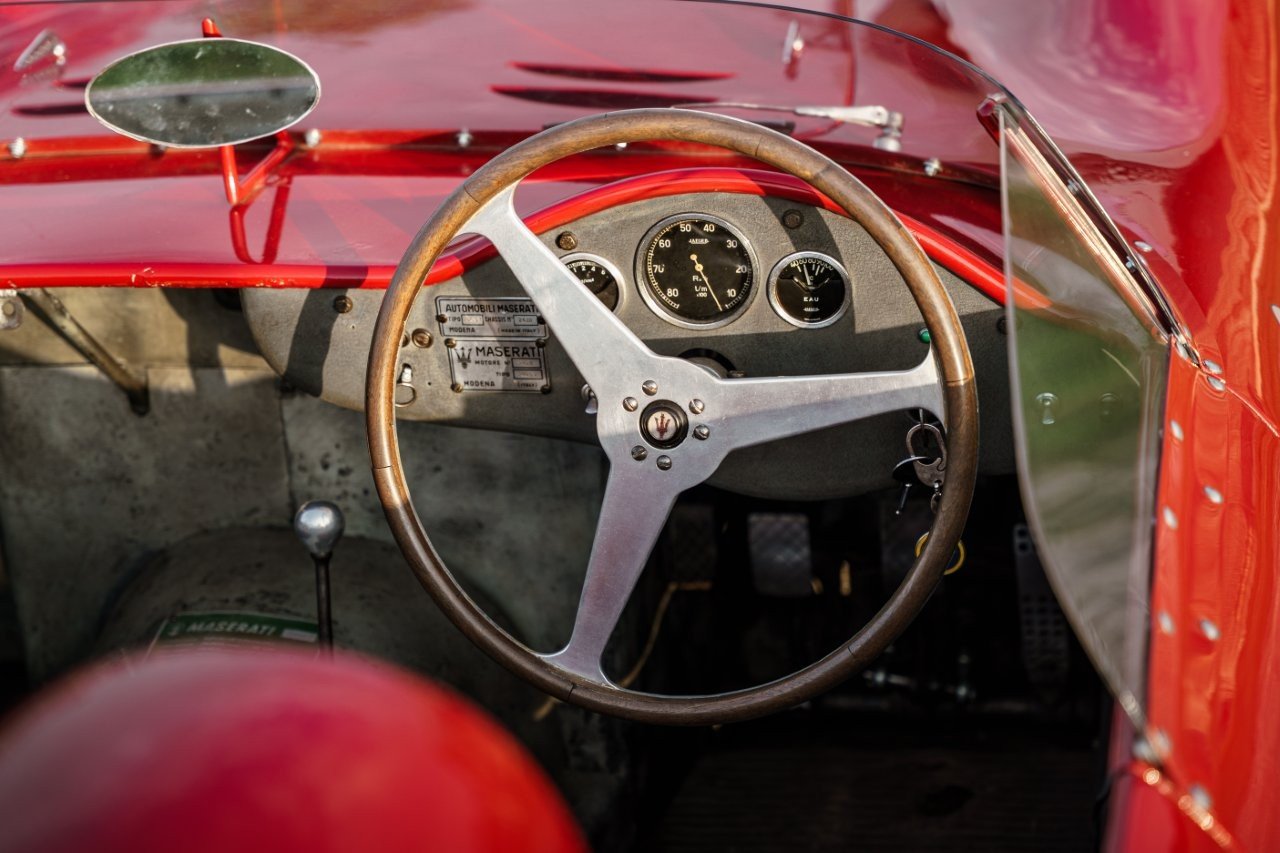
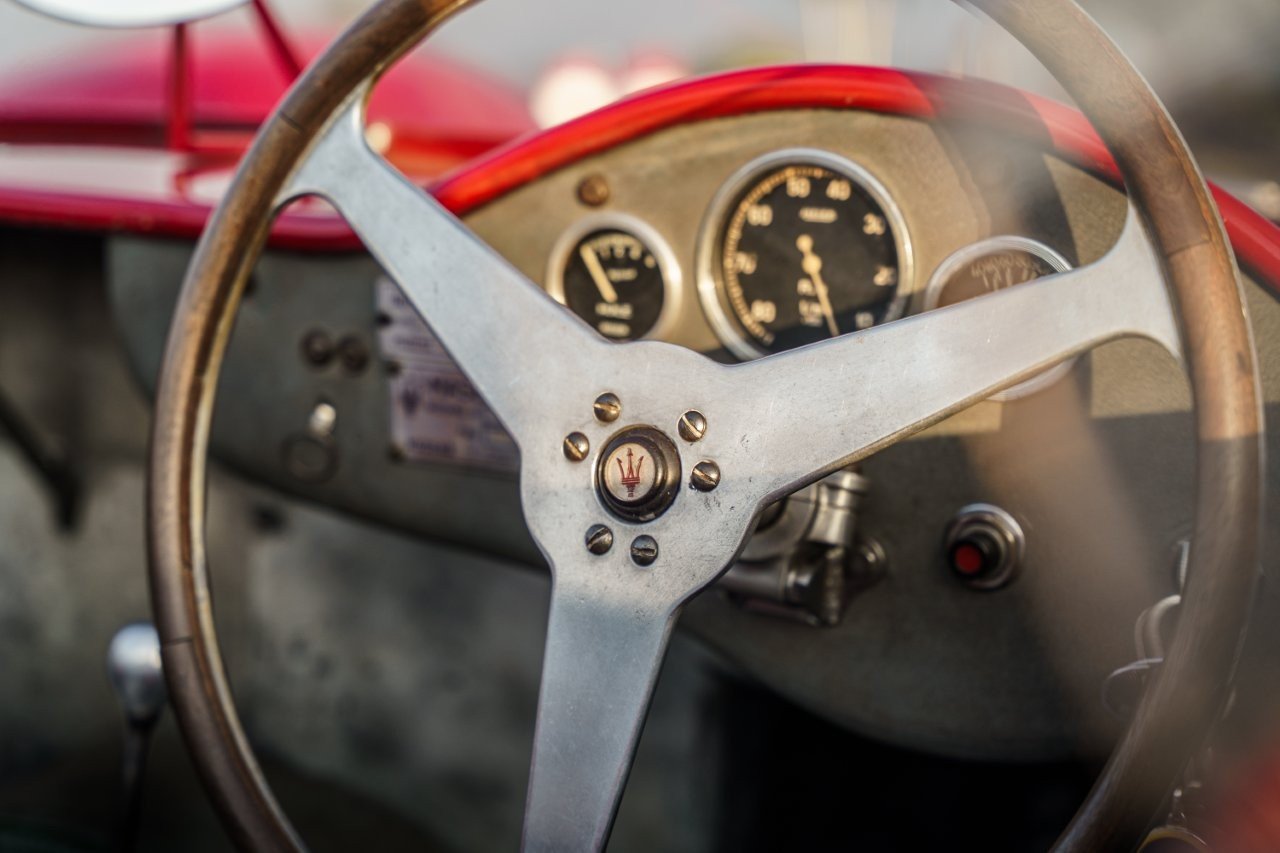
Competition for the 200S came principally from Ferrari, in the form of its all-new 500 Testa Rossa (‘red head’, ironically designed by ex-Maserati man Bellantani), which steadily made its way onto the tracks from mid-1956 onwards. The Ferrari’s four-cylinder turned out 180bhp at 7,000rpm; the two Italian challengers were evenly matched. A 200SI version of the Maserati was introduced from late-1956 onwards to meet the latest international racing rules, so had a full-width screen, fully opening doors and a crude fabric soft-top. These later cars also had improved suspension and engines (up to 190bhp), and smoother and more rounded bodywork. They were the direct rivals of Ferrari’s 500 TRC.
Maserati 200Ss and SIs were raced often by the factory. Top privateers such as Jo Bonnier and Mennato Boffa in Europe, and Charlie Kolb, Lance Reventlow, Carroll Shelby and Jim Hall in the US scored many victories. The highly popular Italian hillclimb championship was a 200SI benefit until 1960. At the end of 1957, Giorgio Scarlatti was loaned a 200SI to compete in the Pontedecimo-Giovi round of the European Mountain Championship. It was the final entry of a works Maserati in the Orsi era. He finished third overall and first in class. Many of the features of the 1959-1961 Tipo 60/61 ‘Birdcage’ originated in the 200SI.
This Motor Car
André Loens, a typical garagiste who had moved to England from France after World War Two, campaigned a Maserati A6GCS in the mid-1950s. After the blue car had been run almost non-stop for two years, by early 1957 it was due for replacement.
In July 1957 Loens took delivery of this car from the factory, Maserati 200SI chassis no. 2428, trading in the tired A6GCS. As an ‘SI’ the new car was suitable for international events such as Le Mans. A copy of the Maserati Build Sheet notes a completion date of 21 July 1957. Other details include:
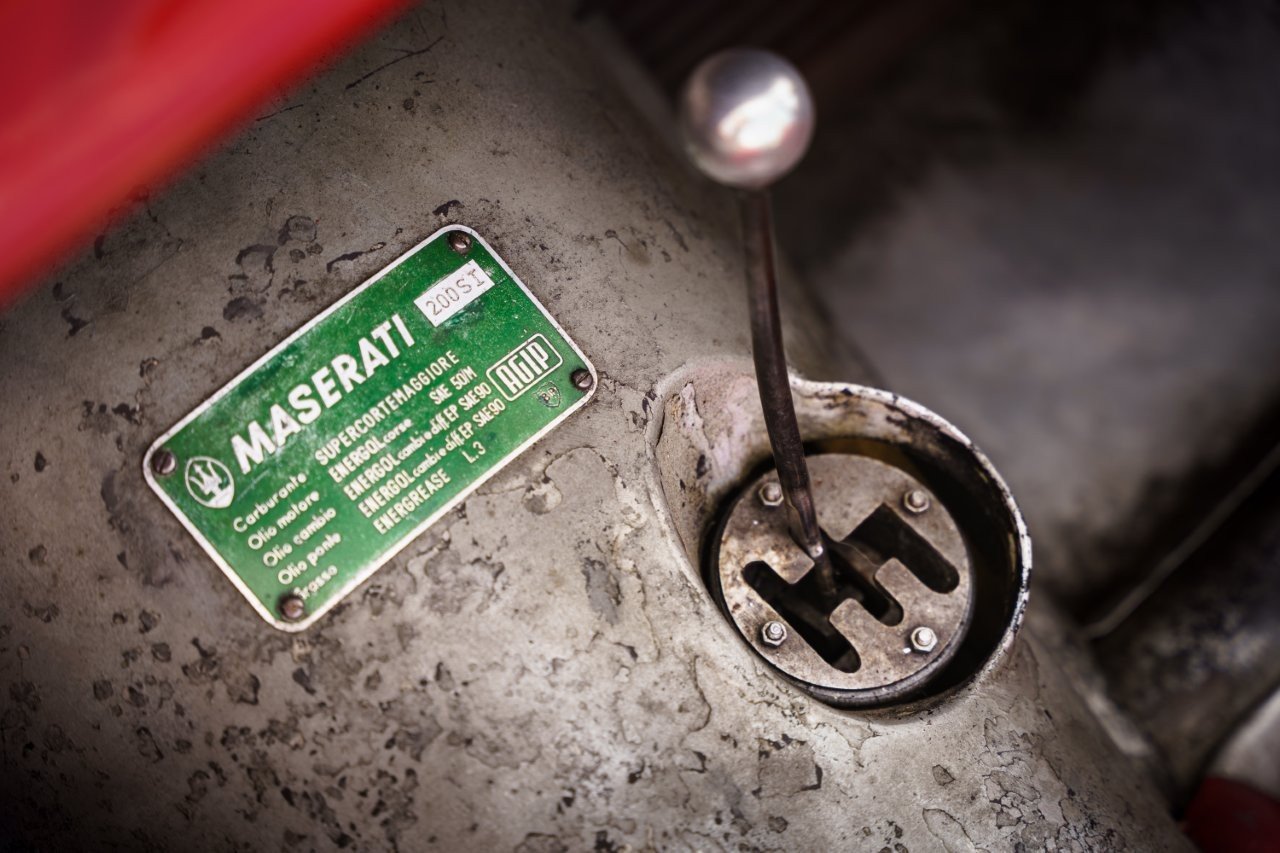
Four-speed, all-synchromesh 150S gearbox.
Triple-plate aluminium clutch of the type used in a 300S.
Final drive ratio ‘8/38’, which translates as a low 4.75:1 for optimum acceleration.
Weber 45 DCO carburettors.
Chassis frame by Gilco.
Aluminium ‘sport’, ‘2-porte’ (‘two-door’) body by Fantuzzi painted red with a white-and-blue band around the nose.
‘Capote’, a basic soft-top to meet the regulations.
The car was pressed into action almost immediately. Its first race was the Royal Automobile Club of Belgium Grand Prix for Sports Cars at Spa-Francorchamps on 25 August 1957. Loens was, on occasions, an impetuous driver and over-revved the engine during practice. Always well-regarded by the Maserati factory, Thépenier – the Trident's official French importer – repaired the car for Loens in time for the 70-lap Grand Prix de Cadours on 8 September.
He repaid Maserati’s generosity in full, winning the race outright, beating Porsche 550 Spyders driven by Carel Godin de Beaufort and Claude Storez.
The car’s next scheduled outing was the 6 October 1957 Coupe du Salon for sports and GT cars at Montlhéry. It ended in tragedy for André Loens, who was killed during the race. He had set fastest time in practice – beating works ace Jean Behra in another 200SI – and was in the lead when on the fifth lap he and occasional works driver Francisco Godia-Sala in his own 200SI locked wheels at the Bretelle de Couard section. The Frenchman was thrown out of the car, hitting an advertising hording that should never have been there.
The car was not too badly damaged and was subsequently recovered by Thépenier, who took it into its ownership for a season of racing in 1958. The car was entered but did not start several races at Montlhéry, so the main focus of attention was the Le Mans 24 Hours held over the weekend of 21-22 June.
Jean Thépenier entered the car personally for former Grand Prix driver Eugène Martin (by then the actual owner) and Michel Dagorne. Bearing race no. 23, ‘2428’ was in a fiercely contested 2,000cc class that included several works Porsche 718 RSKs and a Lotus 15 for Graham Hill. Unfortunately, the Thépenier entry only lasted 20 laps before transmission failure led to retirement.
The car’s competition exploits in 1959 are believed to have been limited to one entry at Montlhéry and at the end of that year Martin sold ‘2428’ to René Hugonnet, who ran it at Montlhéry and Charade in 1960, occasionally taking the wheel himself. Thépenier installed front disc brakes in spring 1961, before the car was sold in 1963 to Raymond Nely a former racing driver who ran a driving school in the Loire. The exotic Maserati became a feature on display there before long-term storage and eventual sale to noted collector/dealer Antoine Raffaelli in 1972.
Raffaelli was well connected with the wealthy art-collecting Maeght family, and Adrien Maeght bought ‘2428’ from Raffaelli in 1973, subsequently showing the car in his own Musée de l'Automobiliste de Mougins from 1984 onwards. Our Italian client bought the 200SI from the collection in June 1996.
The priority was to recommission and prepare it for historic events. Gianni Torelli of Campagnola Emilia, who has maintained the 200SI ever since, overhauled the engine. The non-original disc brakes were replaced with authentic drum brakes; a correct full-width windscreen fitted. Accompanying the car is a folder of invoices from Torelli going back 10 years.
Between 2006 and 2010, our client enjoyed racing the car in the Shell Ferrari-Maserati Challenge, the Le Mans Classic (twice) and various Peter Auto speed events. In more recent times the road-registered Maserati has participated only in touring rallies rather than races or timed events.
Maserati engines are numbered on the cylinder head. The car carries its original head numbered ‘2428’. The engine internal number on the block is the same as listed at Le Mans in 1958 and it is believed that that the block was replaced between the race at Cadours the year before and Le Mans.
The Maserati 200SI has one of the best lines of any 1950s sports-racing car. It’s also eligible for all the great events: racing, showing or simply touring with a friend. This example, unlike so many, has clear provenance and oozes period patina. Offered for the first time in 30 years, we highly commend it.
Vergelijkbare oudjes
 1957 Maserati 200SiPrijs op aanvraag1957 · 1 km · Geneva, Zwitserland · Car & Classic
 1957 Maserati 200SiPrijs op aanvraag1957 · Geneva, Zwitserland · LesAnciennes
Wat doet een Maserati 200SI op de markt? Bekijk de marktwaarde →