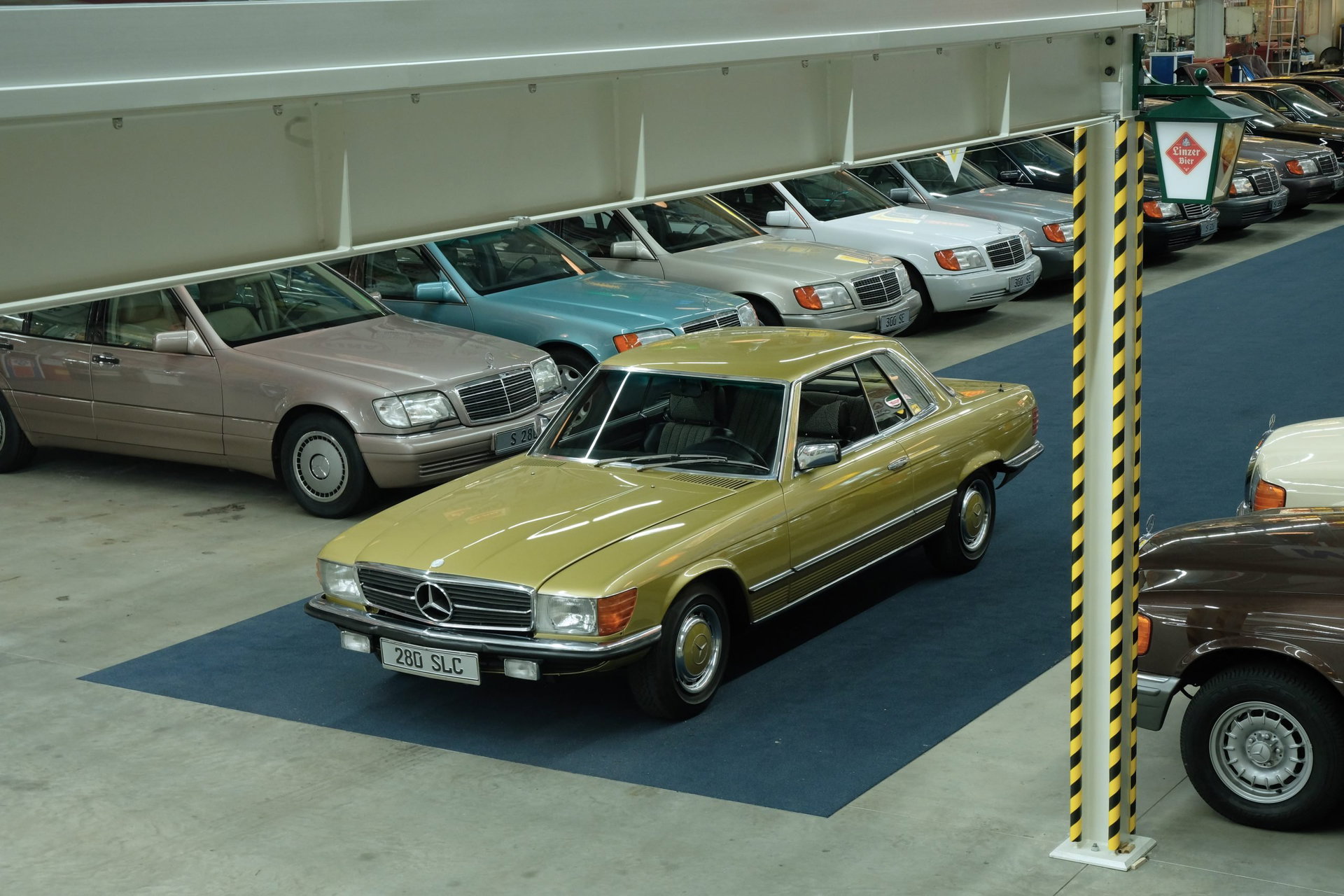
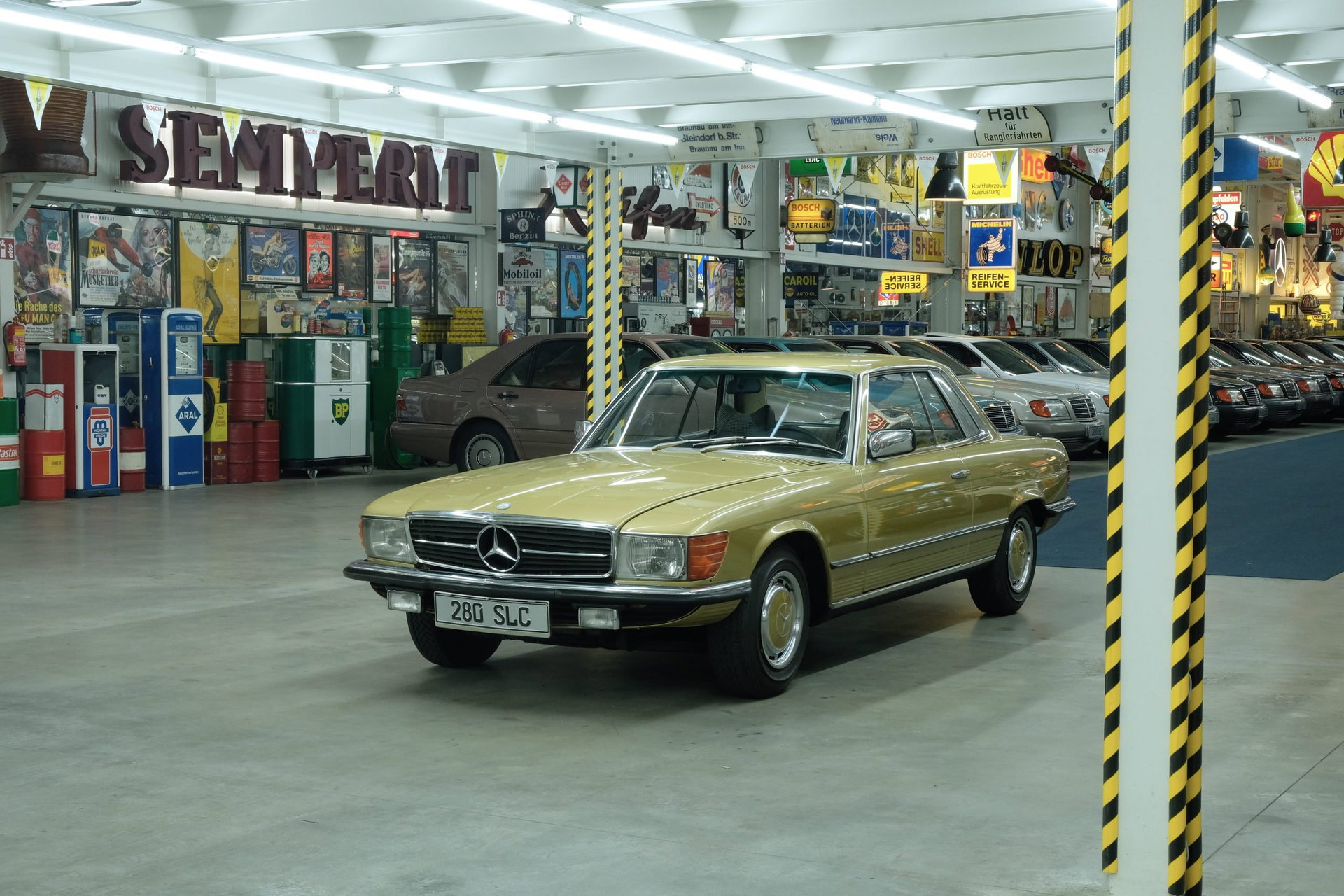
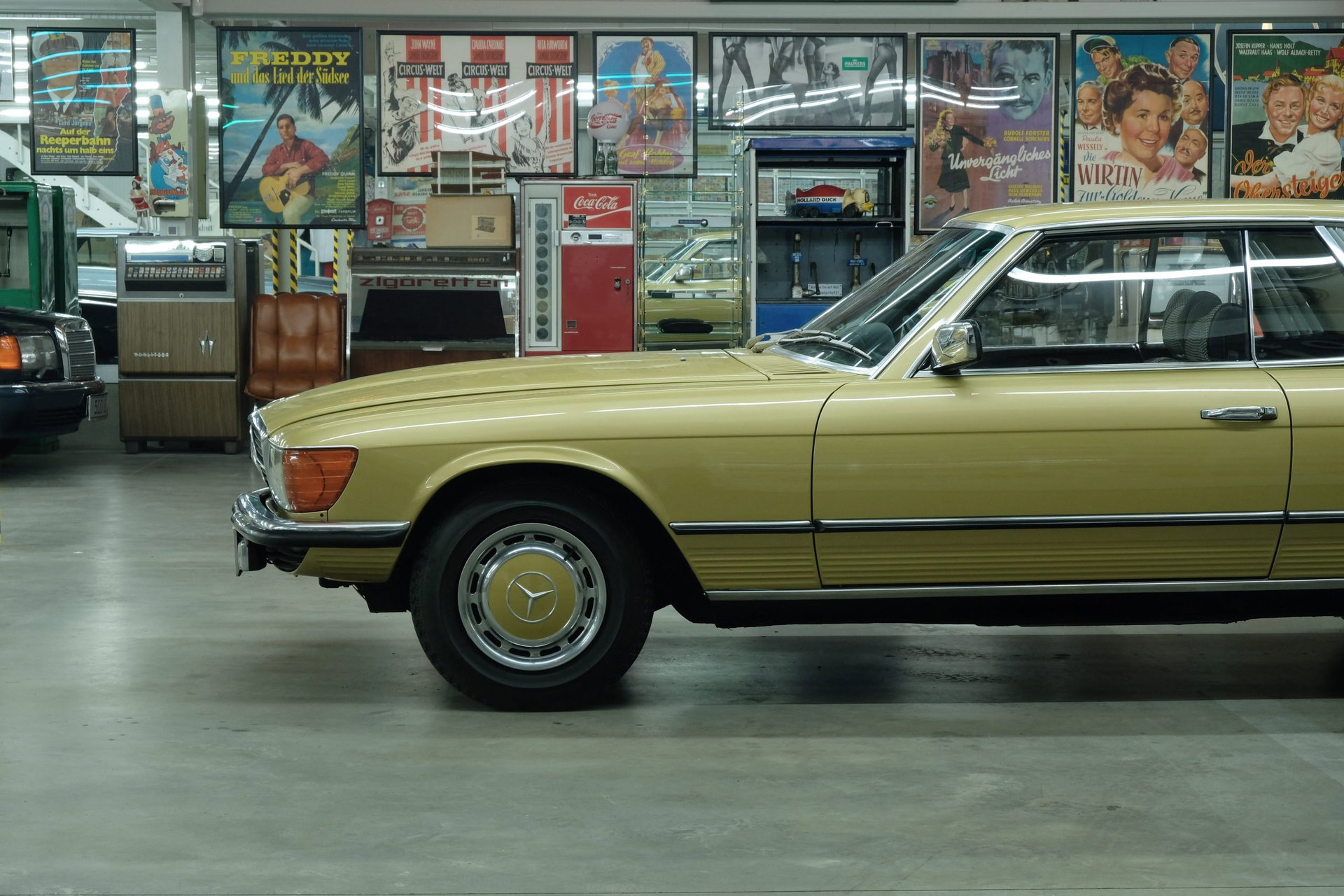
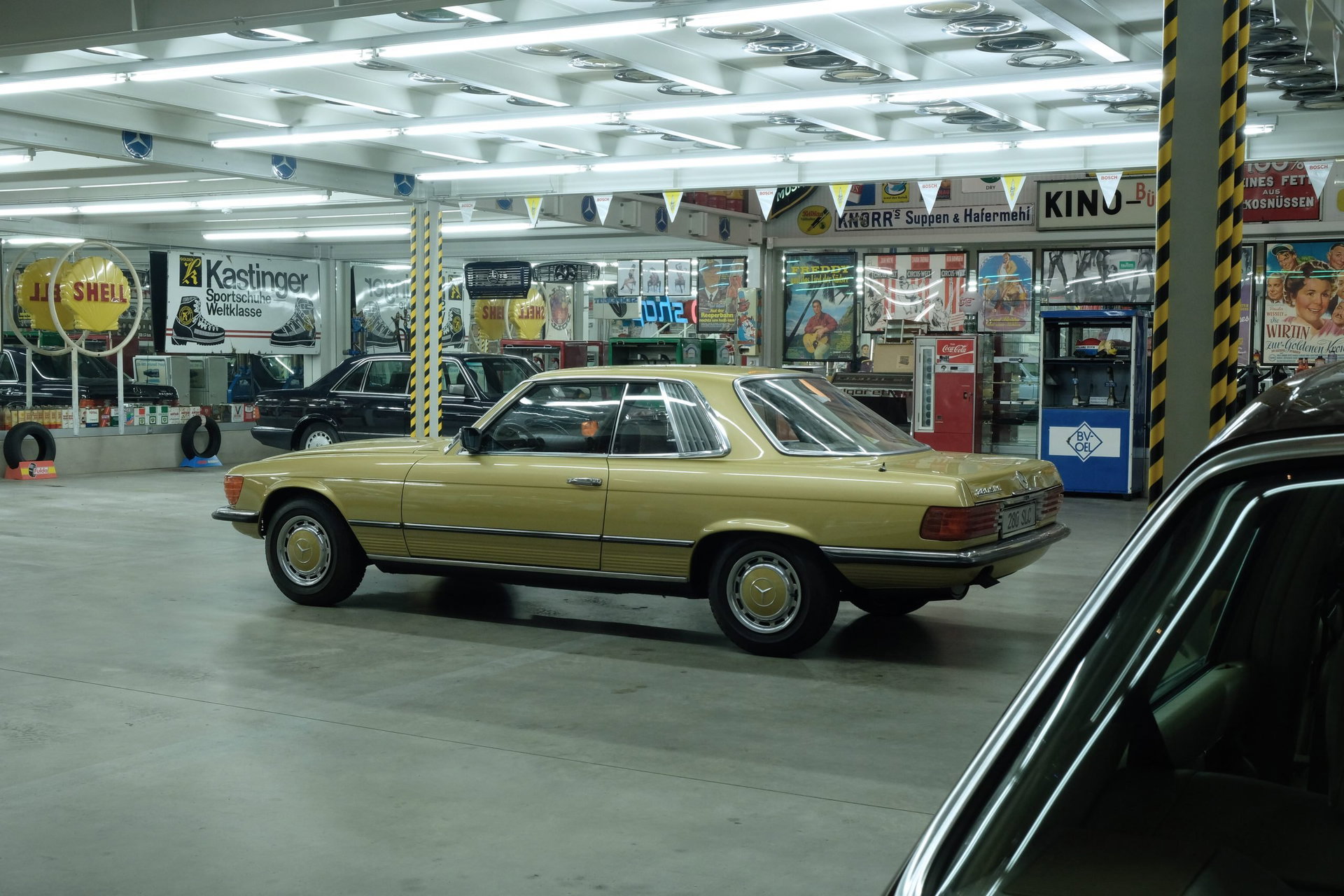
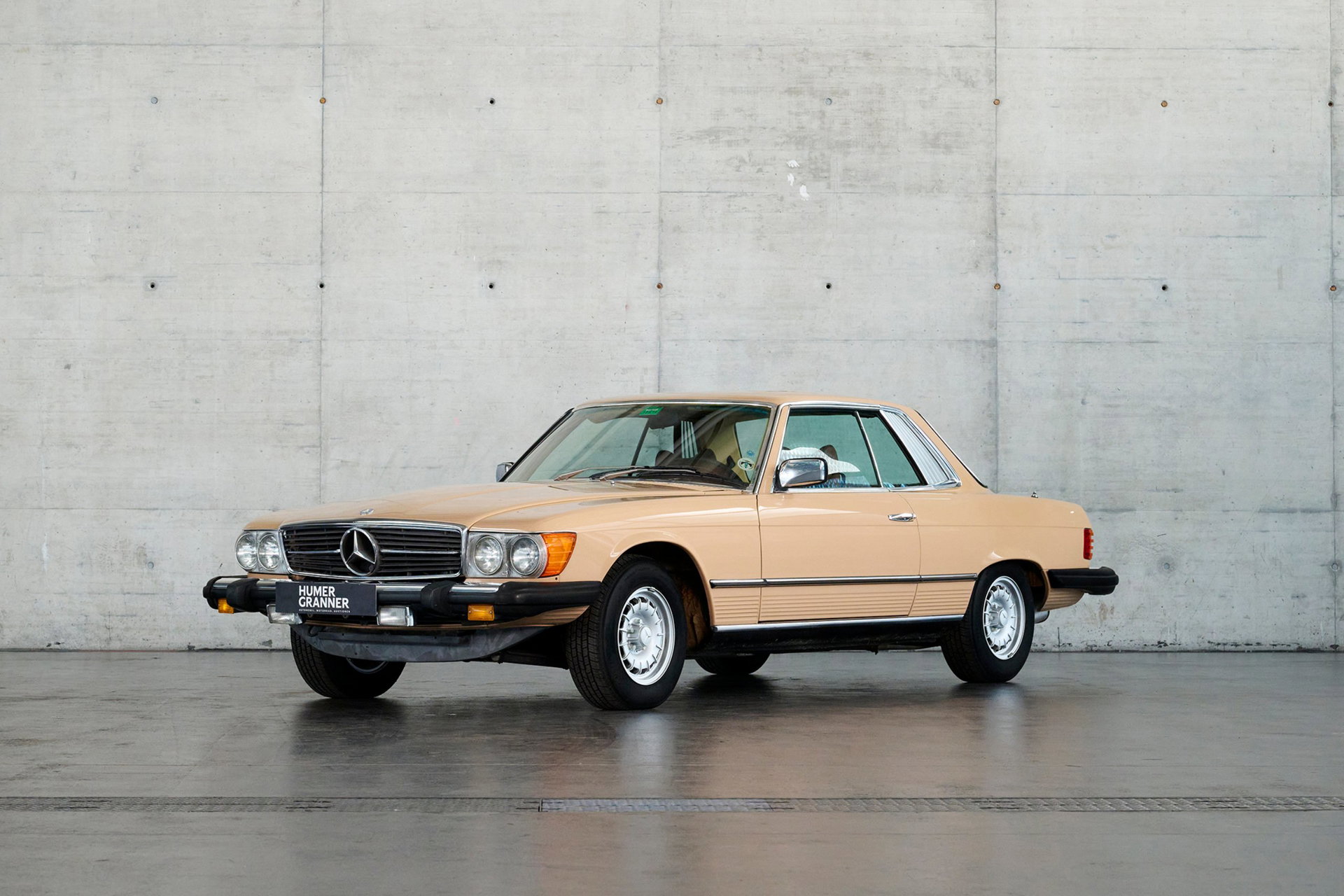
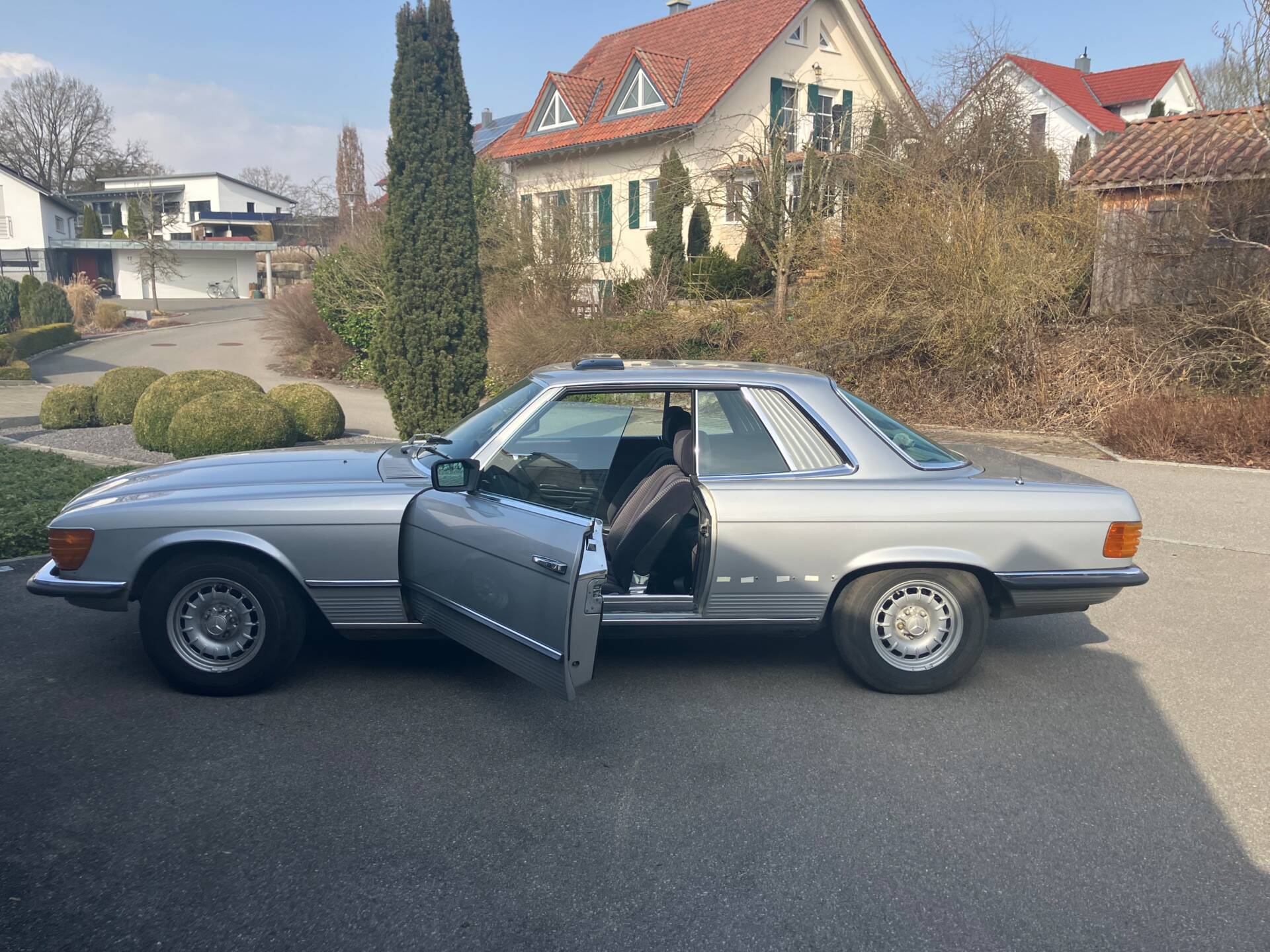
1977 Mercedes-Benz SLC - 280 SLC
1977 · 124.592 km · Feldkirchen an der Donau, Oostenrijk · via Classic Driver
Veiling sluit 8 november 2026, 00:59
Bekijk op Classic Driver → Open in de app
Gegevens
| Merk | Mercedes-Benz |
|---|---|
| Model | SLC (C107) 280 SLC |
| Bouwjaar | 1977 |
| Kilometerstand | 124.592 km |
| Kleur | Icon Gold Metallic |
| Stuur | Links |
| Locatie | Feldkirchen an der Donau, Oostenrijk |
| Verkoper | Humer, Granner & Co GmbH (veiling) |
| Bron | Classic Driver |
| auction | https://www.classicdriver.com/en/auction/humer-granner-co-gmbh-classic-car-auction-sammlung-sonderklasse-07112026 |
| Op Oudjes.xyz sinds | 5 oktober 2026 |
| Laatst gezien | 5 oktober 2026, 18:19 |
Beschrijving
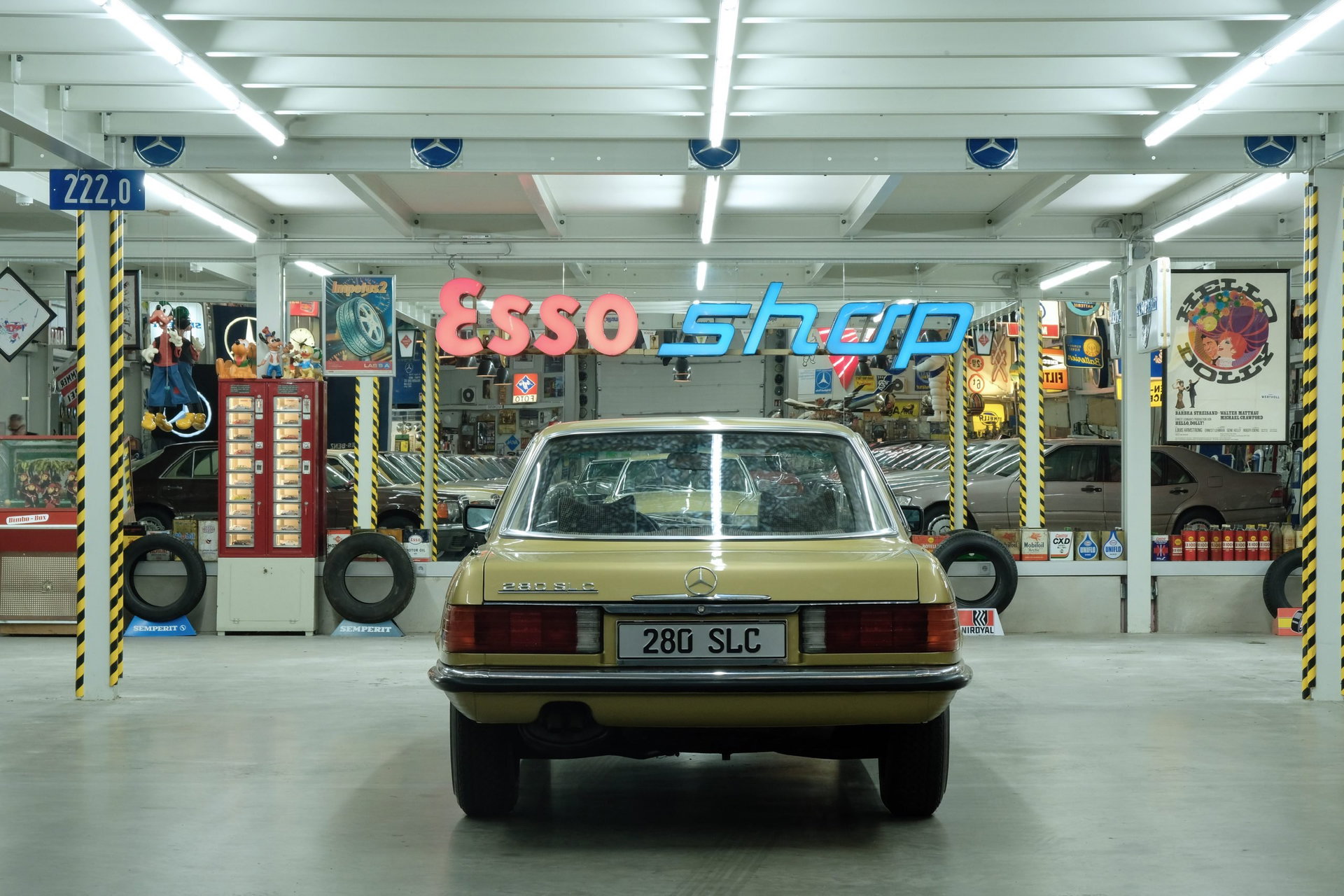
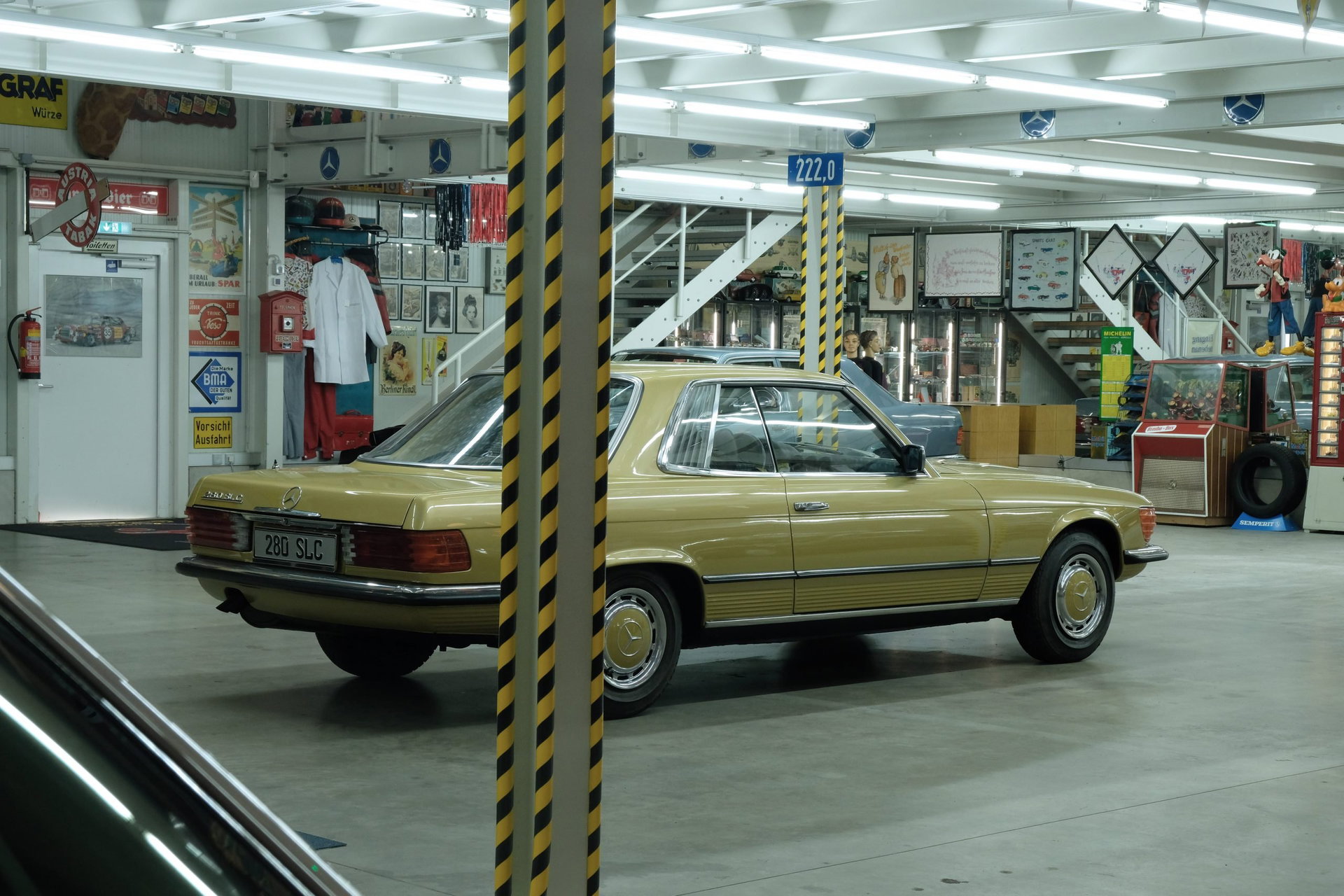
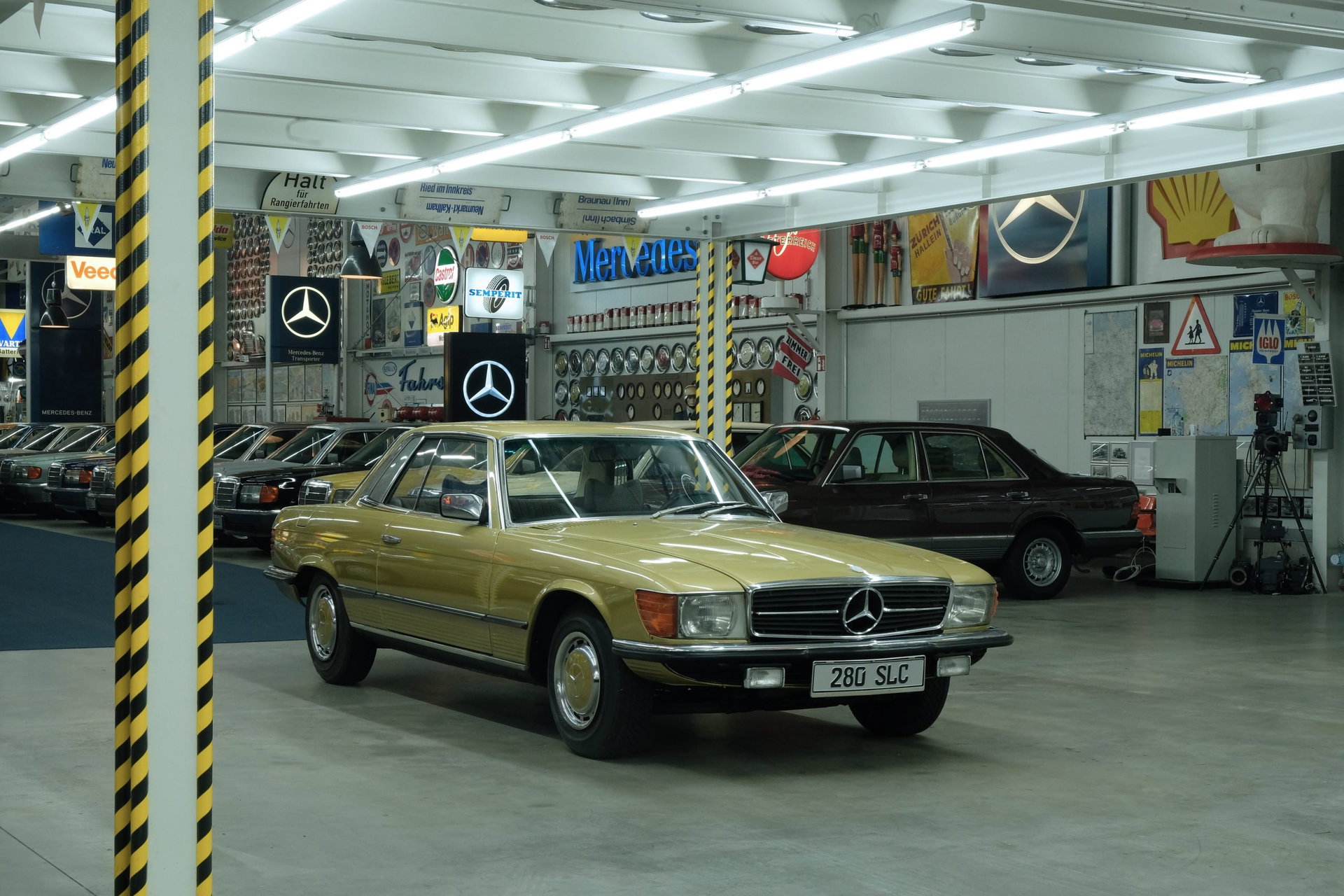
One of 10,666 ever made
Only two registered owner families to date
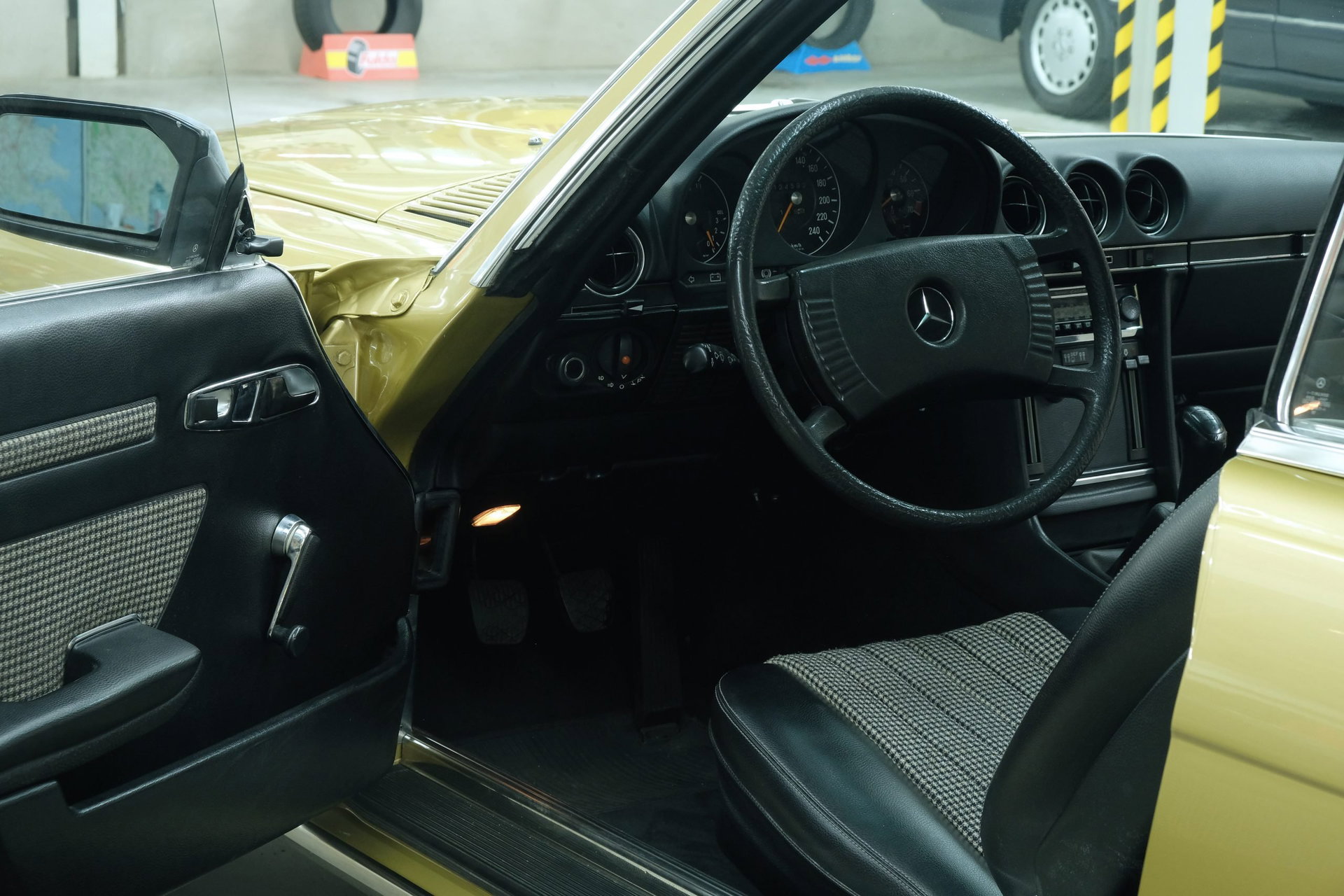
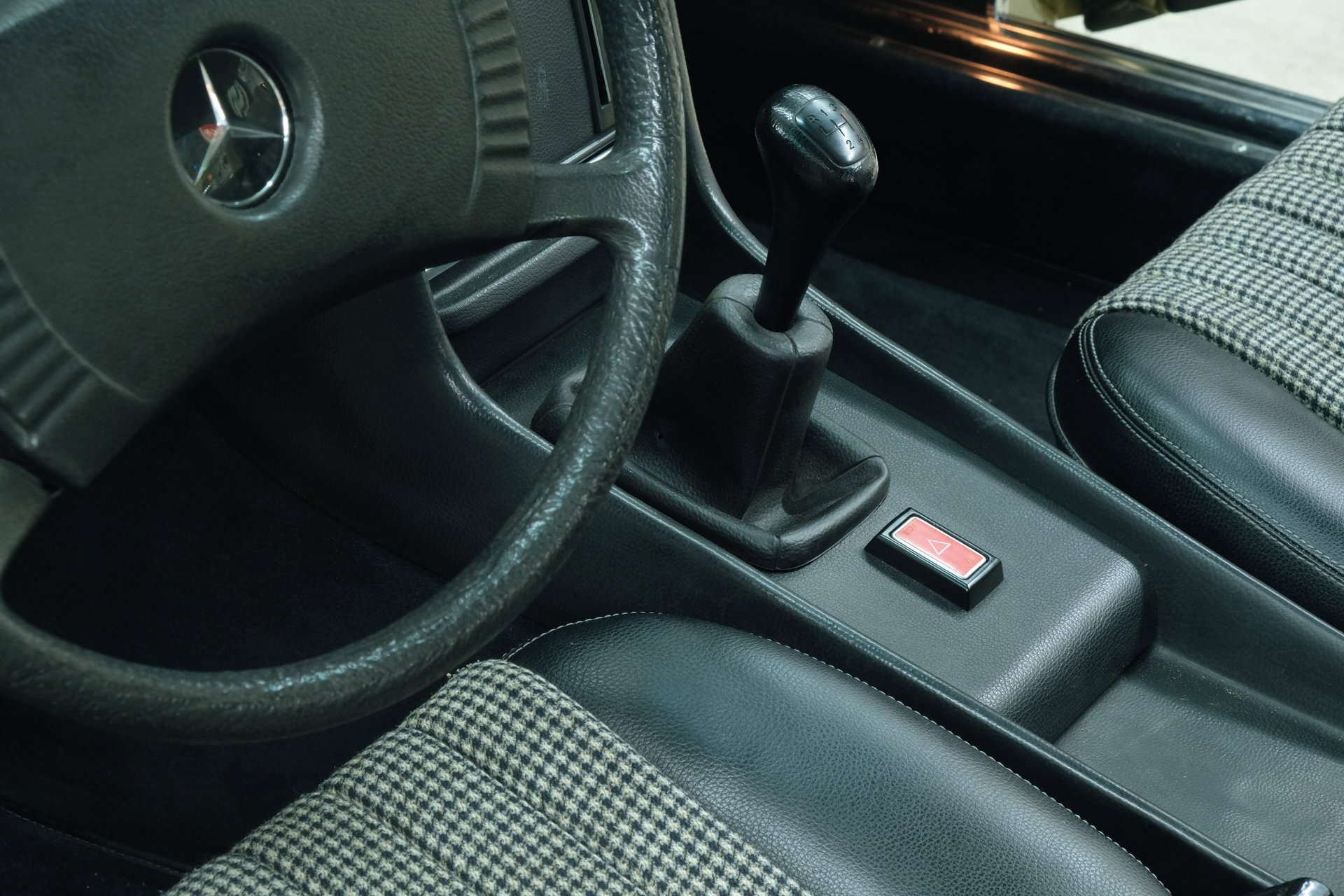
With manual gearbox
Only 124,592 documented kilometers
Chassis no.: 107.022-10-003276
Engine no.: 110.986-10-000526
Body no.: 00148
Production no.: 7702093
Paint: 419 Icon Gold Metallic
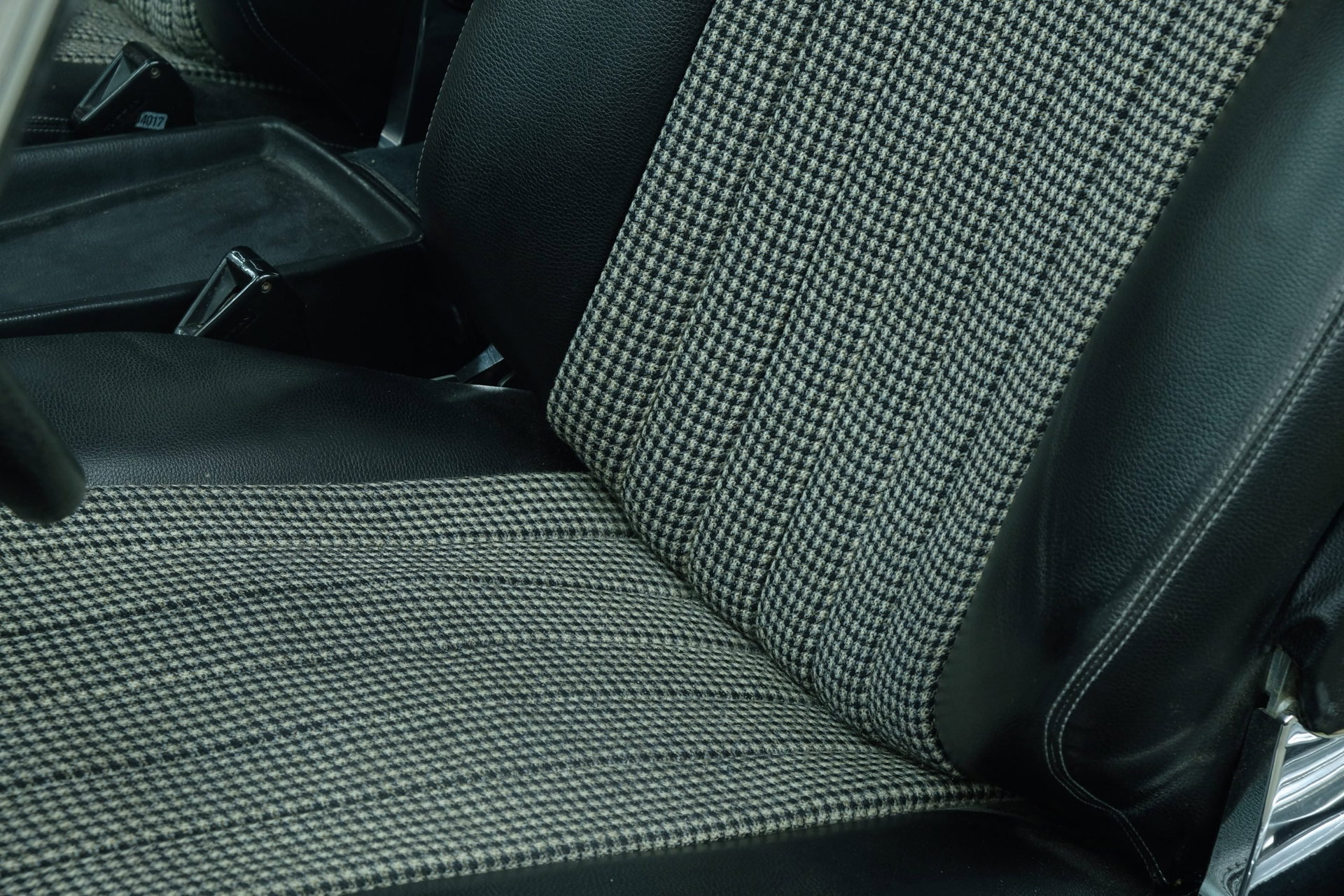
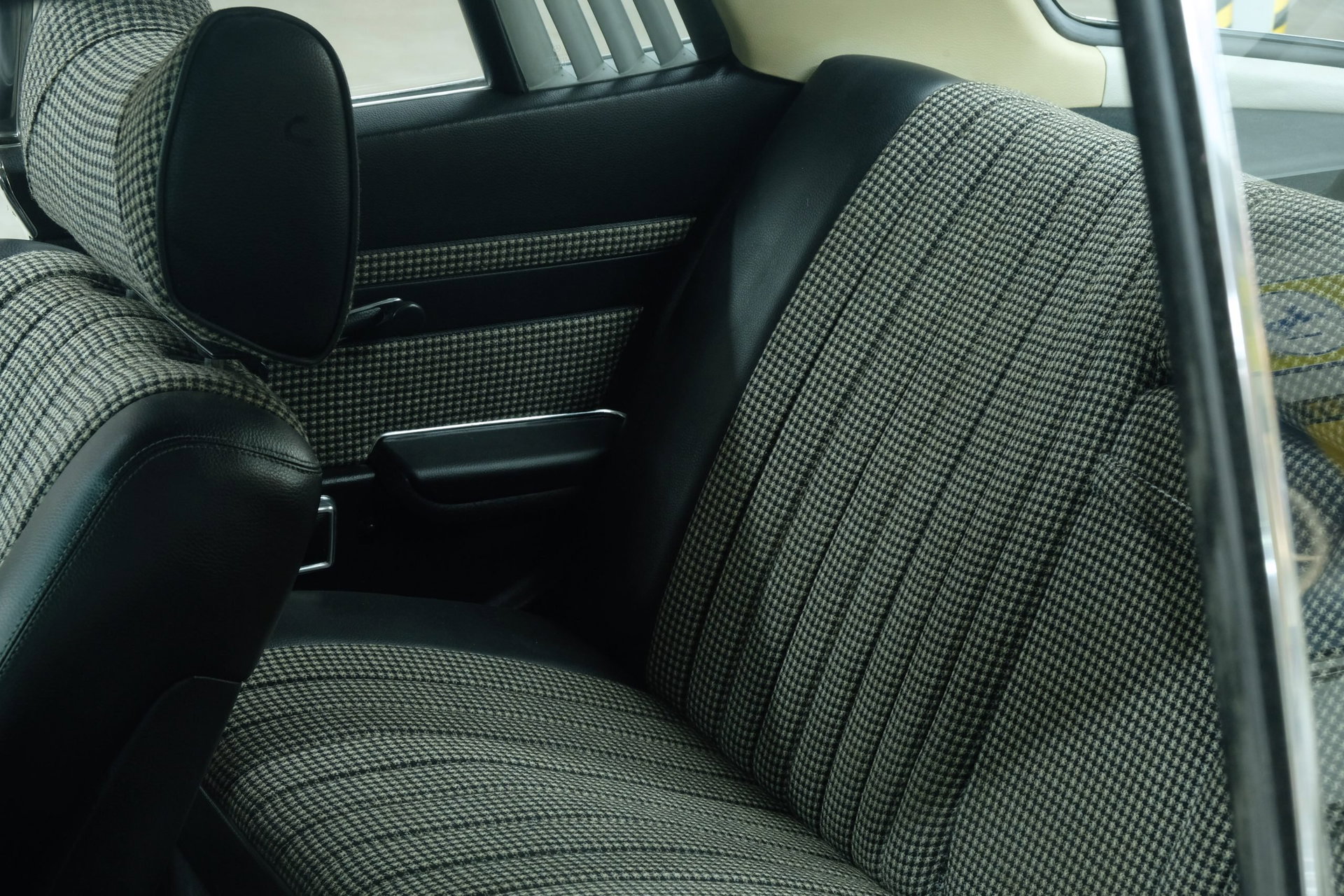
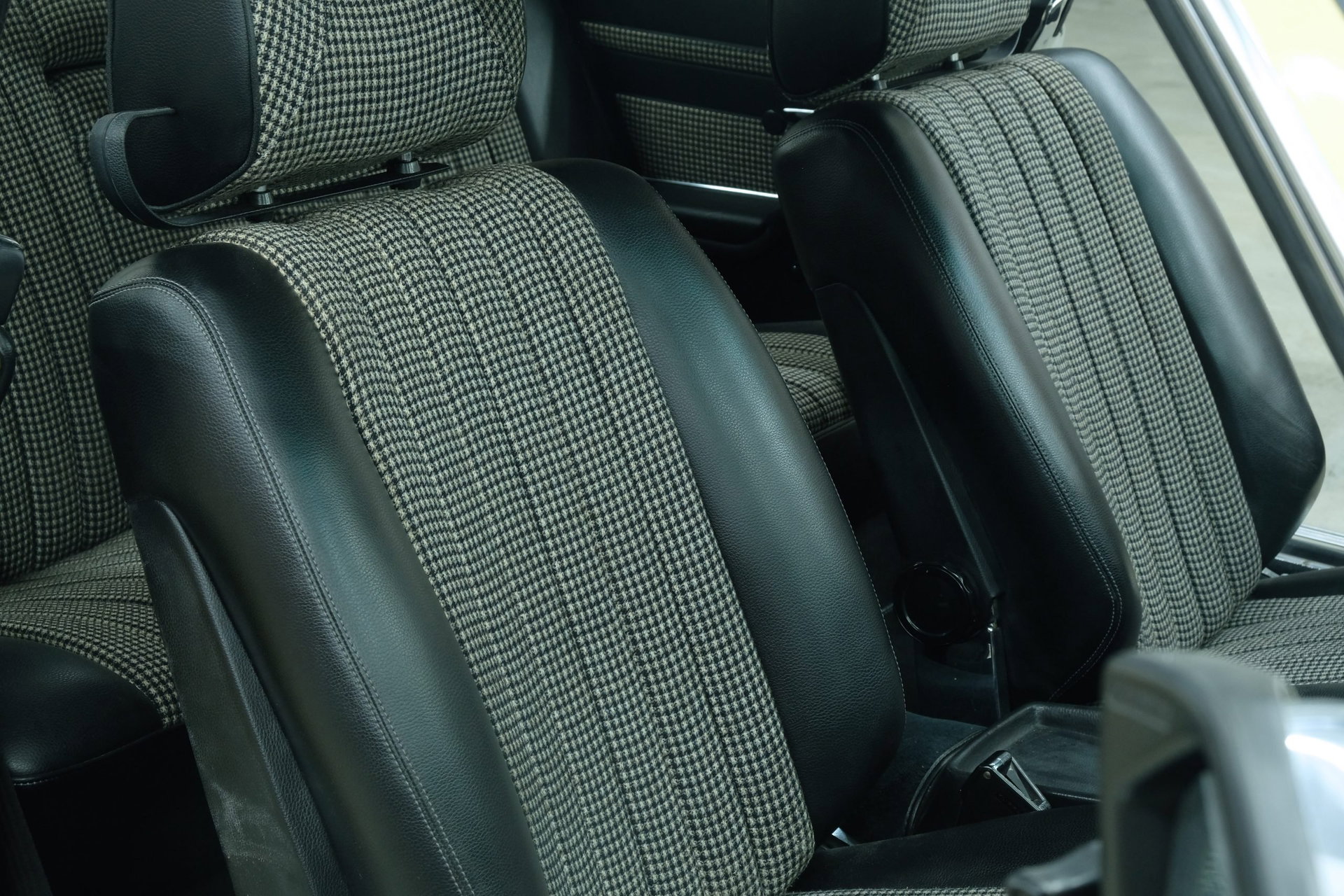
Interior: 205 Fabric/MB-Tex Black
Factory options:
248 Rear window electrically heated (safety glass)
260 Elimination of model designation on rear lid
401 Single seats
621 Export licence plate (elimination of licence plate moulding)
631 First aid kit
656 Michelin tires
665 Mode of packing, VE I
Provenance:
08/03/1977 – Alois Gruber, Noechling, AT
03/10/1980 – Norbert Gruber, Noechling, AT
18/11/1981 – Gerold Riegler, Linz, AT
12/12/2011 – Christa Riegler, Linz, AT
Documents:
Austrian Typenschein (1977)
Original service booklet
About the model line:
R/C 107
In 1971, Mercedes-Benz unveiled the new SL. It was tasked not only with replacing the eight-year-old Pagoda but also with filling the void left by the last of the elegant W 111 Cabriolets and Coupés. Just a few months later, it was joined by the closed-roof SLC. Stretched by a few centimetres, it at least gave the impression of offering four proper seats.
Visually, the two models marked the end of Mercedes‘ era of vertically stacked headlamps. In their place, the headlights now sat horizontally alongside the three-pointed star in the radiator grille—a design cue that would define generations of Mercedes-Benz models to come. Up to the windscreen, SL and SLC were virtually identical. From there on, however, the Coupé followed its own path: a low roofline, a distinctive double-curved rear window set at a pronounced angle, and a gracefully elongated tail. The chrome louvres on the C-pillars became one of its most debated styling features. These clever visual screens created the illusion that the rear side windows disappeared completely into the bodywork, while in reality the upper section that remained visible was simply concealed behind them.
When it came to comfort and optional equipment, customers could indulge themselves almost without limit—provided their wallet was deep enough. Engine choices, however, were rather more straightforward. At launch, the familiar 3.5-litre V8 was the only option available. Customers across the Atlantic, as had already been the case with the W 111 and W 112, were offered an extra litre of displacement. Before long, the 4.5-litre V8 also became available in Europe, only for the oil crisis to shift priorities towards greater economy. Mercedes responded in 1974 with the 280 SL and 280 SLC, powered by a twin-cam inline-six. No sooner had the crisis passed than engine capacities began to grow once more. A lightweight 5.0-litre aluminium V8 arrived in 1978, and in 1980 the 350 gave way to the 380.
After an absence of 22 years, Mercedes-Benz returned to international competition in 1977 with the SLC. This time, however, it traded smooth tarmac for gravel, exchanging the World Sports Car Championship for the gruelling world of long-distance rallying. The London–Sydney Marathon immediately brought success, with two 280 E saloons securing a one-two finish. For the 1978 season, Mercedes prepared three new 450 SLC 5.0 competition cars. To satisfy homologation requirements, the production models also received aluminium bonnets and a discreet rear spoiler on the boot lid. At the *Vuelta a la América del Sur*, Mercedes celebrated an astonishing one-two-four-five finish. In 1979, the five-litre SLCs contested the World Rally Championship. Hannu Mikkola announced their arrival with a remarkable second place in the Safari Rally, before the season finale on the Ivory Coast produced an emphatic one-two-three-four finish for Mercedes, led home by Mikkola ahead of Björn Waldegård, Andrew Cowan and Vic Preston. Mercedes returned in 1980 with a further-developed version of the SLC for several World Championship events, adding more podium finishes and another commanding one-two result on the Ivory Coast.
For the 1981 season, Mercedes signed none other than reigning World Champion Walter Röhrl. Yet before the opening round in Monte Carlo, the company unexpectedly withdrew from the championship and brought all factory motorsport activities to an end. Instead of defending his title, Röhrl was left watching from the sidelines for an entire season.
While its open sibling went on to become the longest-produced SL generation in Mercedes-Benz history, the arrival of the W 126 S-Class Coupé brought the SLC’s career to a close in 1981. By then, almost 63,000 examples had been built. It had been Mercedes-Benz’s first true grand tourer—and for many years, its last. The SL, meanwhile, remained in production until 1989 and received a comprehensive facelift in 1985, together with an entirely new engine range. Export markets even gained the mighty 5.6-litre V8 from the S-Class, bringing the legendary 560 SL to life
Vergelijkbare oudjes
 1977 MERCEDES 280 SLC 280 slc€ 25.9001977 · 76.000 km · Creuzier-le-Vieux, Allier, Frankrijk · Car & Classic
 1977 Mercedes-Benz SLC - 450 SLCRichtprijs € 10.0001977 · Salzburg, Oostenrijk · Classic Driver
 1977 Mercedes SLC Series C107 450 SLC£ 14.000 (≈ € 16.525)1977 · 89.000 km · Padiham, Lancashire, Verenigd Koninkrijk · Car & Classic
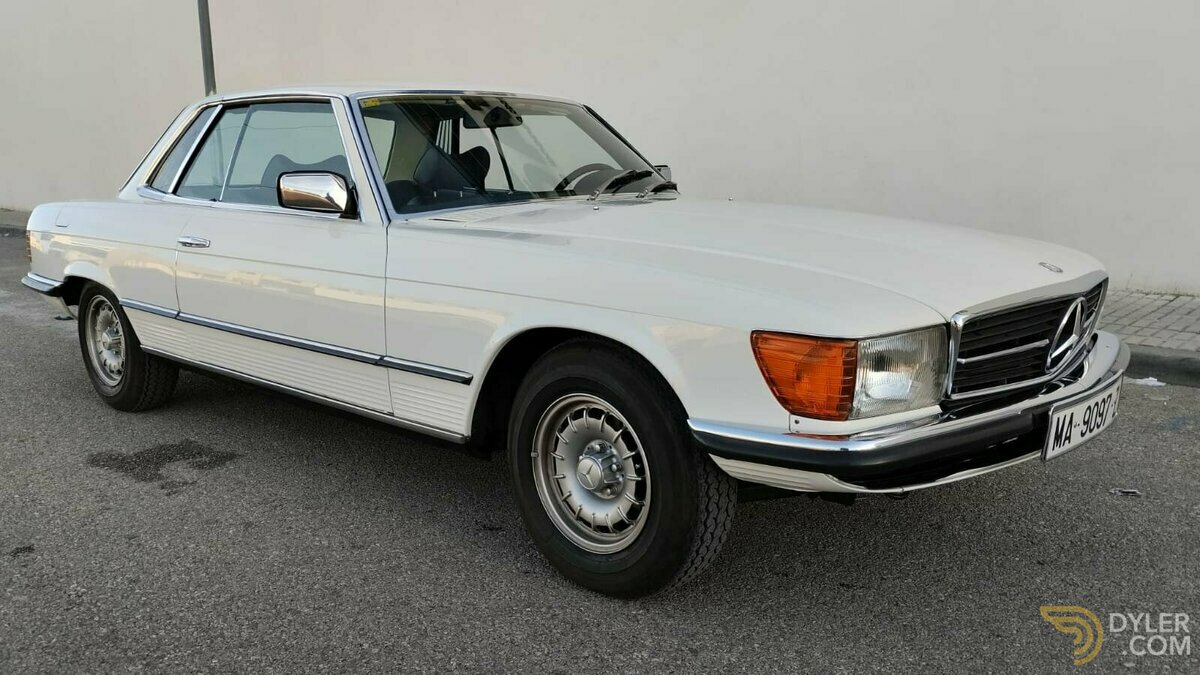 1977 Mercedes-Benz 280 SLC€ 16.7001977 · La Rioja, Spanje · Dyler
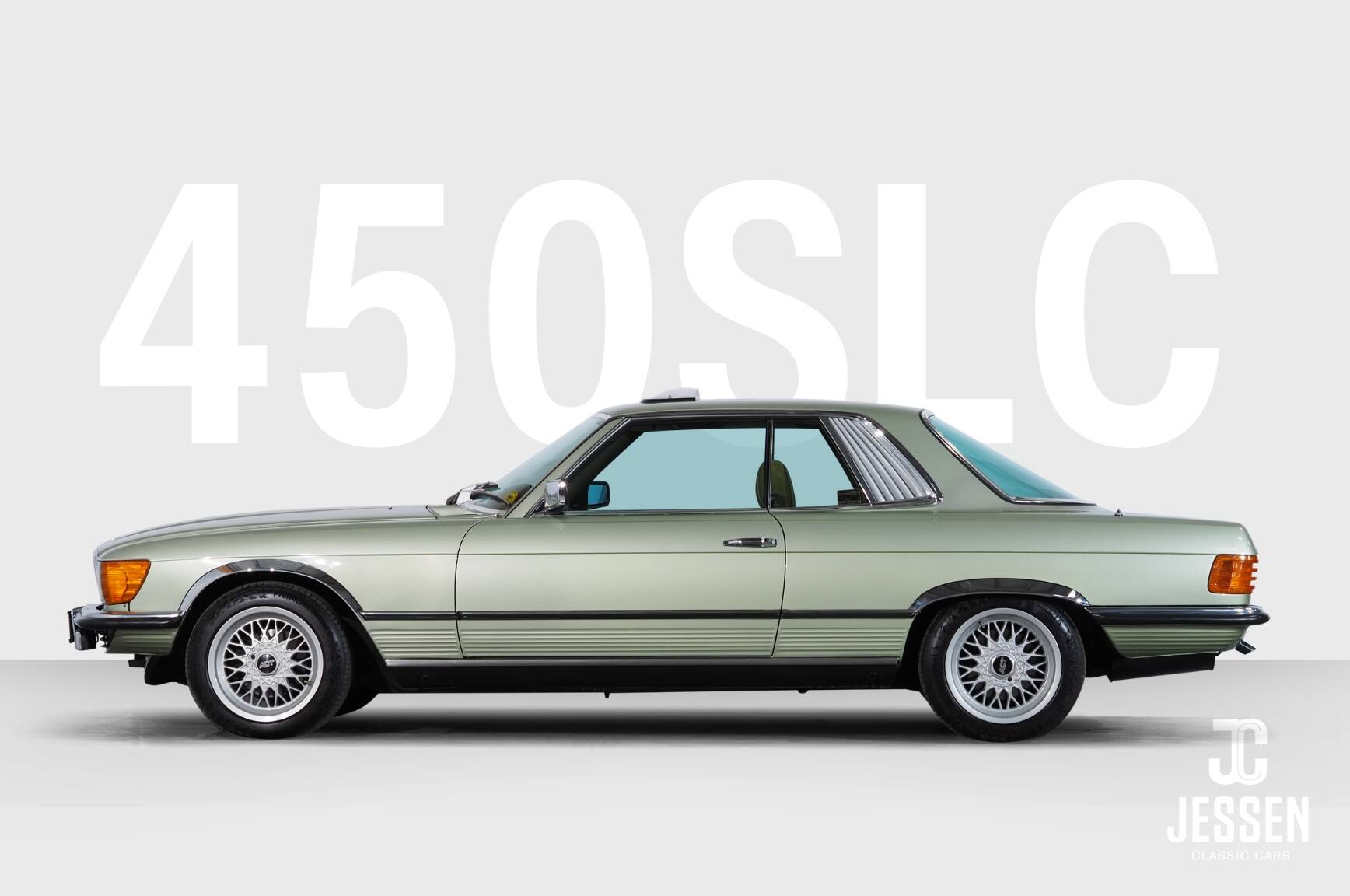 1977 Mercedes-Benz 450 SLC€ 33.8901977 · 110.000 km · Oppenheim, Duitsland · Classic Trader
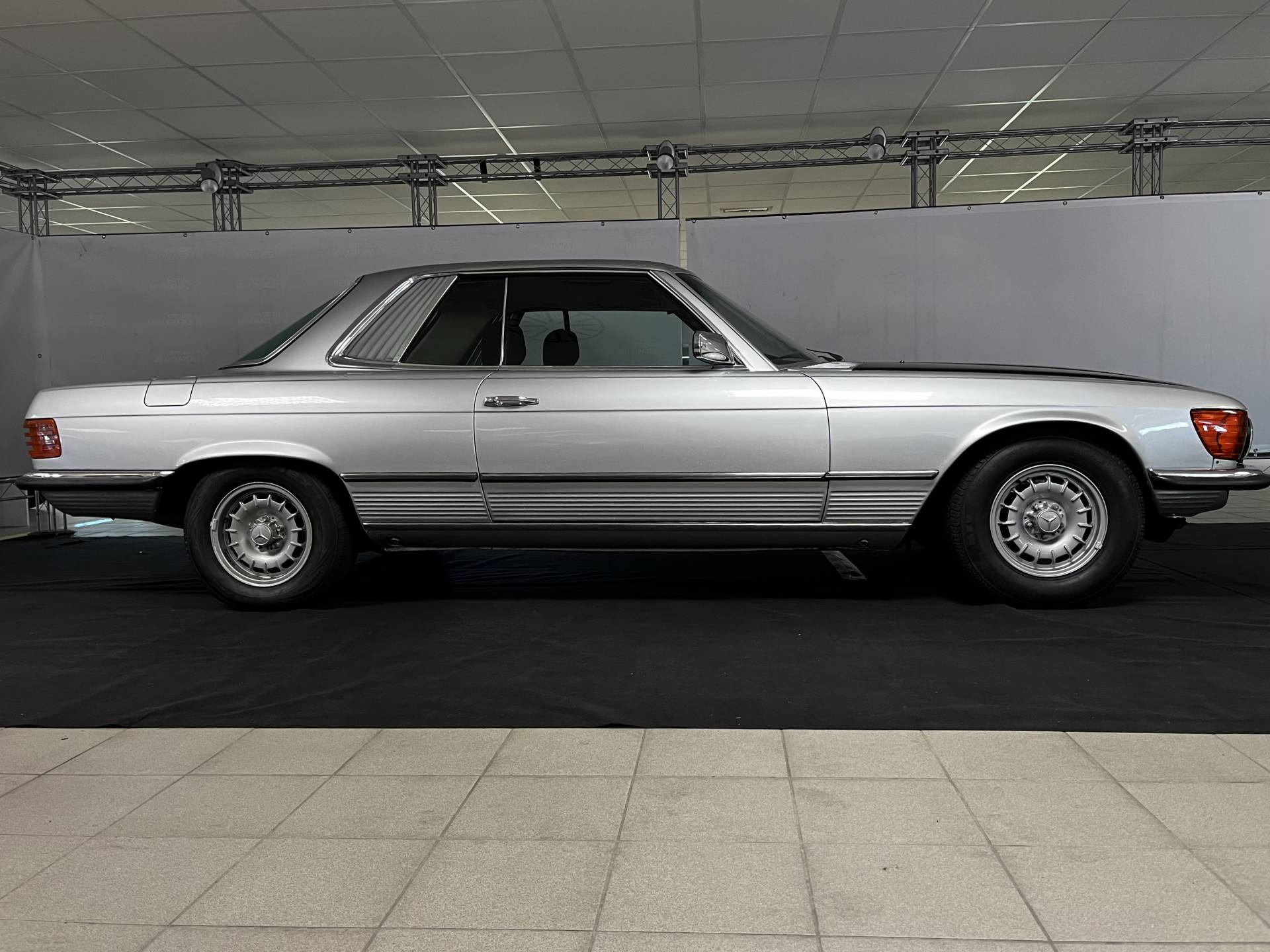 1977 Mercedes-Benz 450 SLC Rally€ 22.0001977 · 154.000 km · Empoli, Italië · Classic Trader
 1977 Mercedes-Benz 280 SLC€ 10.0001977 · 220.000 km · Schwendi, Duitsland · Classic Trader
MB 350 SLC, V8, W107 / C107, H-Kennzeichen, TÜV bis 2028€ 11.0001977 · 180.500 km · Schenefeld, Kreis Pinneberg, Duitsland · Kleinanzeigen
Wat doet een Mercedes-Benz SLC (C107) op de markt? Bekijk de marktwaarde →