1938 Adler 2.5-Litre - 2.5 Liter Sport-Limousine
1938 · Salzburg, Oostenrijk · via Classic Driver
Veiling sluit 18 oktober 2026, 01:59
Bekijk op Classic Driver → Open in de app
Gegevens
| Merk | Adler |
|---|---|
| Model | 2.5 2.5 Liter Sport-Limousine |
| Bouwjaar | 1938 |
| Carrosserie | Sedan |
| Stuur | Links |
| Locatie | Salzburg, Oostenrijk |
| Verkoper | Humer, Granner & Co GmbH (veiling) |
| Bron | Classic Driver |
| auction | https://www.classicdriver.com/en/auction/humer-granner-co-gmbh-classic-car-auction-17102026 |
| Op Oudjes.xyz sinds | 5 oktober 2026 |
| Laatst gezien | 8 oktober 2026, 06:16 |
Beschrijving
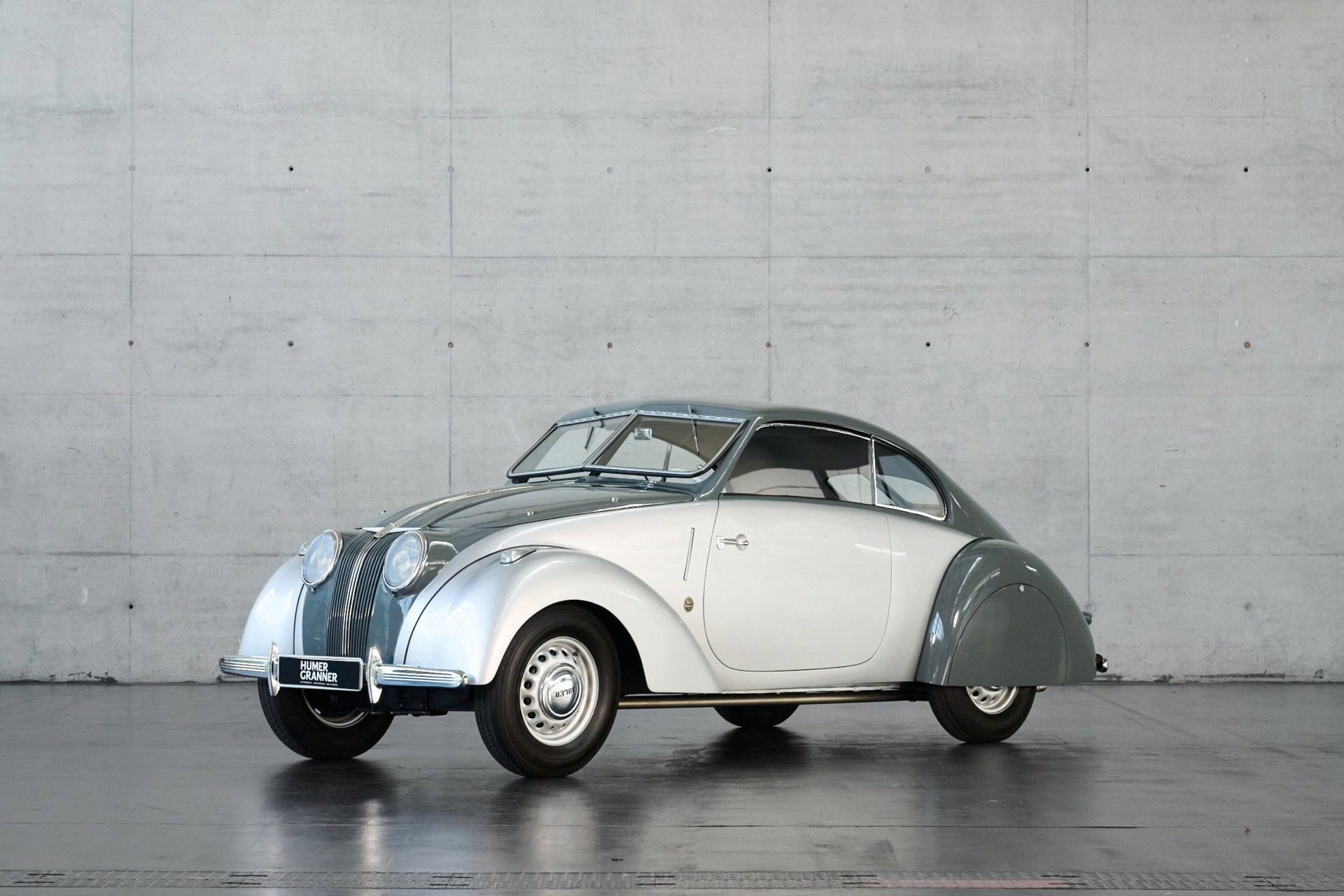
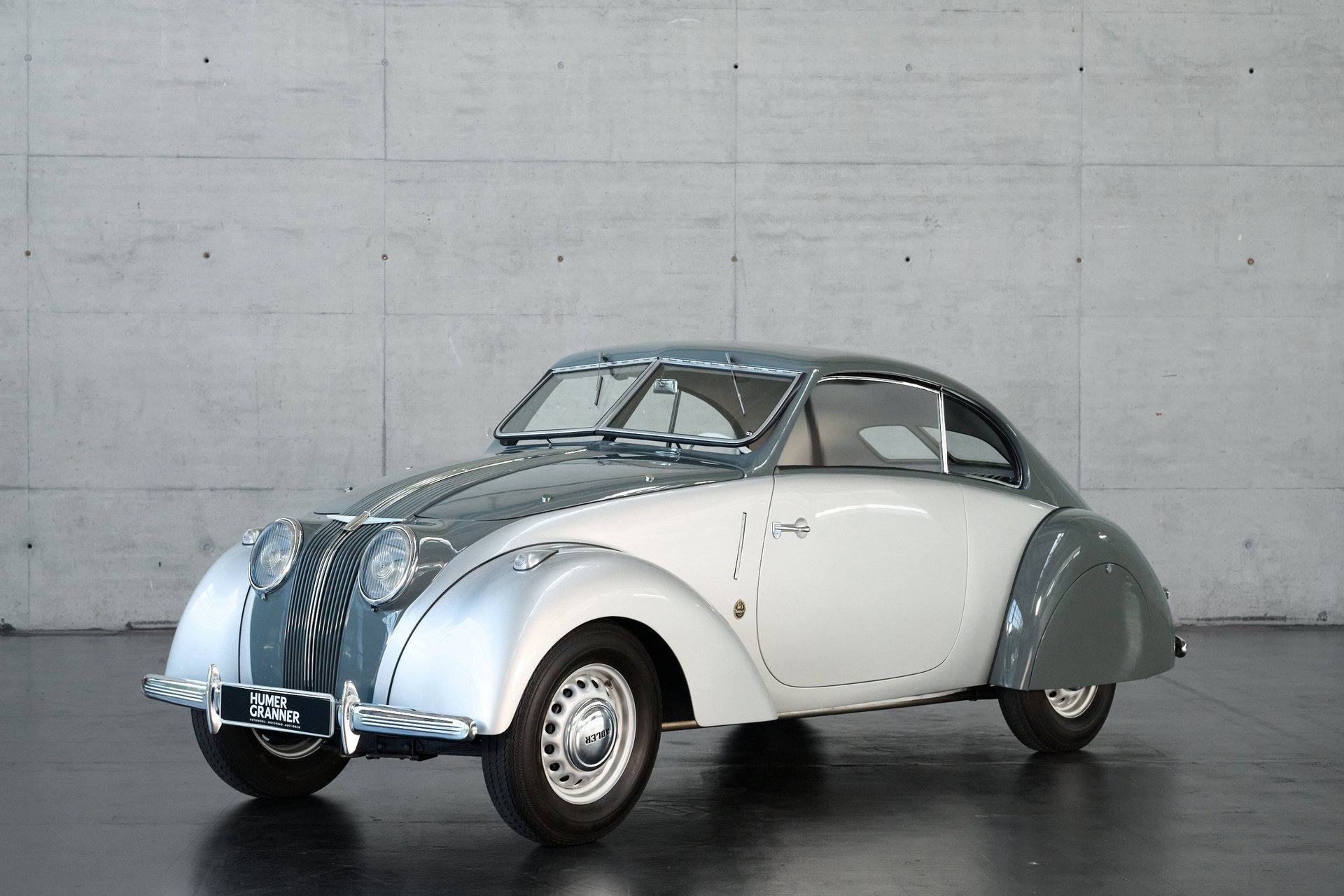
Reconstruction of a Gläser Sports Saloon
One of the most extraordinary motor cars of its era
High-quality execution of an ambitious project
In the consignor’s collection for almost 20 years
With the 2.5 Litre, Adler demonstrated in 1937 what the future of the motor car looked like from Frankfurt. The new Type 10 was intended to replace the conservative Diplomat and differed from it about as thoroughly as an express train did from a stagecoach. Responsible for this was Karl Jenschke, who had previously designed, among other cars, the streamlined Type 50 at Steyr. At Adler, he took the idea several steps further.
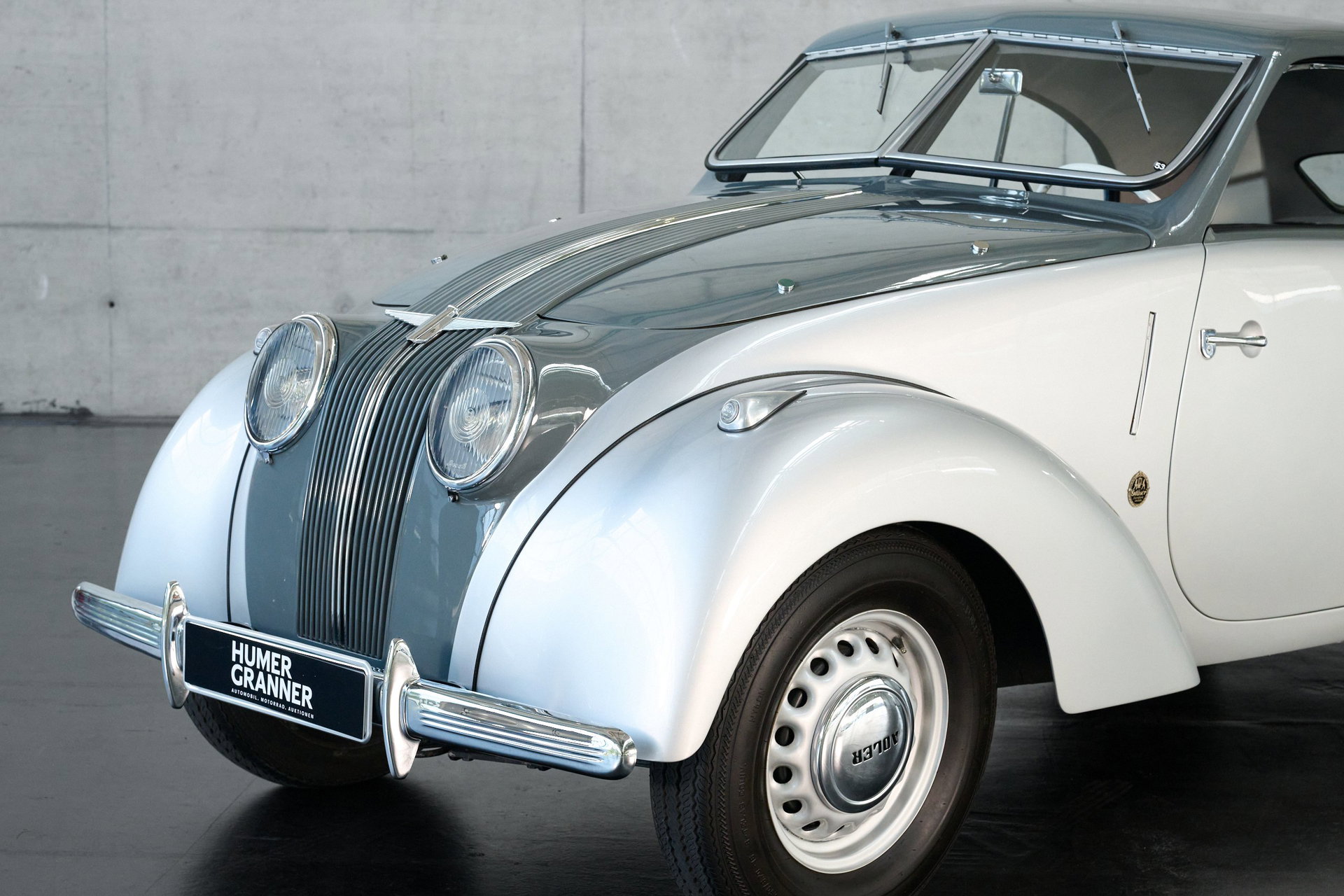
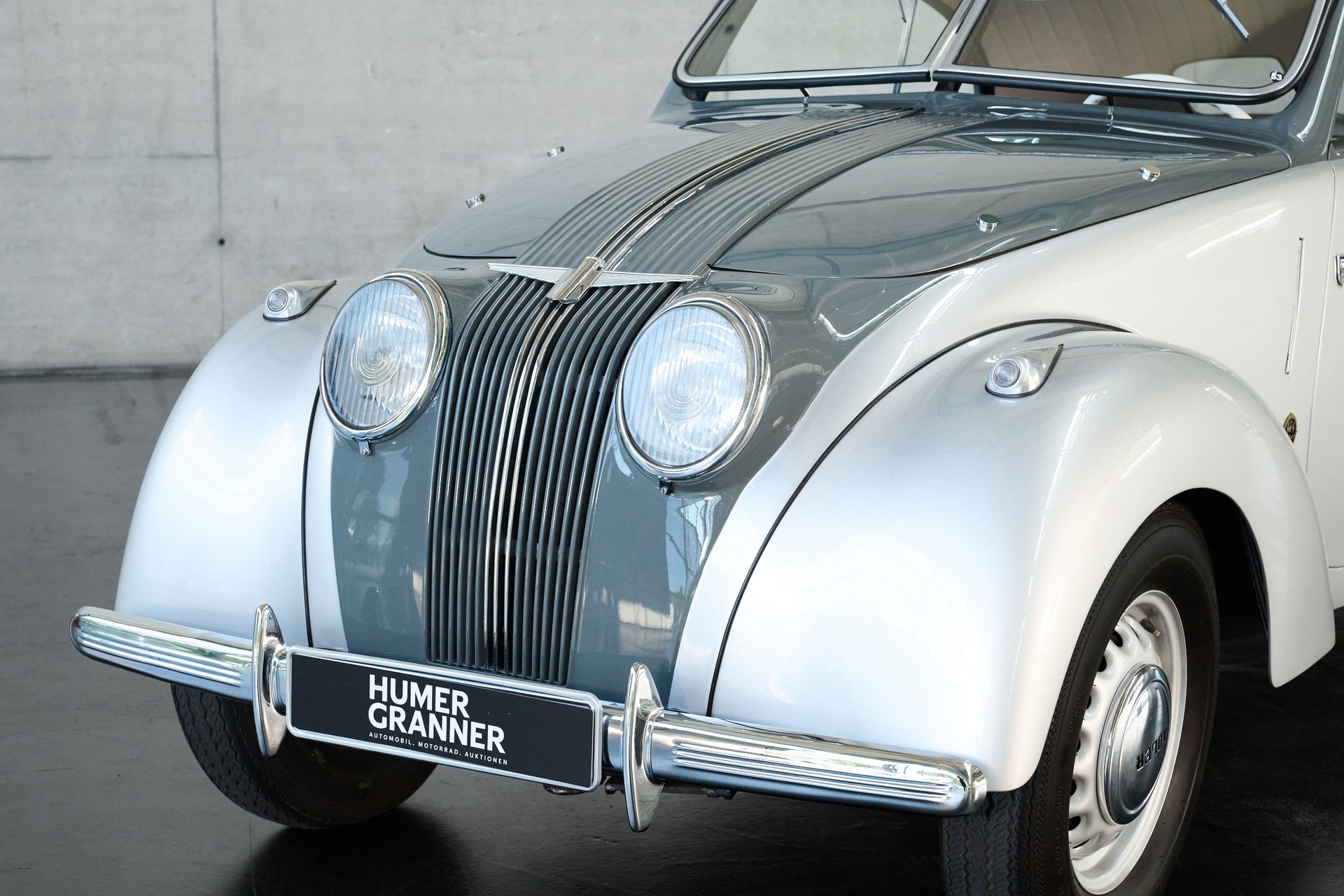
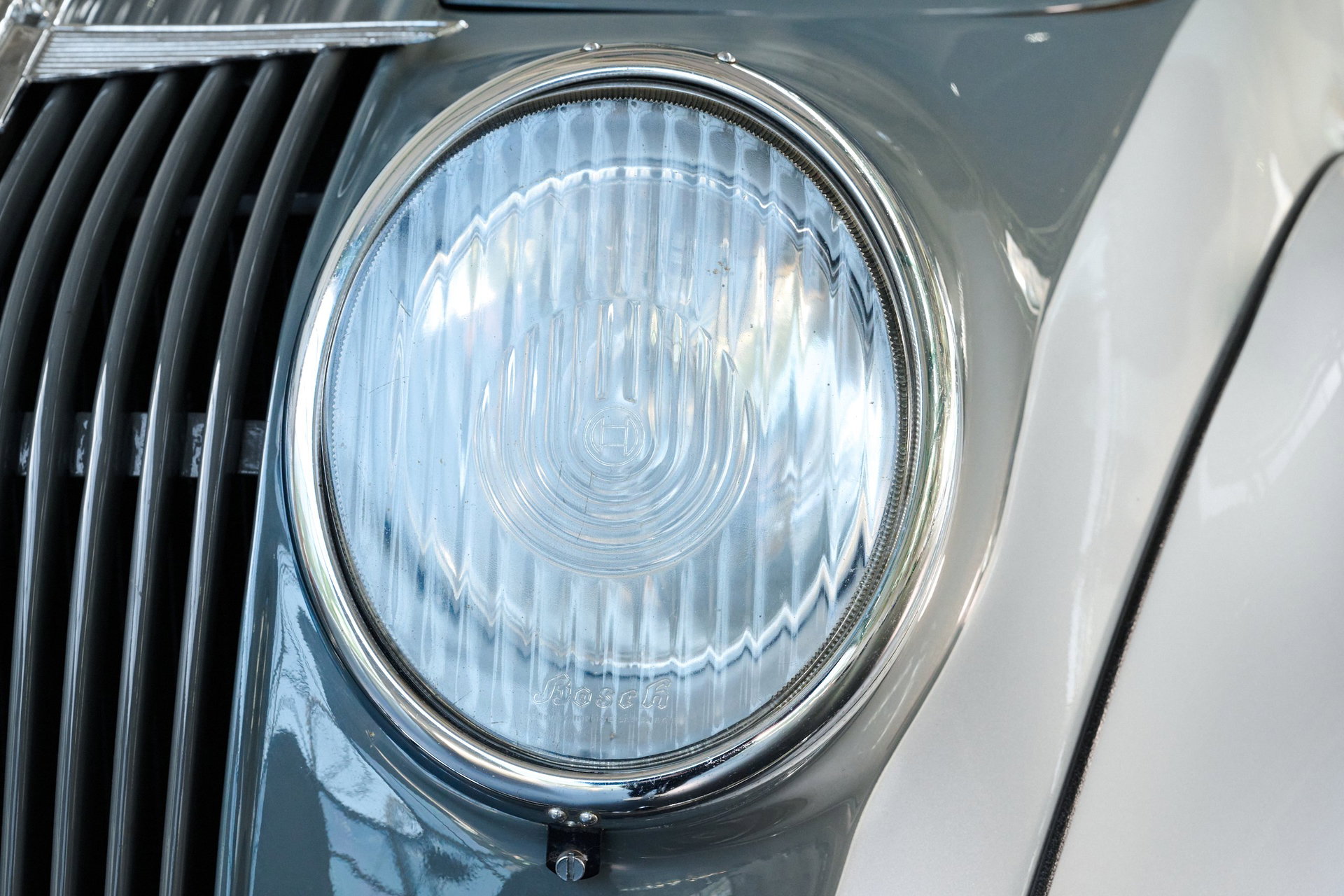
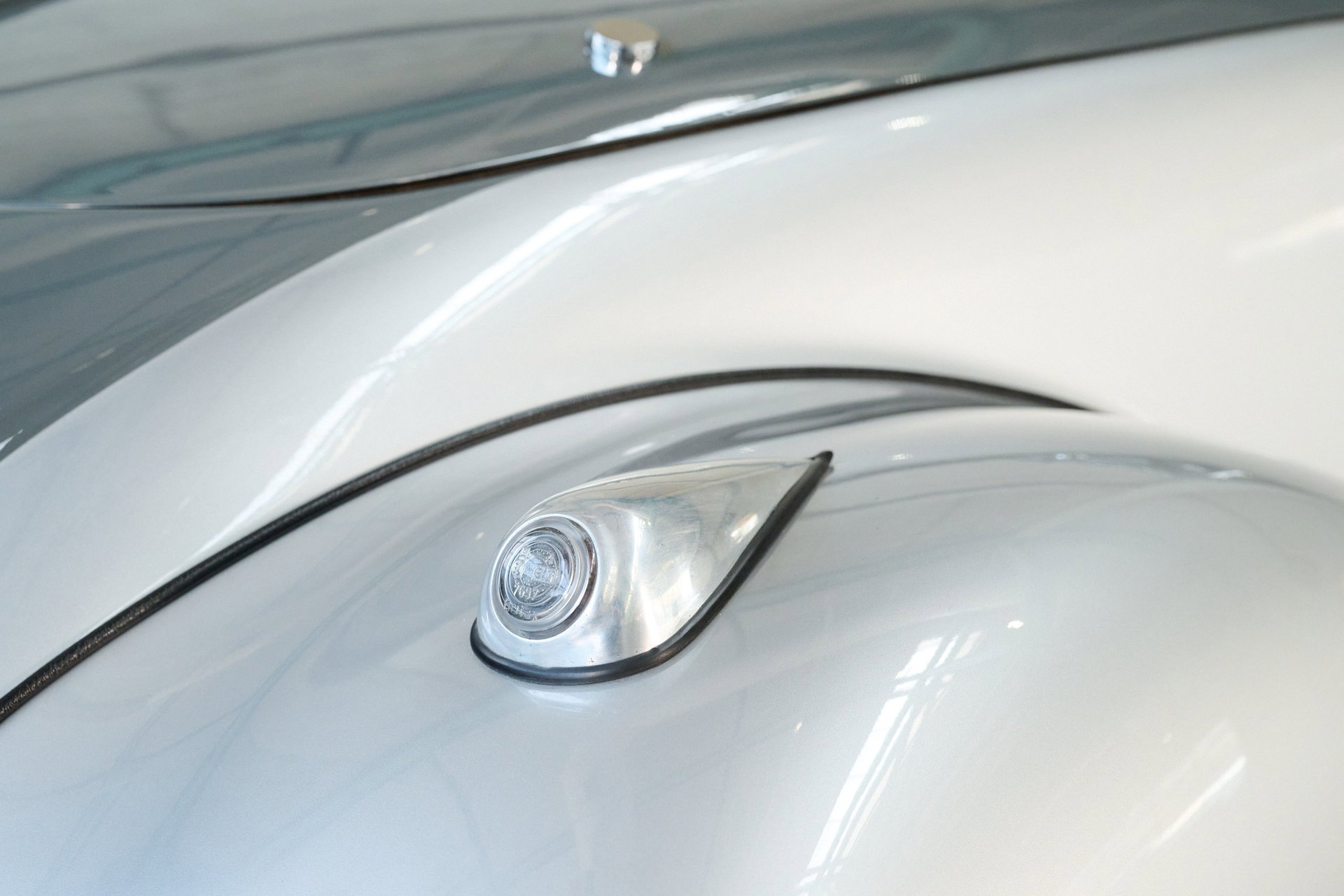
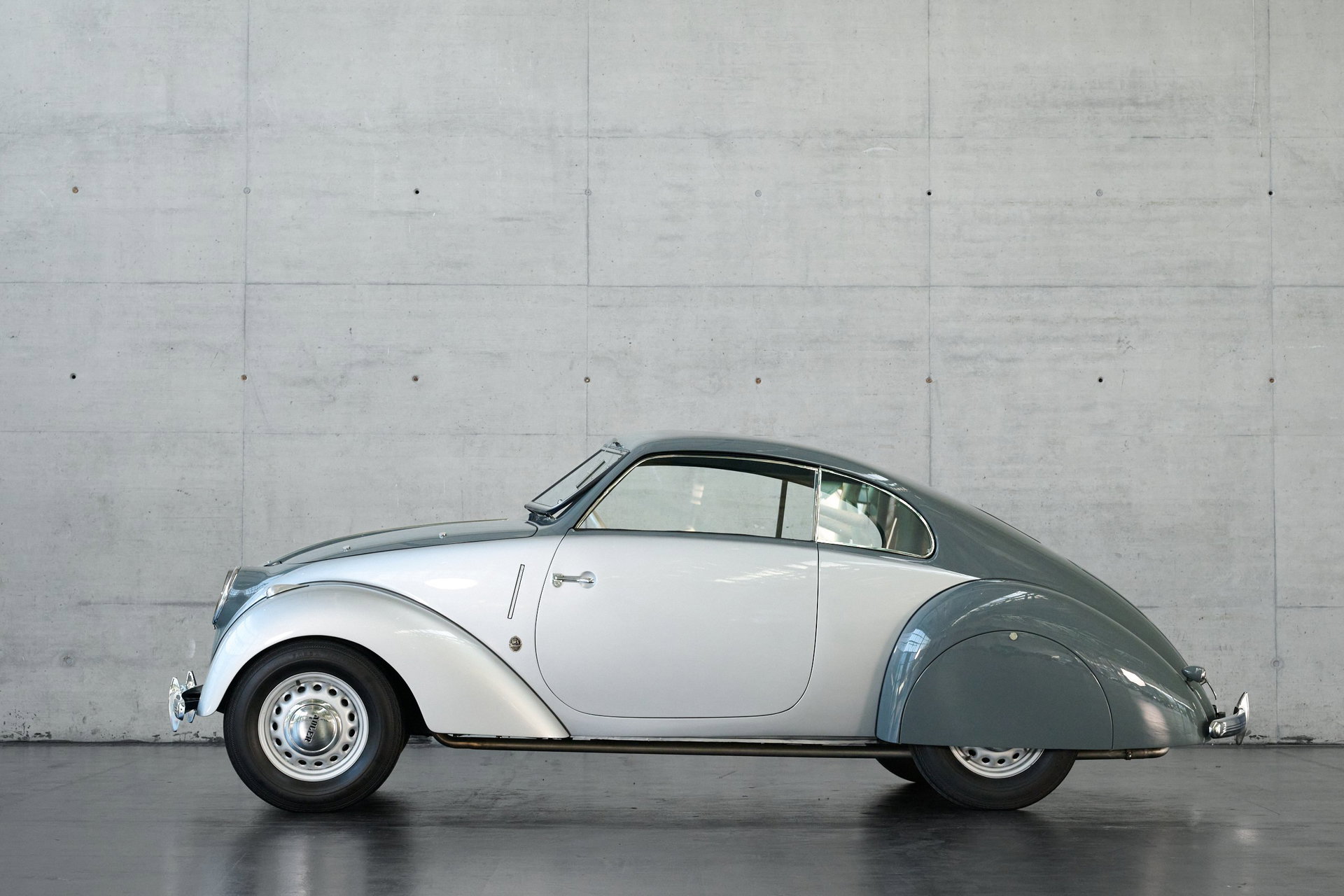
The body largely dispensed with the separate forms that had been customary until then, the headlamps were integrated into the wings and the tail swept away towards the rear. As this decidedly modern motor car appeared at precisely the time when Germany was rapidly expanding its motorway network, a nickname was soon found: the “Autobahn-Adler”. Officially, it remained simply the 2.5 Litre.
Beneath the bodywork, matters were rather less revolutionary. The water-cooled 2,494 cc straight-six employed side valves and initially produced 58 hp. A four-speed gearbox, with synchromesh on the upper three ratios, transmitted power to the rear wheels. At around 125 km/h, the saloon was certainly brisk, but it was no sports car. The four-door bodies were supplied by Ambi-Budd, while the Cabriolets came from Karmann. By 1940, a total of 5,295 examples of the 2.5 Litre had been built.
In 1938, Adler went a step further. For the Sports version, compression was raised from 6.25:1 to 7.25:1 and the six-cylinder engine was equipped with three carburettors. The result was 80 hp at 4,200 rpm, enough for around 150 km/h. For a German road car anno dazumal, that was quite a statement. Revised gearbox ratios were added to the equation, along with, above all, a body that looked considerably more hurried even when standing still.
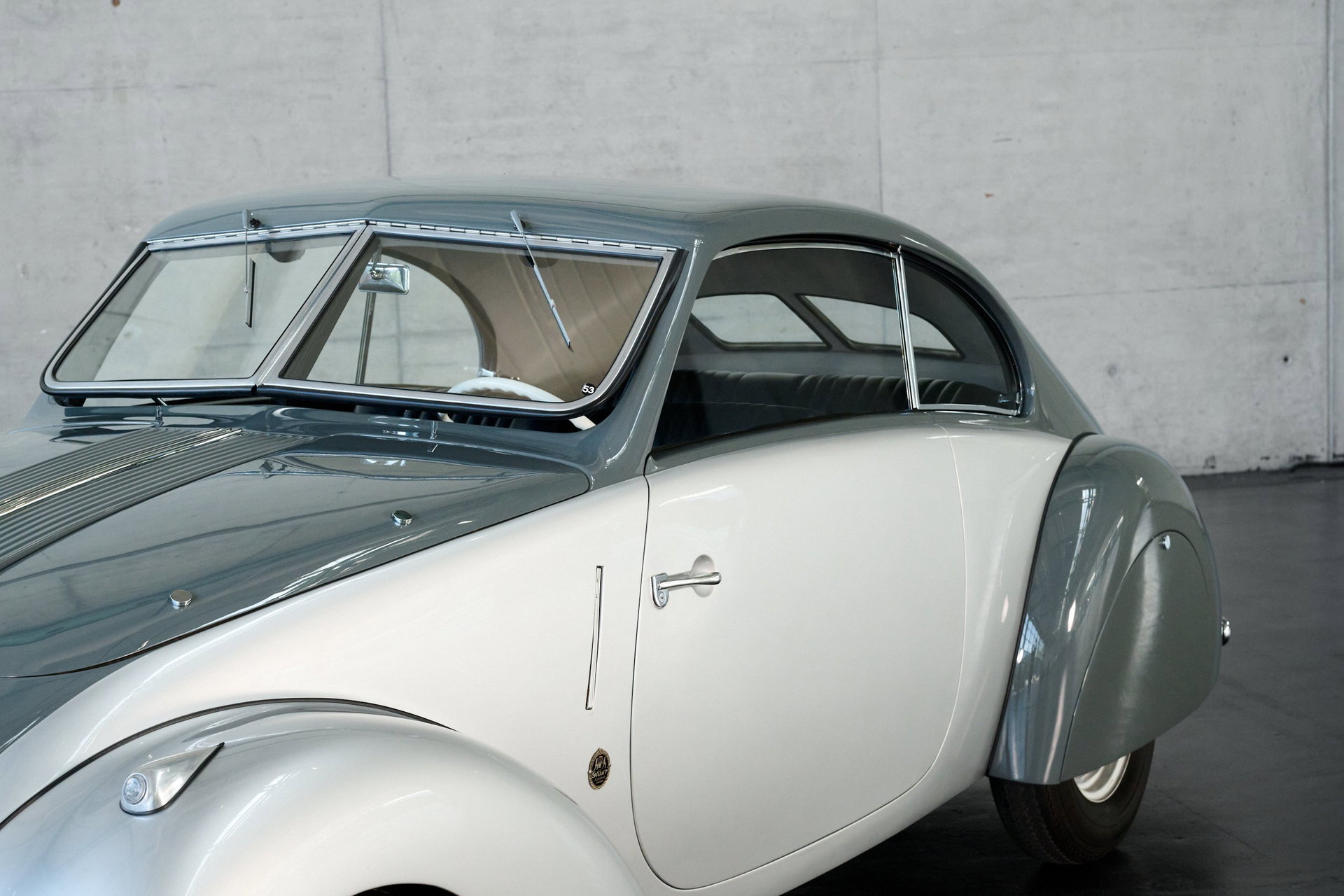
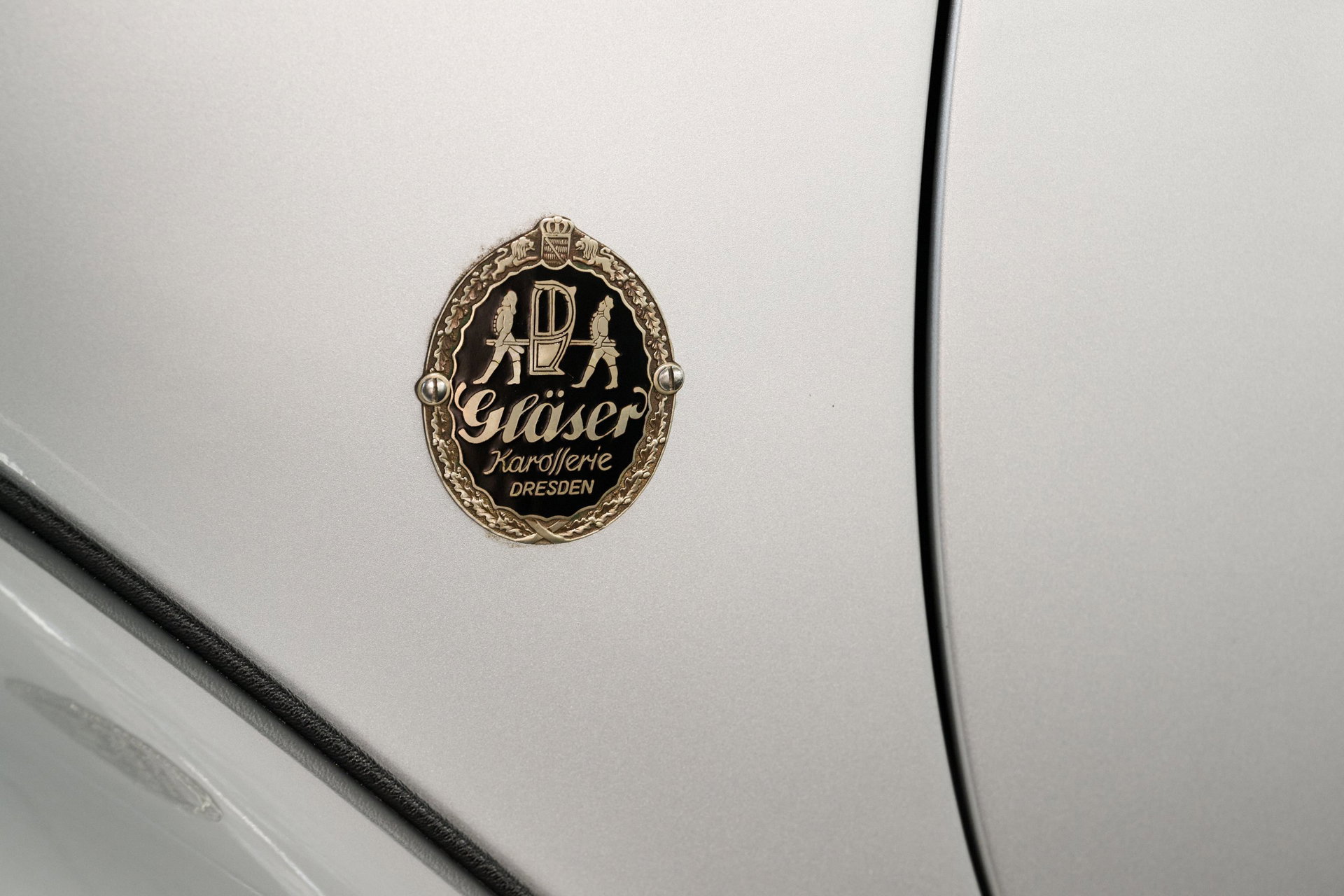
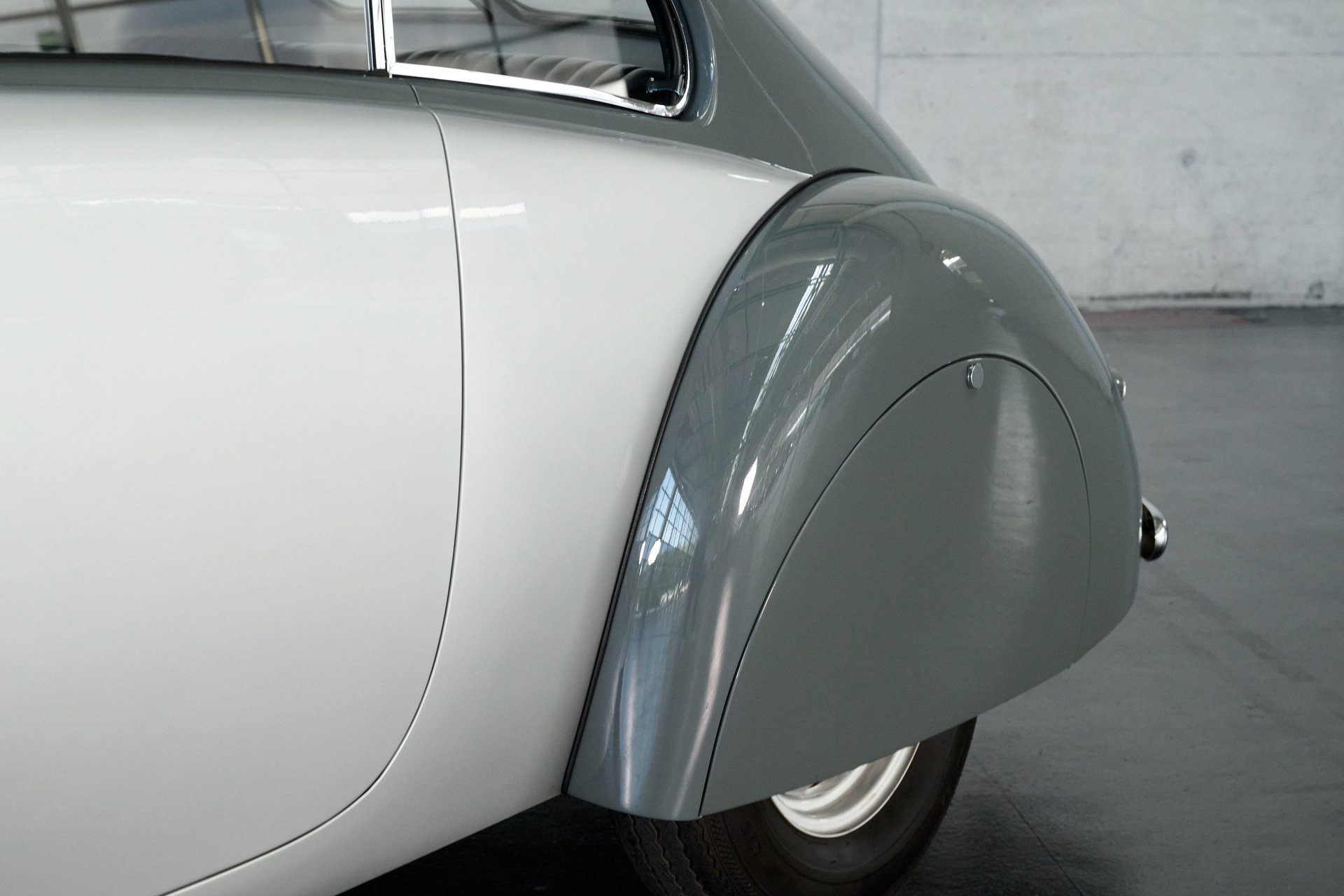
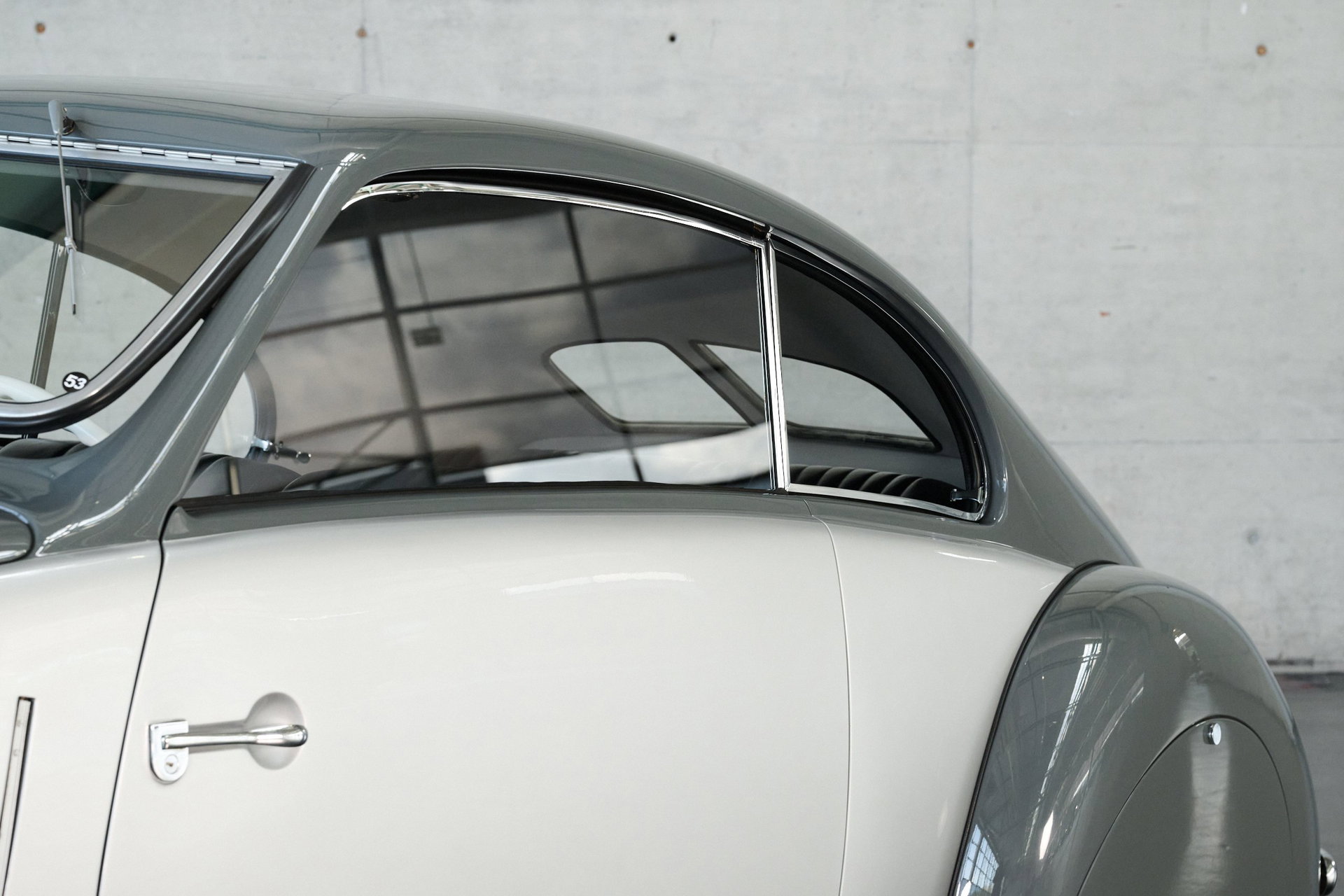
Alongside Buhne in Berlin, Adler turned to Gläser in Dresden, then one of the foremost names in elegant bespoke coachwork. At 1.50 metres, the two-door Sports Saloon was considerably lower than the standard saloon, slightly longer and featured fully enclosed rear wheelarches. The result was less a saloon than a streamlined Coupé, one that looked ready to leave the air behind without further discussion. Inevitably, things became somewhat tighter inside. Beauty demanded sacrifices even then.
Only a tiny number of the Sports Saloons were bodied by Gläser; examples with coachwork by Buhne are also encountered in period literature and among surviving cars. The frequently quoted figure of just two Gläser-bodied cars cannot be established beyond doubt from readily accessible sources. What is certain, however, is that the Sports Saloon itself was an exceptional rarity.
At 8,750 Reichsmark, it was also considerably more expensive than the standard saloon at 5,750 Reichsmark. In return, the buyer received one of the most fascinating German touring cars of its era.
The story of this Sports Saloon begins around the year 2000 with an idea. A museum is said to have approached a renowned restoration company in North Rhine-Westphalia to ask whether a Sports Saloon could be reconstructed from an Adler 2.5 Litre saloon, as none of the Gläser special-bodied cars were believed to have survived. It was an appealing idea, as intricate as it was ambitious, particularly as only a handful of photographs existed.
As the chassis frames of the two cars were identical, reconstruction began from the A-pillars rearwards. The doors were altered and the rakish tail recreated. It should be remembered that there had been both a Buhne and a Gläser interpretation. The standard of workmanship appears extremely high and the project as a whole remarkably successful.
Mechanically, the Sports Saloons differed primarily through their triple-carburettor arrangement. In this respect, the reconstruction retained the standard saloon specification. The result is a unique motor car, created in an effort to preserve the memory of what appears to be a lost masterpiece of the coachbuilder’s art.
When the Adler was offered to the consignor in 2008, he seized the rare opportunity. The car has hardly been driven since. The Sports Saloon was loaned to a renowned museum and maintained as part of the consignor’s own collection.
Naturally, a reconstruction is not an original, nor does it pretend to be. What has been created here, with considerable commitment and craftsmanship, is a breathtaking motor car: a homage to a sensation from 1938. Any prospective buyer should keep these facts firmly in mind – together with the reality that undertaking such a project today would be virtually unaffordable.
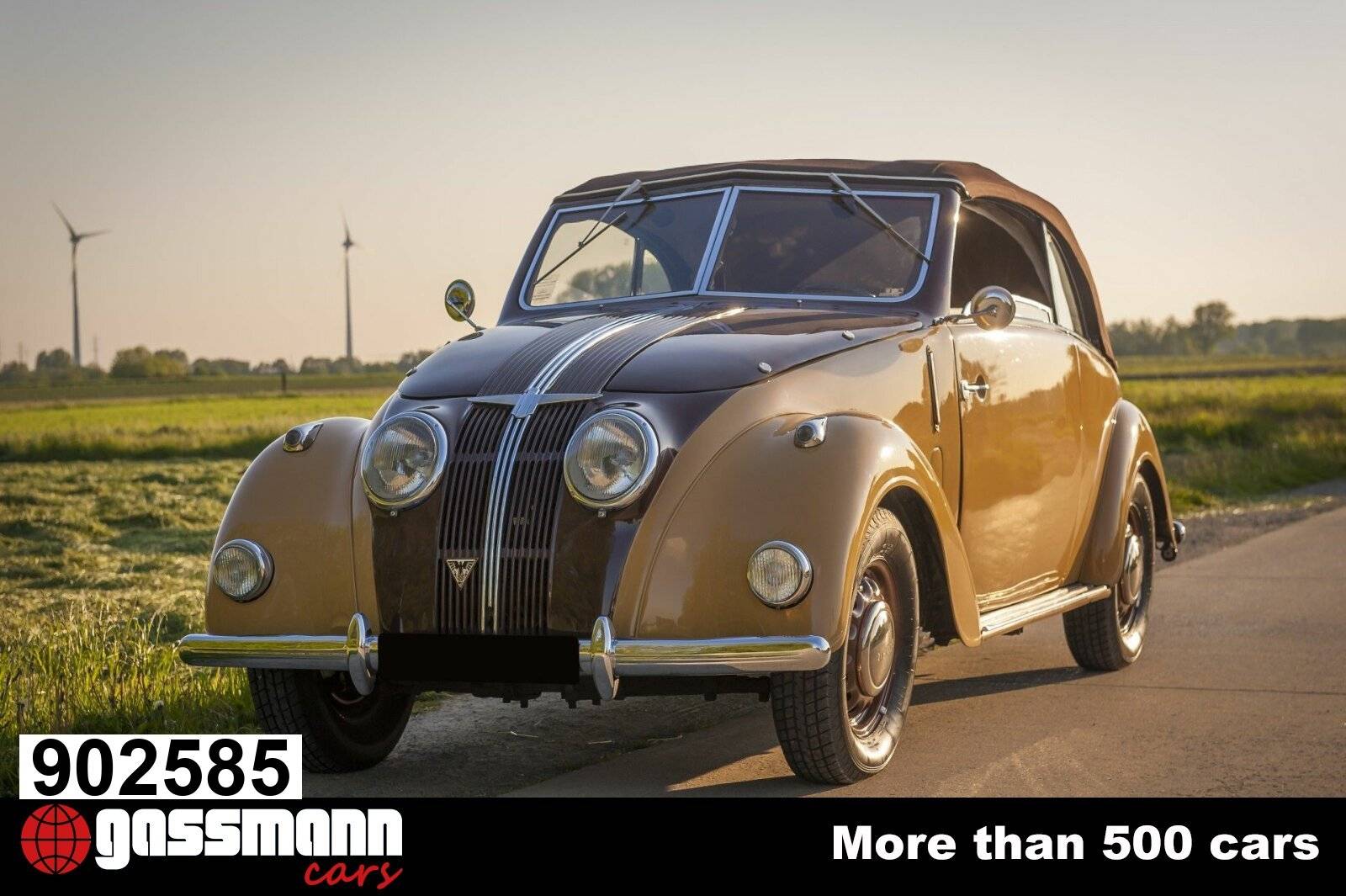 1938 Adler 2,5 Litre