1949 Tatra T87 - Type 87
1949 · Salzburg, Oostenrijk · via Classic Driver
Veiling sluit 18 oktober 2026, 01:59
Bekijk op Classic Driver → Open in de app
Gegevens
| Merk | Tatra |
|---|---|
| Model | T87 Type 87 |
| Bouwjaar | 1949 |
| Stuur | Links |
| Locatie | Salzburg, Oostenrijk |
| Verkoper | Humer, Granner & Co GmbH (veiling) |
| Bron | Classic Driver |
| auction | https://www.classicdriver.com/en/auction/humer-granner-co-gmbh-classic-car-auction-17102026 |
| Op Oudjes.xyz sinds | 5 oktober 2026 |
| Laatst gezien | 8 oktober 2026, 06:16 |
Beschrijving
Hans Ledwinka’s greatest achievement
A modern automotive icon
A pioneer in aerodynamics in its day
Restored by Dr Tatra Aleš Maralík
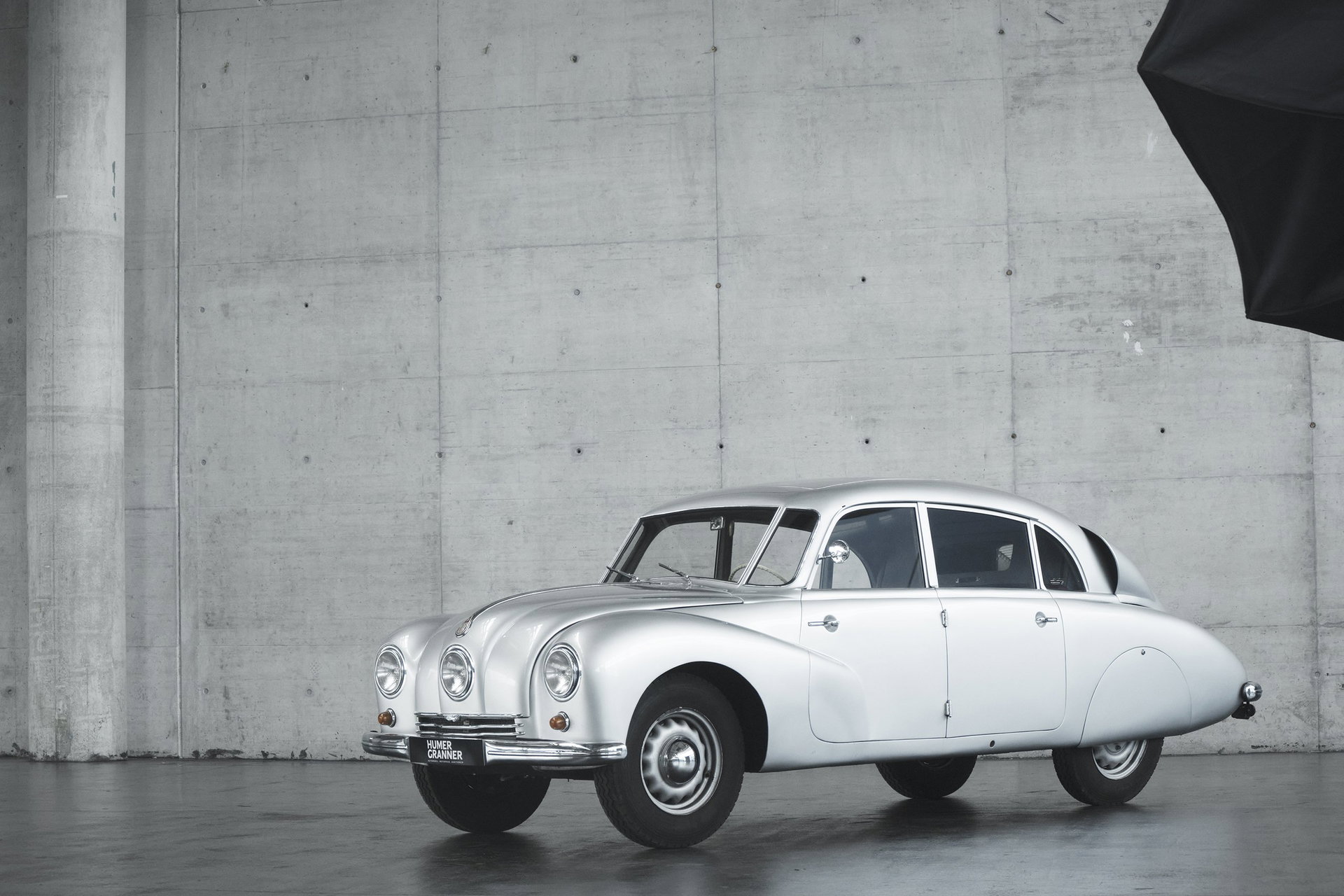
In Kopřivnice, they were already thinking differently about cars while elsewhere radiators were still standing upright in the wind. The man chiefly responsible was Hans Ledwinka, chief designer since 1921 of the »Nesseldorfer Wagenbau-Fabriks-Gesellschaft«, as Tatra had once been called. Born in Klosterneuburg, Ledwinka had long since created his own technical universe at Tatra, with backbone chassis, swing axles and air-cooled engines. In the early 1930s, Paul Jaray added streamlining to the mix. The former Zeppelin aerodynamicist knew, after all, that air was good for more than just breathing.
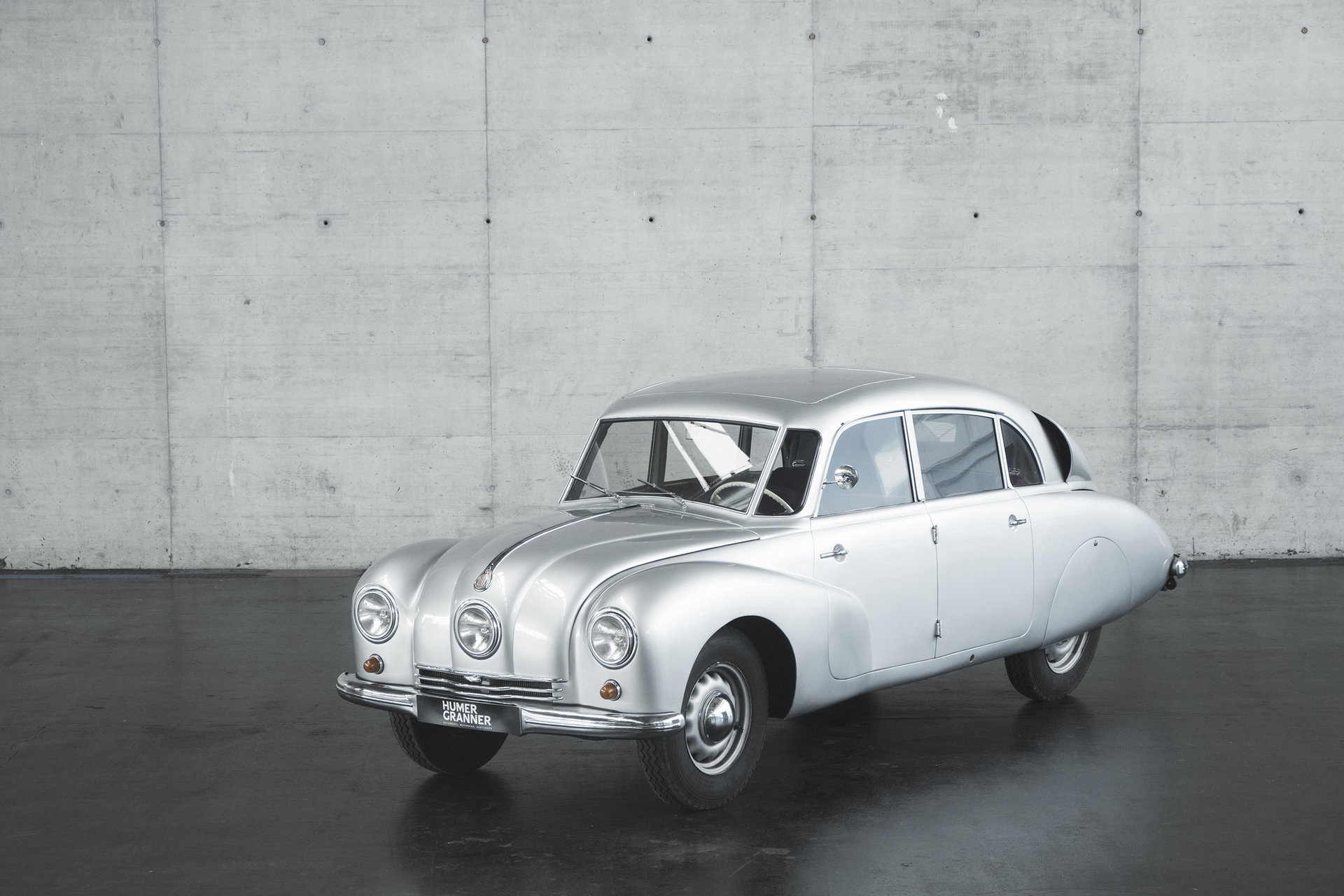
In 1934, Tatra presented the Type 77. Slippery through the air, with an air-cooled V8 in the rear and a mighty fin on top of it, it looked like a car from a future that was taking its time to arrive. Technically, it was no less extravagant. The trouble was, the T77 was too big and too heavy. The outer skin of the more than five-metre-long car was still nailed to a wooden framework. Progress had its weight even then. And it was expensive. Too expensive to become a success.
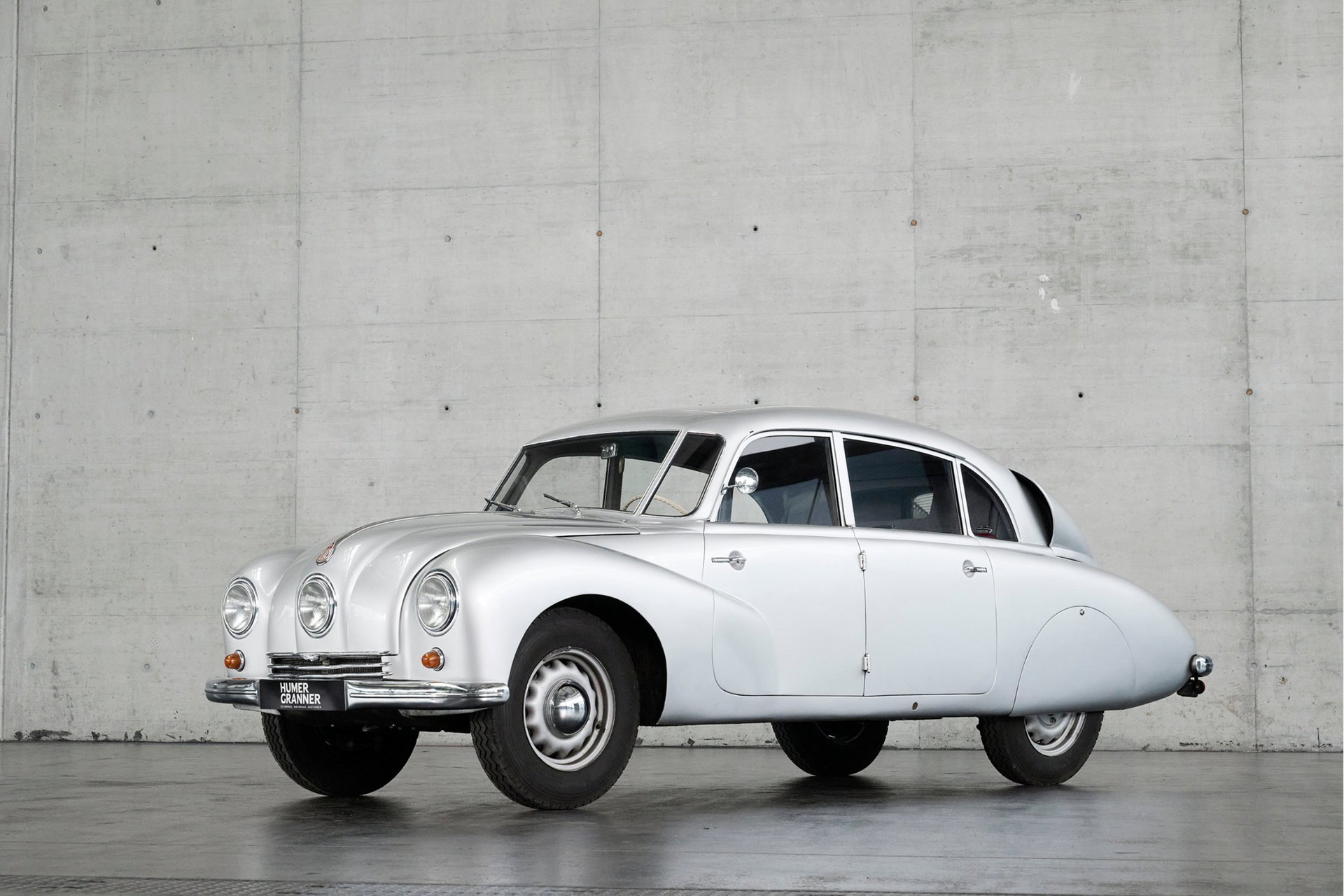
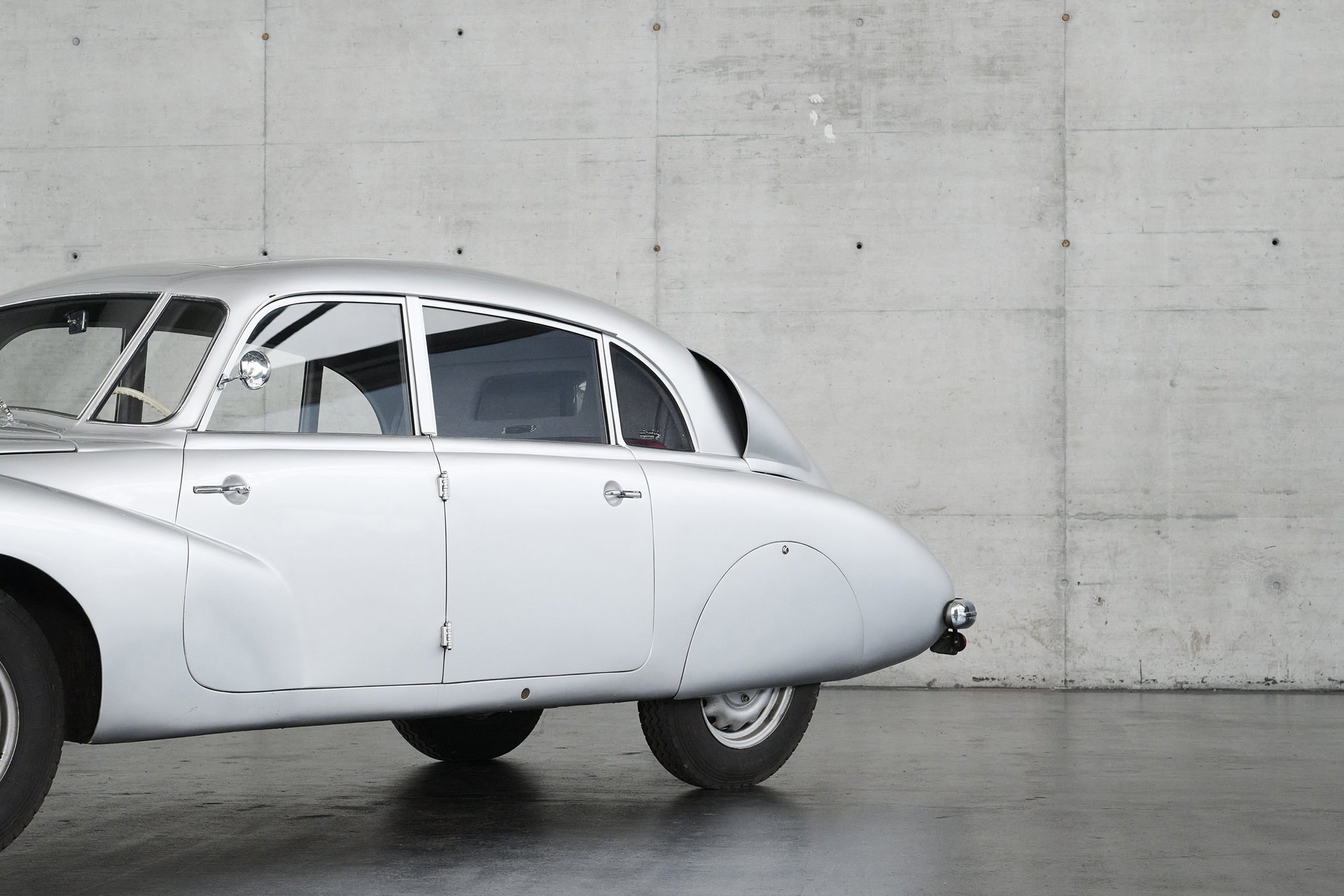
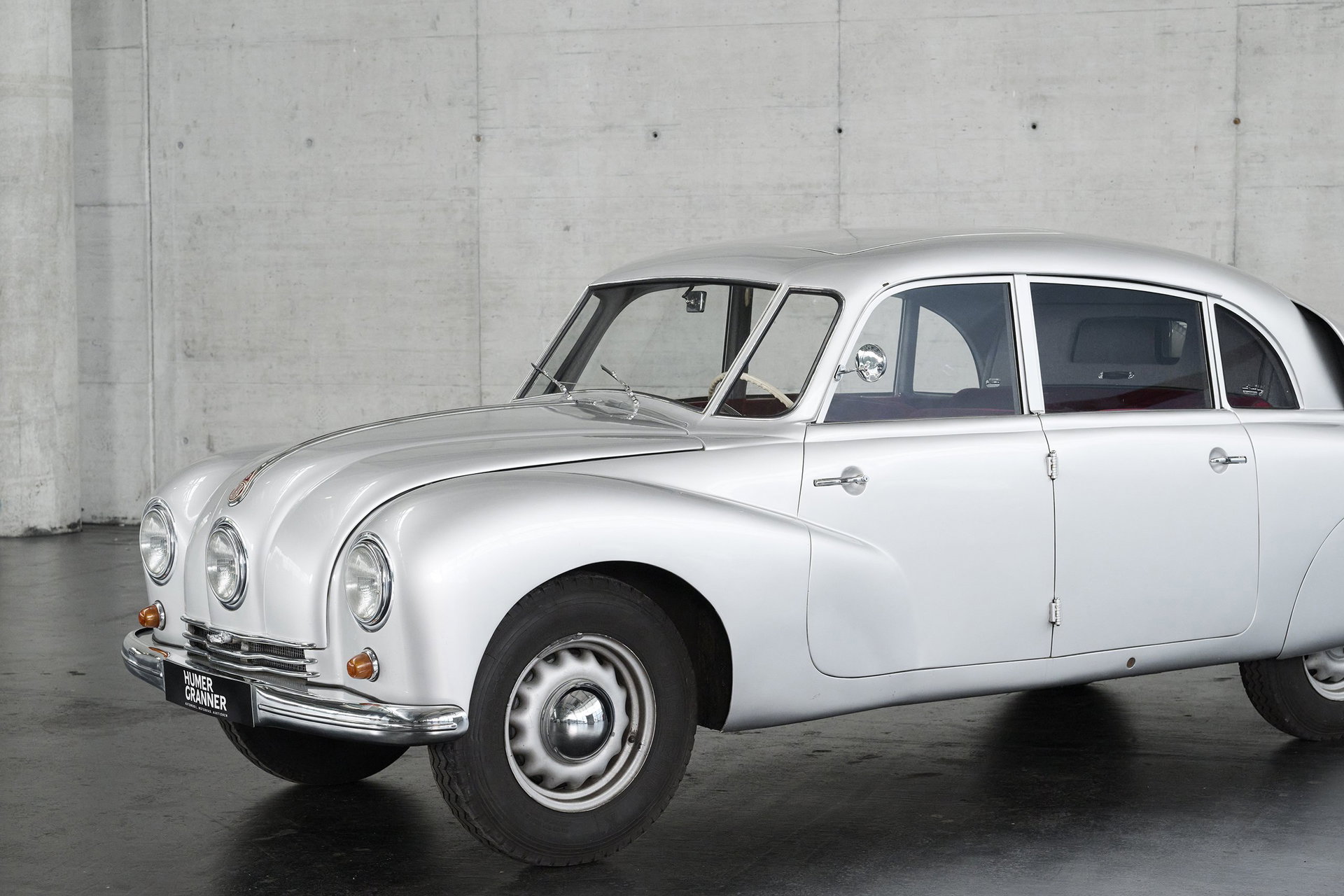
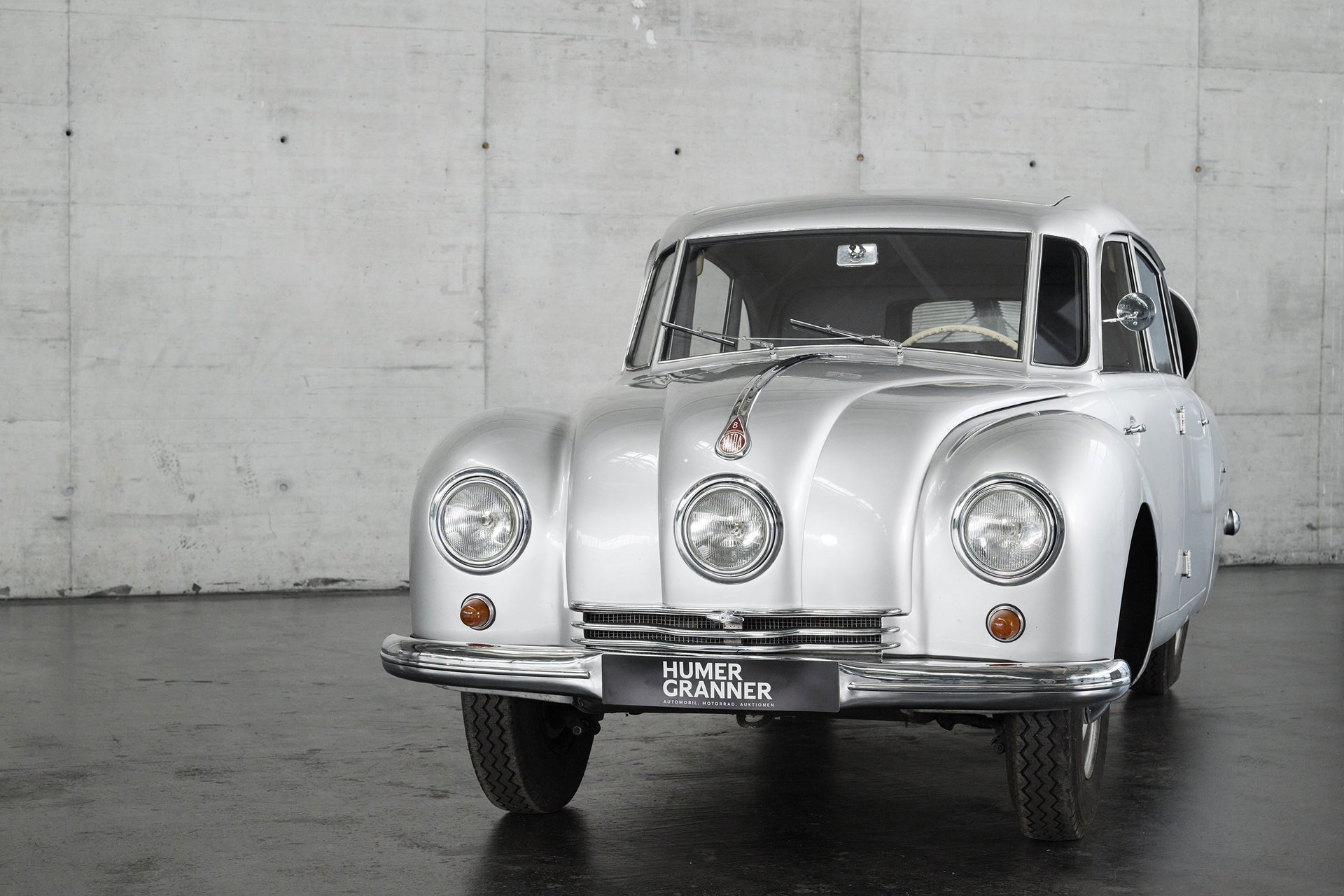
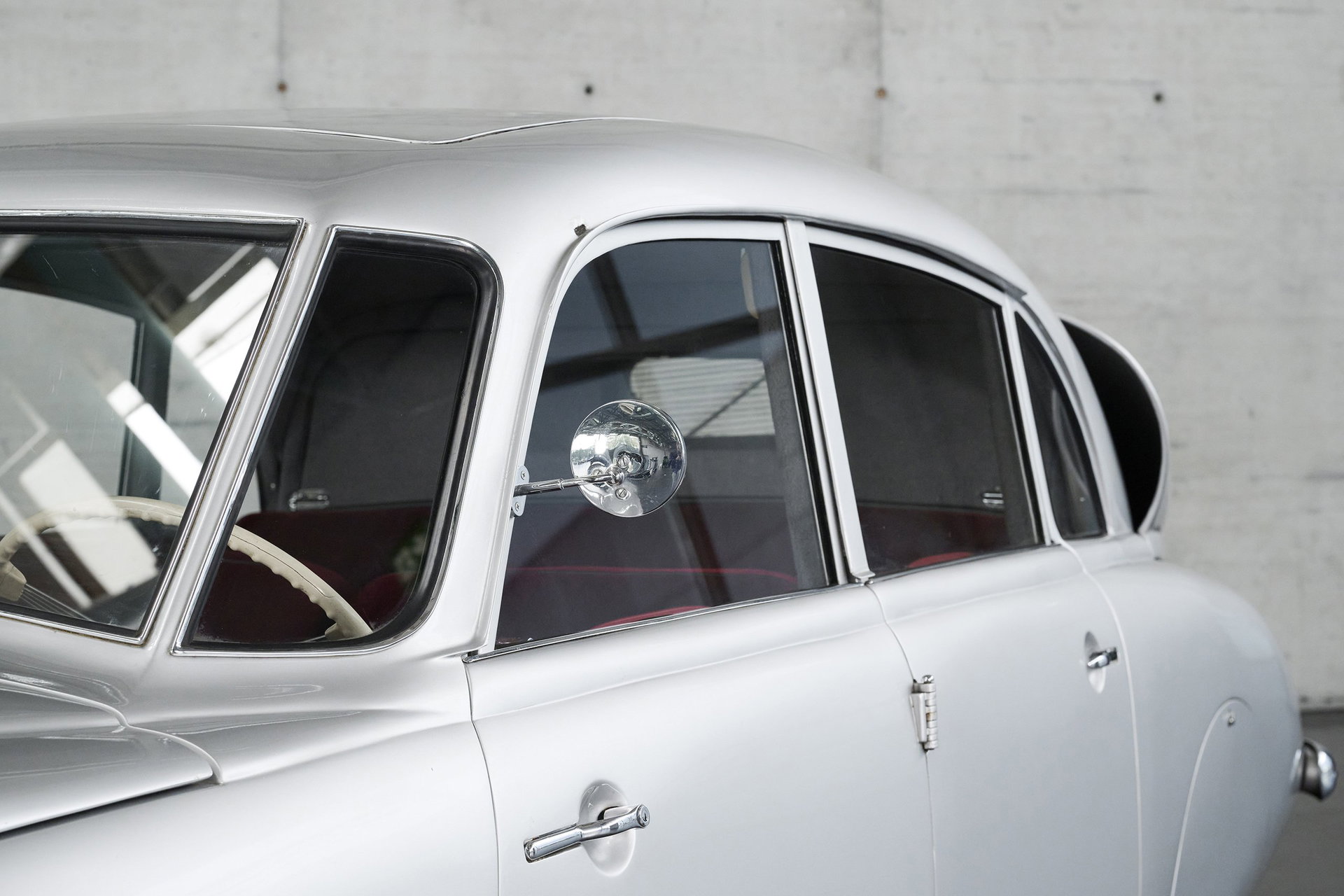
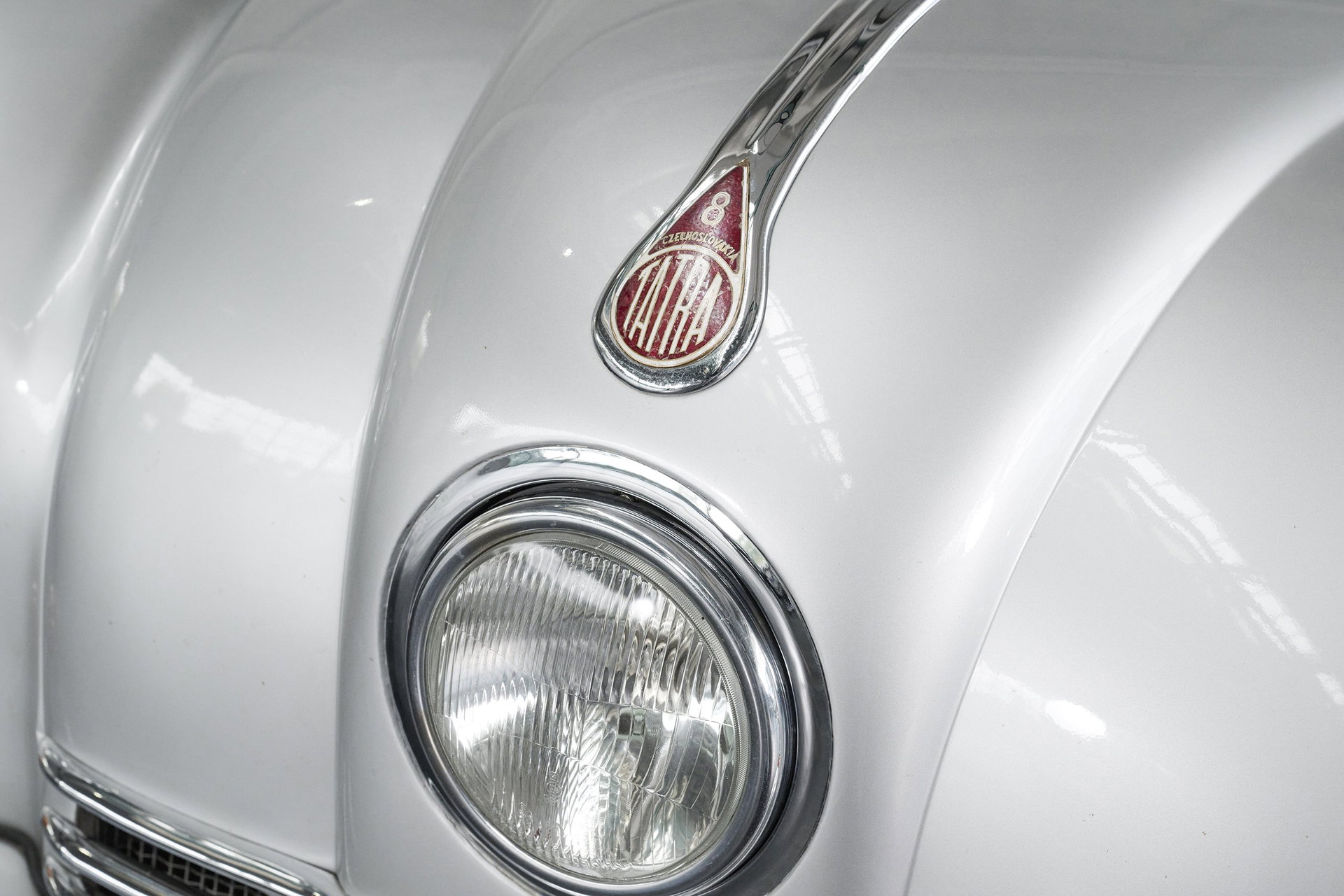
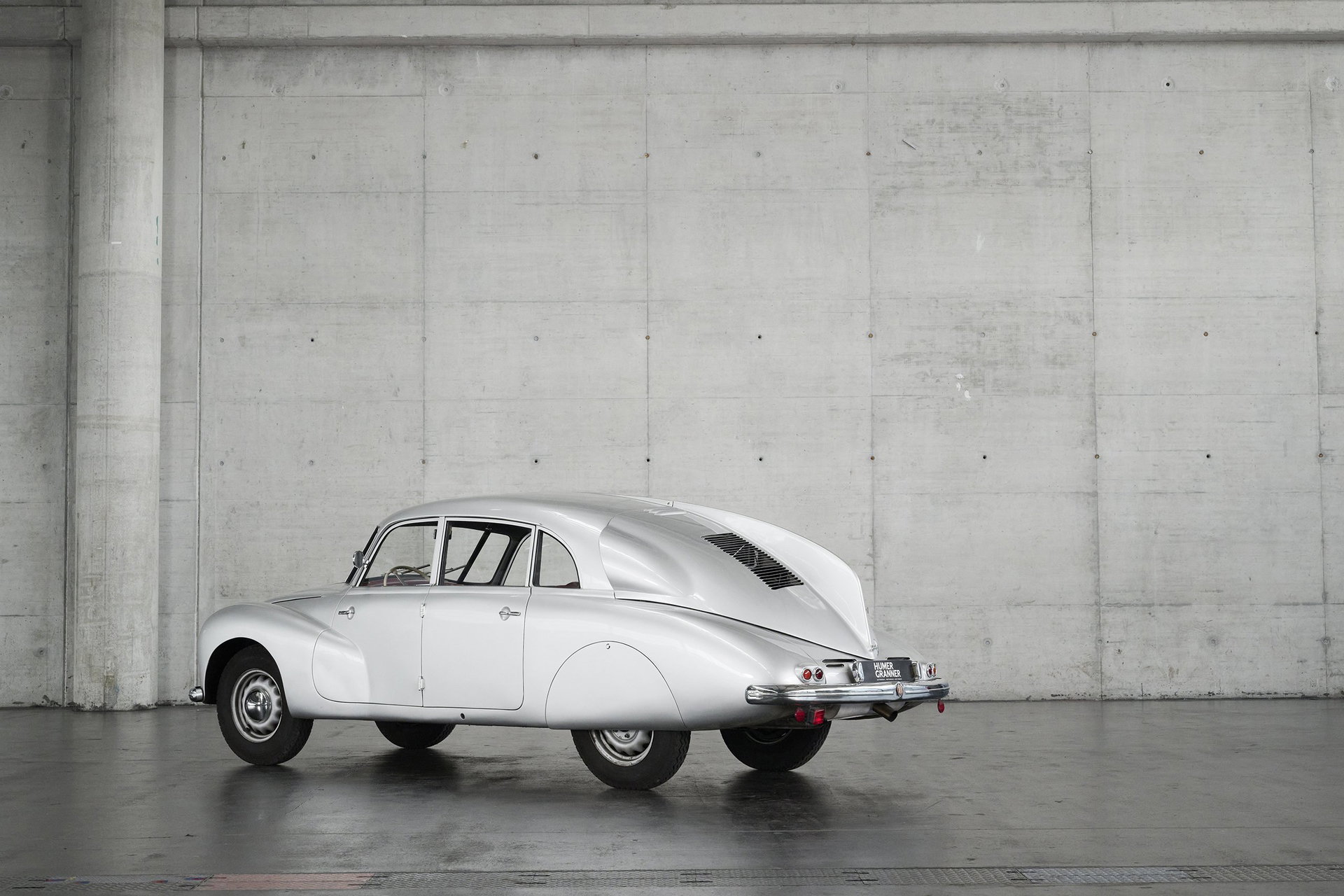
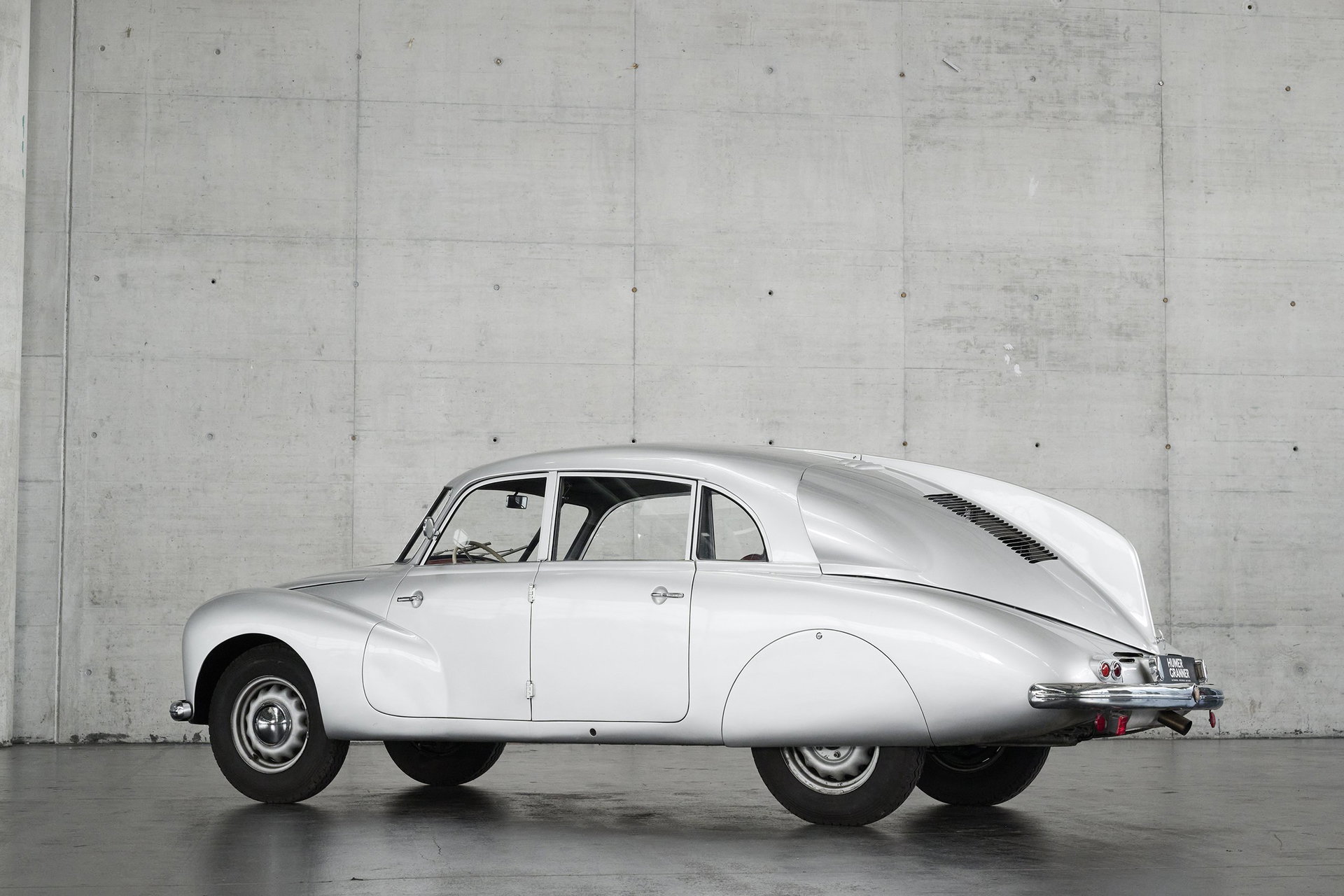
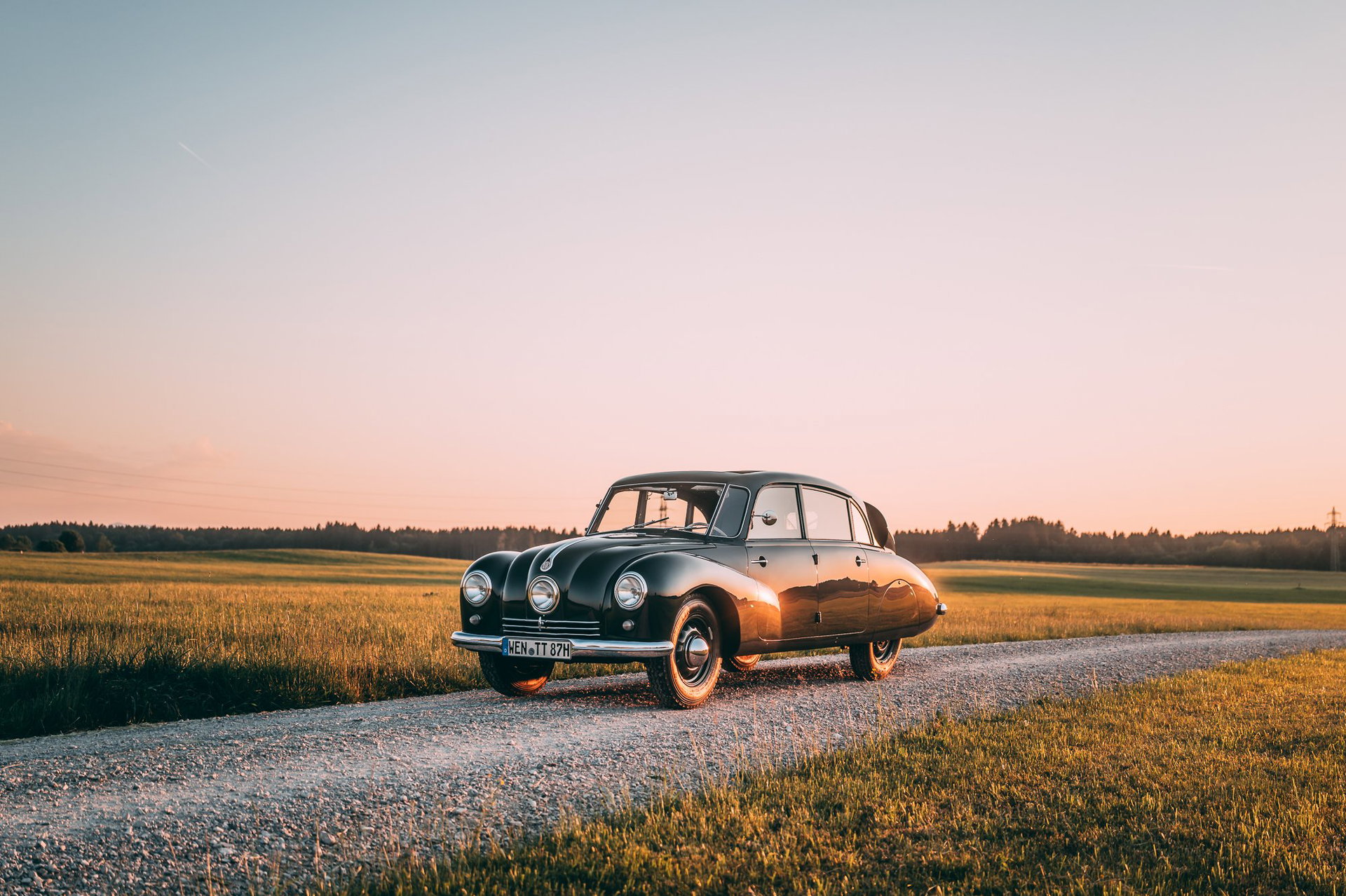
Ledwinka knew it and, together with Erich Übelacker, set about the next evolutionary step. In 1936 came the Tatra 87. A little shorter, considerably lighter and further refined in the wind tunnel, it retained all the ingredients that had made its predecessor so extraordinary. Its unitary steel body tapered towards the rear like a teardrop, three headlamps stared ahead and the distinctive dorsal fin split the tail. Beneath it, where other cars kept their luggage, sat an air-cooled light-alloy V8.
From 2,968 cc, the eight-cylinder engine produced around 75 hp. That sounds modest, and it was, but thanks to its aerodynamics it was enough to push the almost one-and-a-half-tonne Tatra to around 160 km/h. In the late 1930s, that was damned fast. Having the engine behind the rear axle did, however, result in handling that demanded respect. Throw a T87 into a corner too quickly and you received a lesson in physics without having booked one.
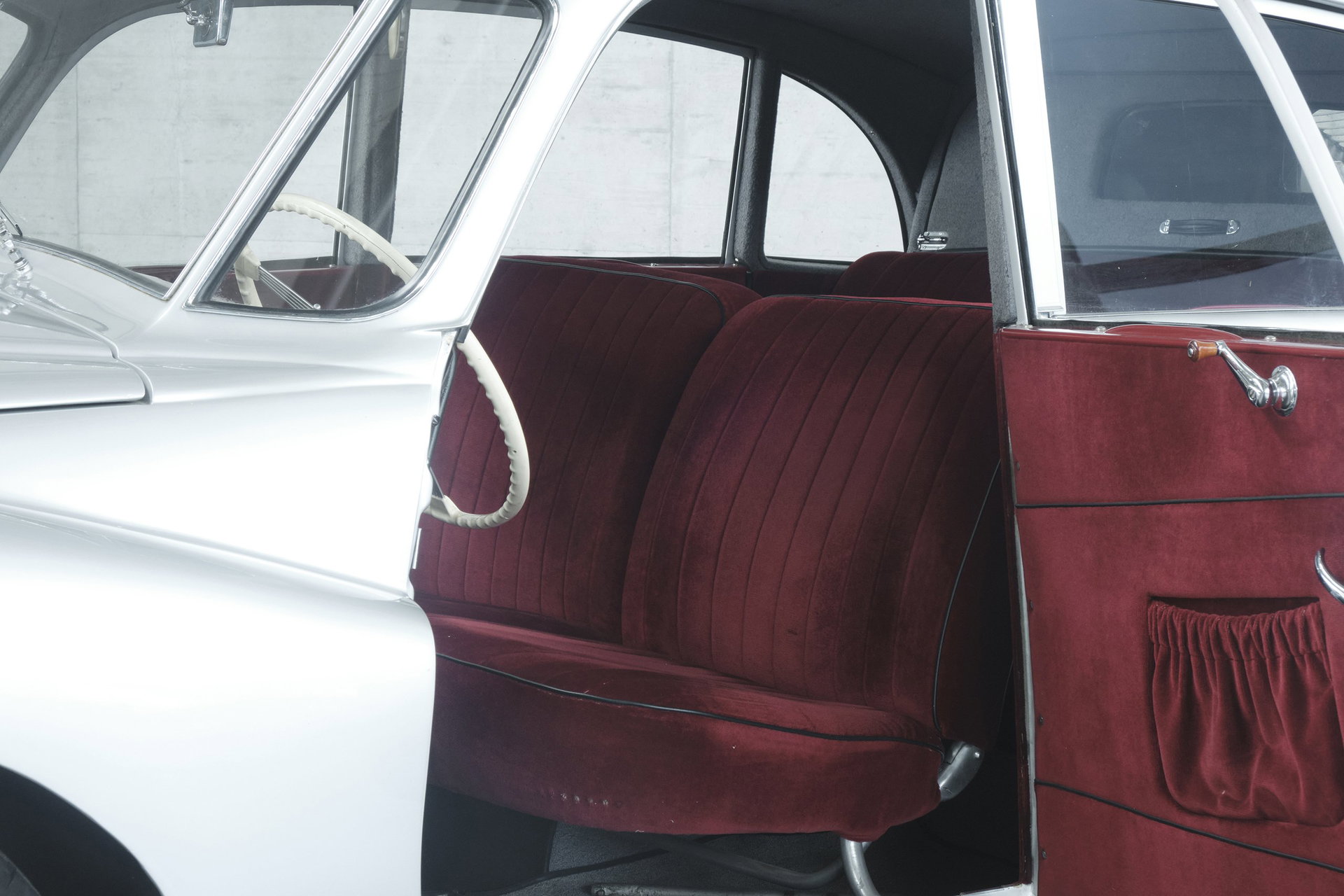
Things were no less peculiar inside. Driver and passengers sat well forward, while the engine did its work right at the back. Between the two there was a surprising amount of room for people and luggage. The T87 was therefore no technical exercise, but a fully fledged long-distance saloon – just one that looked as though somebody had put a Zeppelin on four wheels.
The war interrupted its story, but did not end it. After 1945, production of the T87 resumed and its appearance was gently modernised. By 1950, only a little over 3,000 had been built.
Its shape alone was not what made it famous. In 1947, Jiří Hanzelka and Miroslav Zikmund set off in a T87 on their legendary journey through Africa and Latin America, making it famous around the world. Hardly any other car could have suited the task better. The Tatra 87, after all, had already travelled a long way while standing still – ahead of its time.
This particular Tatra Type 87 was restored by the man they called »Doctor Tatra« in the Czech Republic. For Aleš Maralík (1932–2024), automobiles from Kopřivnice – whether Type 87, Tatraplan or 603 – were a central part of his life for decades. No one restored more of them, and nobody knew them better. It took years for the car’s last Austrian owner to persuade Maralík to sell him one of his marvels on wheels. In 2010, he finally succeeded.
There was, however, still some paperwork standing between man and machine. An official export permit was required, because a Type 87 is considered protected cultural property in the Czech Republic. Quite rightly, too. It was Ledwinka’s vision of the future and, with hindsight, became an icon of modernity. Even today, it fascinates from every angle, quite simply because it is unlike anything that came before it – or after.
After a Sleeping Beauty slumber of more than ten years, the V8 recently fired up again at the first attempt. A careful inspection before returning it to the road would nevertheless be advisable. Because however much this streamliner draws the eye like a work of art, it was still made to be driven. And that is when it reveals just how fascinating it really is.
 1950 Tatra T87