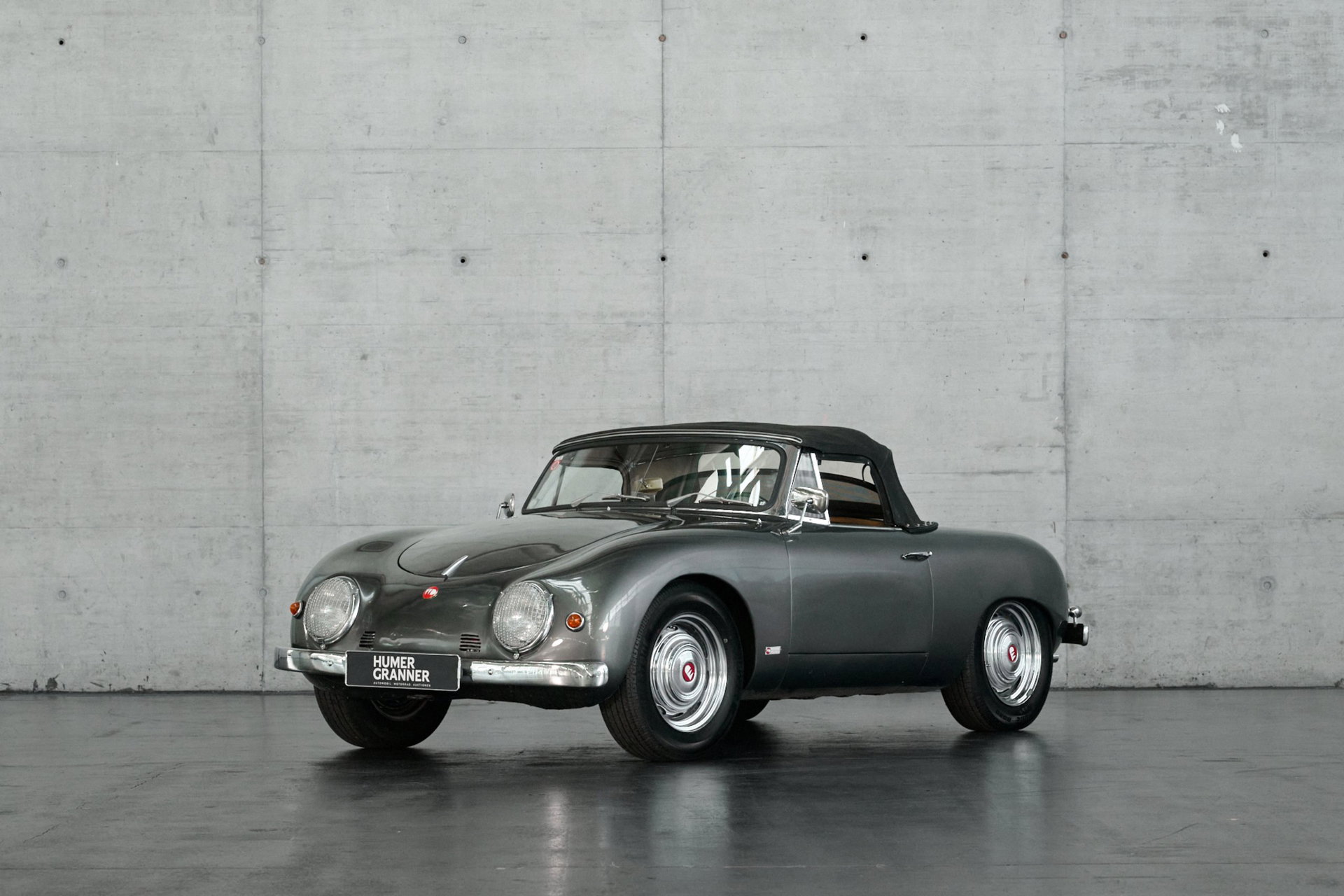
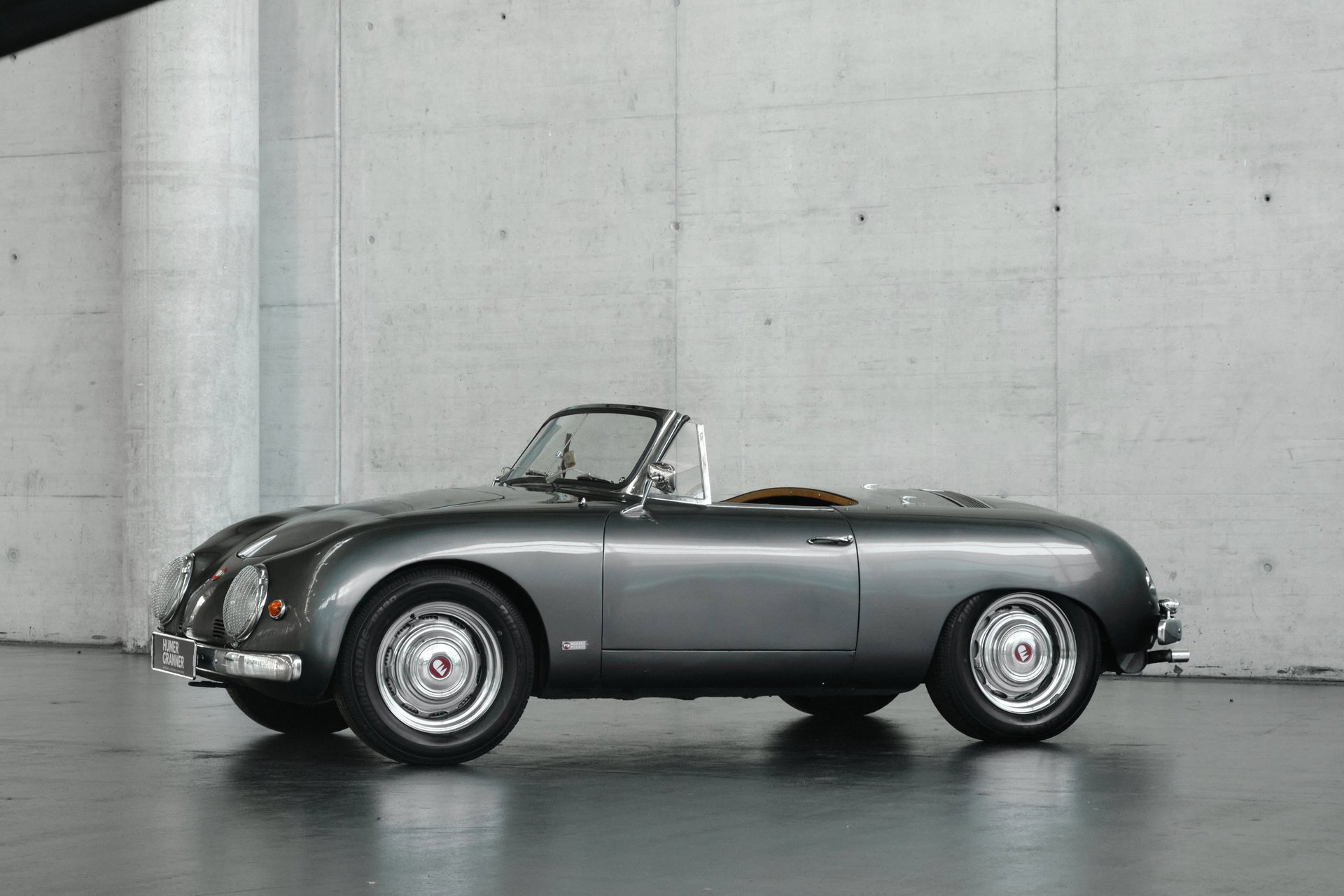
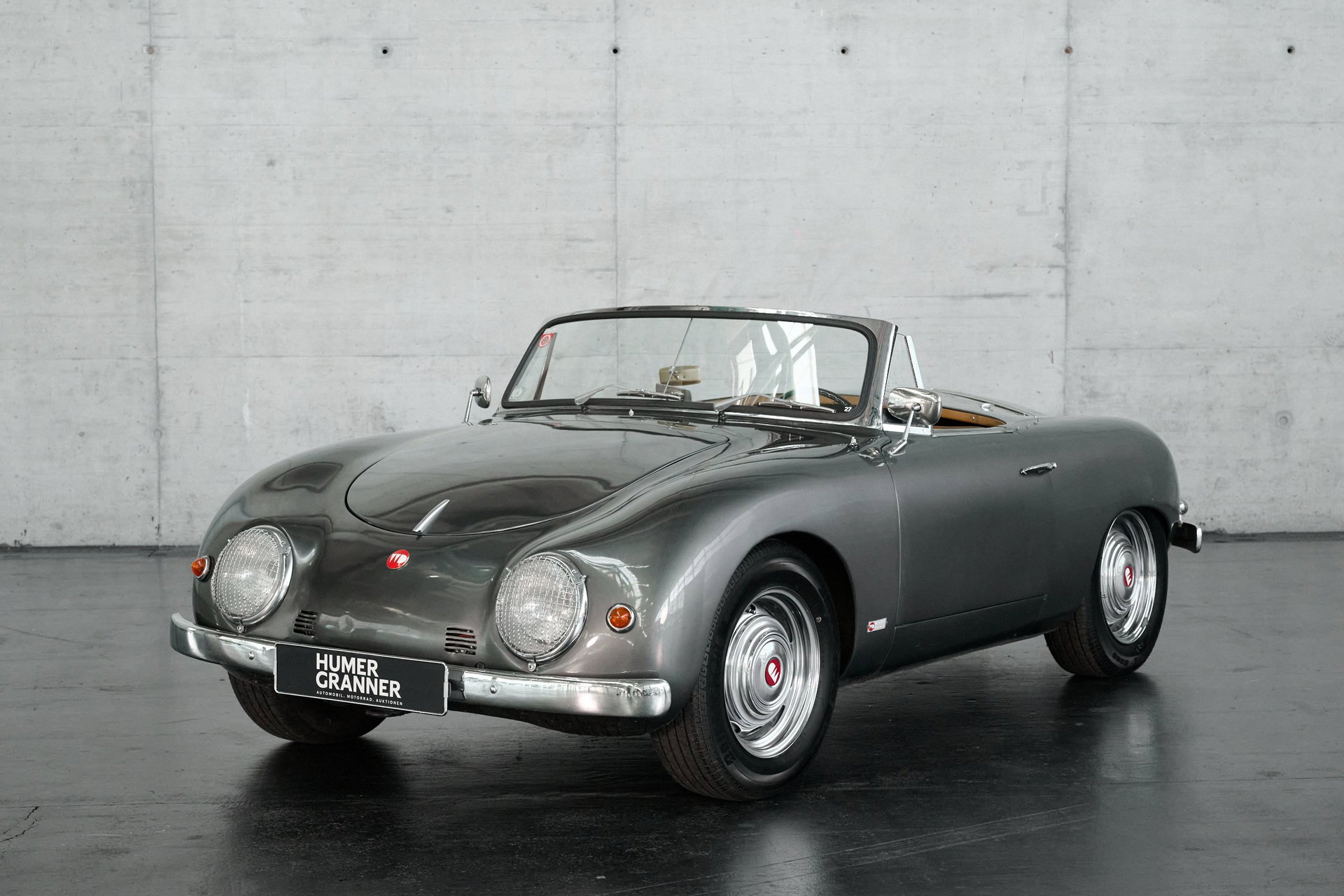
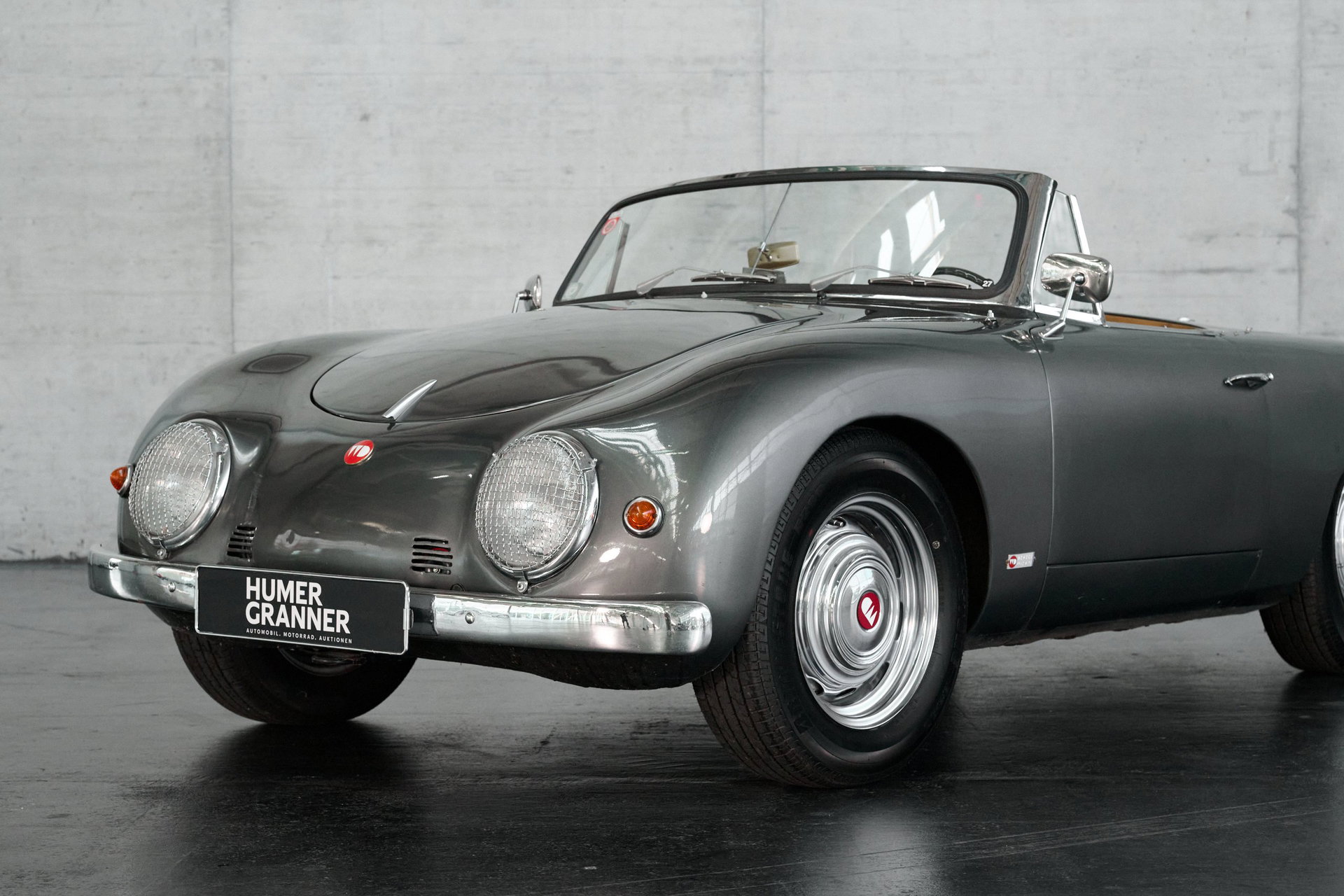
1957 Denzel 1300 - 1300 Serien Super
1957 · Salzburg, Oostenrijk · via Classic Driver
Veiling sluit 18 oktober 2026, 01:59
Bekijk op Classic Driver → Open in de app
Gegevens
| Bouwjaar | 1957 |
|---|---|
| Stuur | Links |
| Locatie | Salzburg, Oostenrijk |
| Verkoper | Humer, Granner & Co GmbH (veiling) |
| Bron | Classic Driver |
| auction | https://www.classicdriver.com/en/auction/humer-granner-co-gmbh-classic-car-auction-17102026 |
| Op Oudjes.xyz sinds | 5 oktober 2026 |
| Laatst gezien | 7 oktober 2026, 18:16 |
Beschrijving
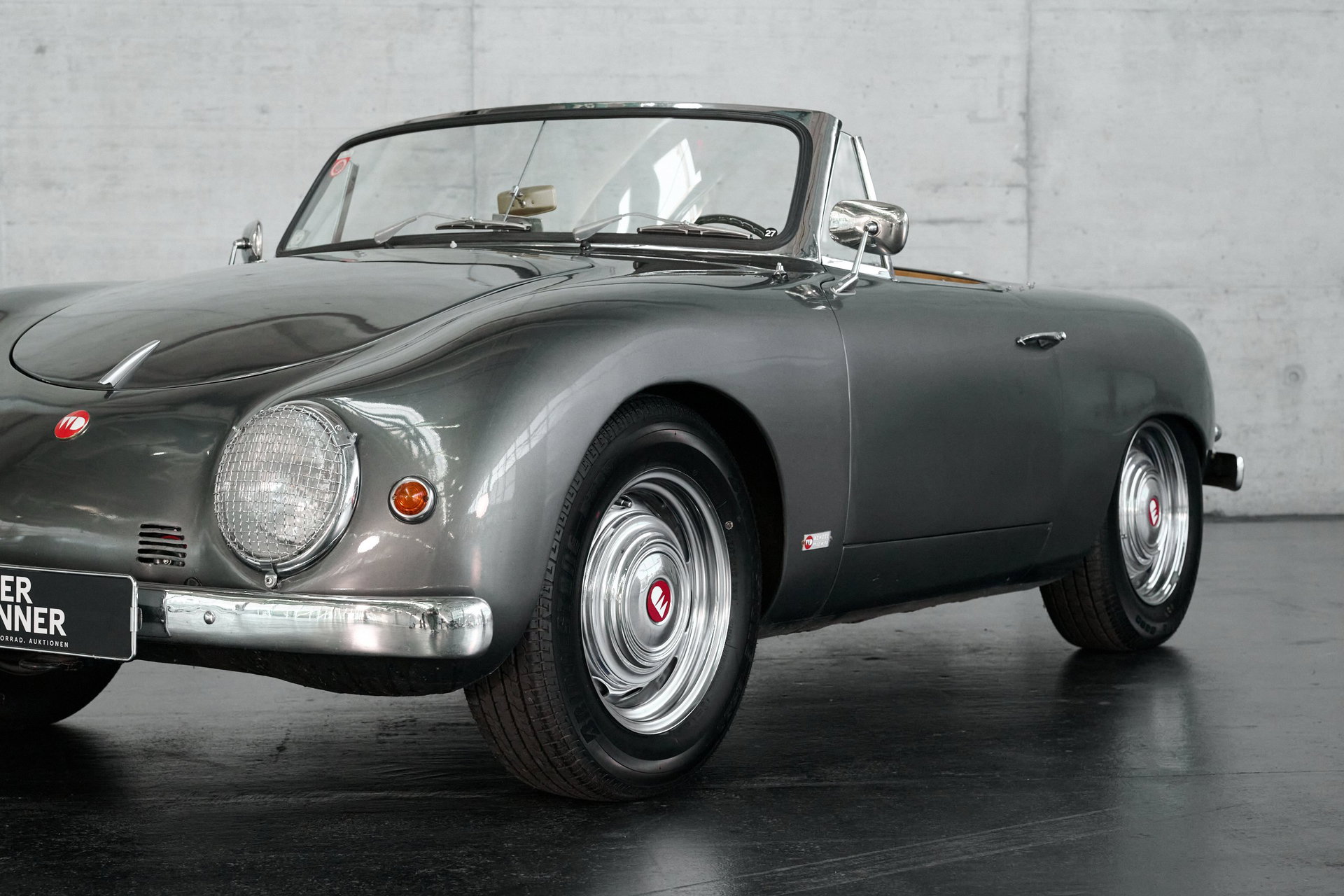
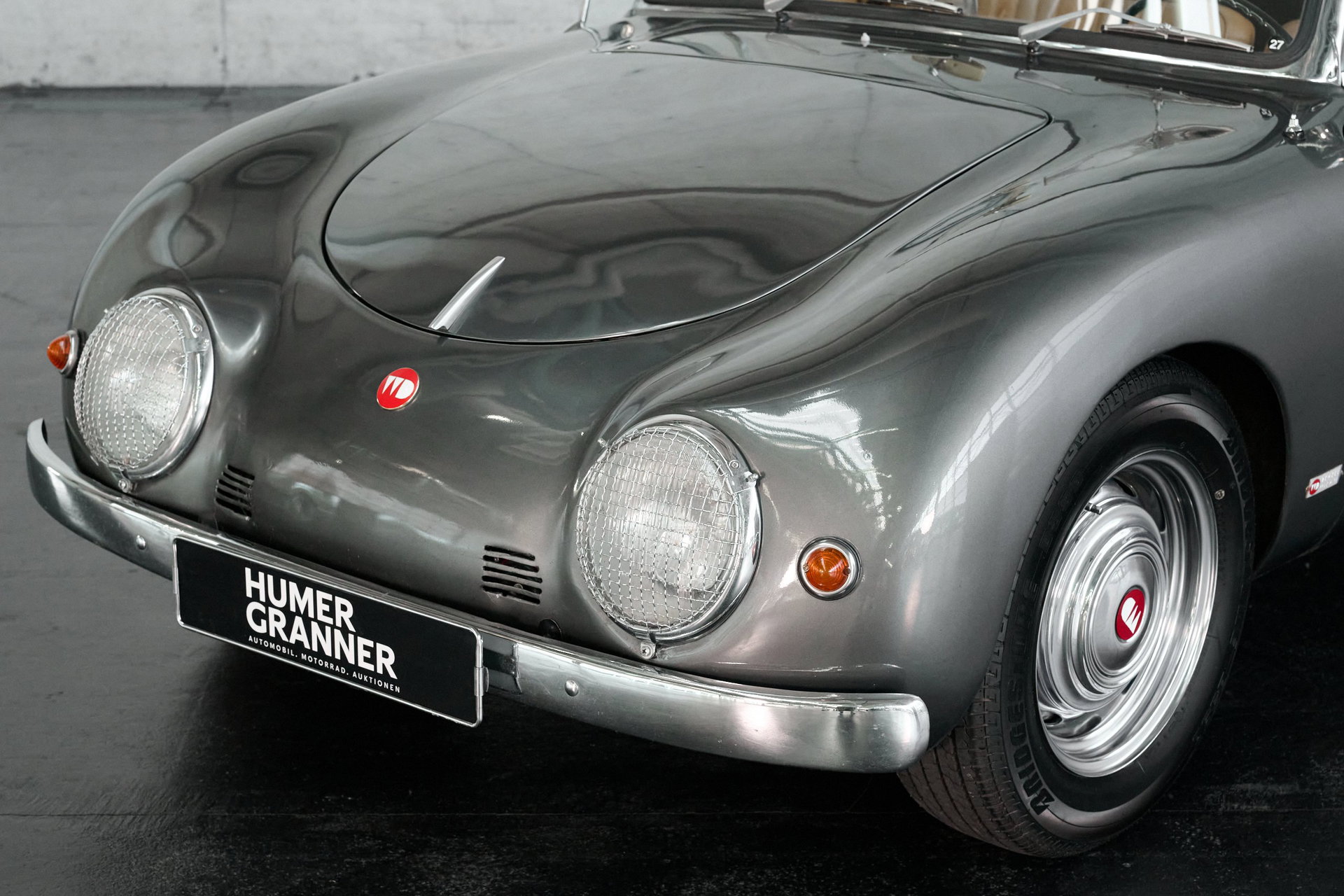
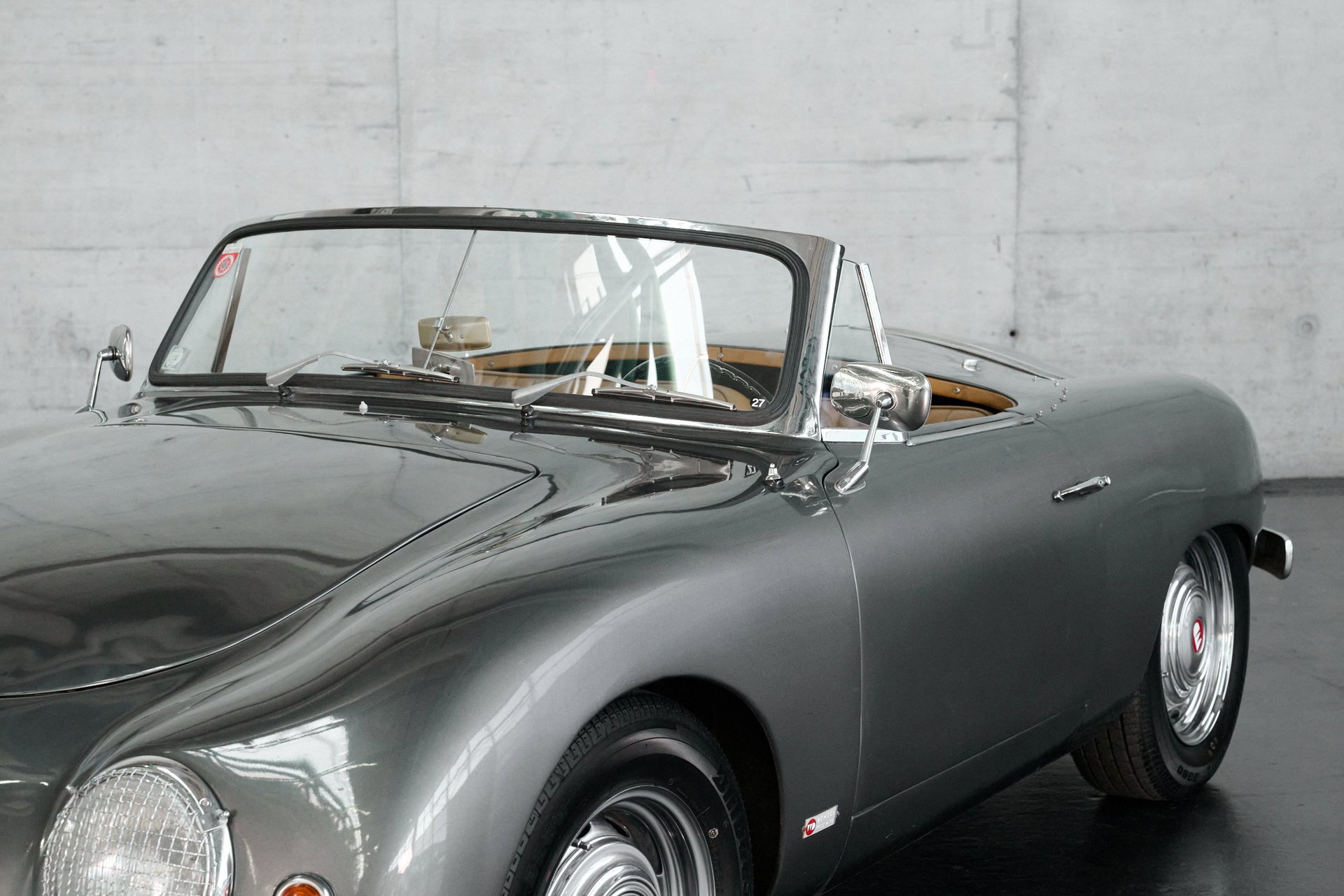
The 52nd of approximately 70 Denzel sports cars built
One of only 35 examples known to survive to this day
With a recognised Denzel expert for the last25 years
The only Portuguese Denzel never used in competition
Accompanied by a correctly built 1300 Denzel engine
A piece of Austrian automotive history
Austria and motor manufacturing were once a combination to be taken quite seriously. Austro-Daimler, Gräf & Stift, Steyr – names that carried considerable weight far beyond the borders of the young republic. Then came economic crisis, war and destruction, and after 1945 practically nothing remained of the industry that had once existed. Anyone who owned a car at all was doing well. Anyone who wanted to build one had to be either exceptionally optimistic or called Wolfgang Denzel.
Denzel was amply endowed with both qualities. Born in Graz in 1908, he was an engineer, racing driver, entrepreneur, yachtsman and generally one of those people for whom a single field of activity was apparently never enough. He had already set up on his own in Vienna in 1934. After the war, he began with what was available. And what was available included the remnants left behind by the Wehrmacht. The Allies granted Denzel a so-called Bergeschein, permitting him to recover abandoned military equipment. Among it were Volkswagen Kübelwagen and Schwimmwagen. Others might have turned them into spare parts. Denzel turned them into sports cars.
He was not entirely alone in the idea. At much the same time, Ferdinand Porsche was busy in Gmünd in Carinthia developing a small, lightweight sports car from Volkswagen components. Denzel and Porsche even knew each other personally. According to the recollections of Denzel’s son Peter, the two had dealings with one another in France during the war and for a time pursued plans to collaborate on a sports-car project. Denzel was to manufacture engine components, while the body would have been built in Gmünd. Nothing came of it. Porsche built his 356, Denzel built his own car. Austria was apparently big enough for two sports-car manufacturers back then. At least for a while.
The first Denzel was completed in 1948. At this stage it was less a car in its own right than a Volkswagen that had been very thoroughly rethought. The chassis came from VW, as did the engine, gearbox and major parts of the suspension. Denzel lowered the car, coaxed a little more power from the 1.1-litre flat-four and clothed it in a lightweight open body. Since aluminium and good-quality body steel were not exactly sitting on the shelves in post-war Austria, the earliest bodies were made from a textile-reinforced synthetic material known as Wekavia-Jute. They were built by the Kittelberger boatyard in Bregenz. Improvisation in those days was not a virtue. It was simply a necessity.
The first car was registered in the autumn of 1948. Its colour soon earned it the nickname “Blauer Blitz” – Blue Lightning. Several more followed. They were light, spartan sports cars which could hardly deny their technical relationship to the Beetle, but dynamically wanted very little to do with it. Denzel himself made sure they did more than merely impress outside Viennese coffee houses. He raced and rallied them, preferably wherever the road went uphill, downhill and around as many corners as possible.
Motor sport was far more than advertising. It was a development department operating under rather more demanding conditions. Whatever survived an Alpine Rally could safely be inflicted upon a customer. Whatever did not went back to the workshop. Denzel competed in the International Austrian Alpine Rally as early as 1949, and in 1950 came the next decisive step. A modified Volkswagen was no longer good enough for him. If he was going to build a sports car, he might as well do it properly.
Together with his trusted technical collaborator Hubert Stroinigg, Denzel therefore developed a chassis of his own. Around 40 centimetres shorter than the Volkswagen platform previously used, light, rigid and relentlessly pared down to save weight, it was a remarkably ambitious design. In place of the heavy Volkswagen platform chassis came a bespoke structure made from steel sections and tubing. Even the floor was relieved of every unnecessary kilogram. Hardboard panels were deemed perfectly adequate in places where other manufacturers generously used steel. Comfort was heavy, after all.
With this new chassis, the Denzel finally began to sever its ties with the Beetle. The prototype of the new Super Sport generation was built during the winter of 1949/50 and competed in the Austrian Alpine Rally as early as June 1950.
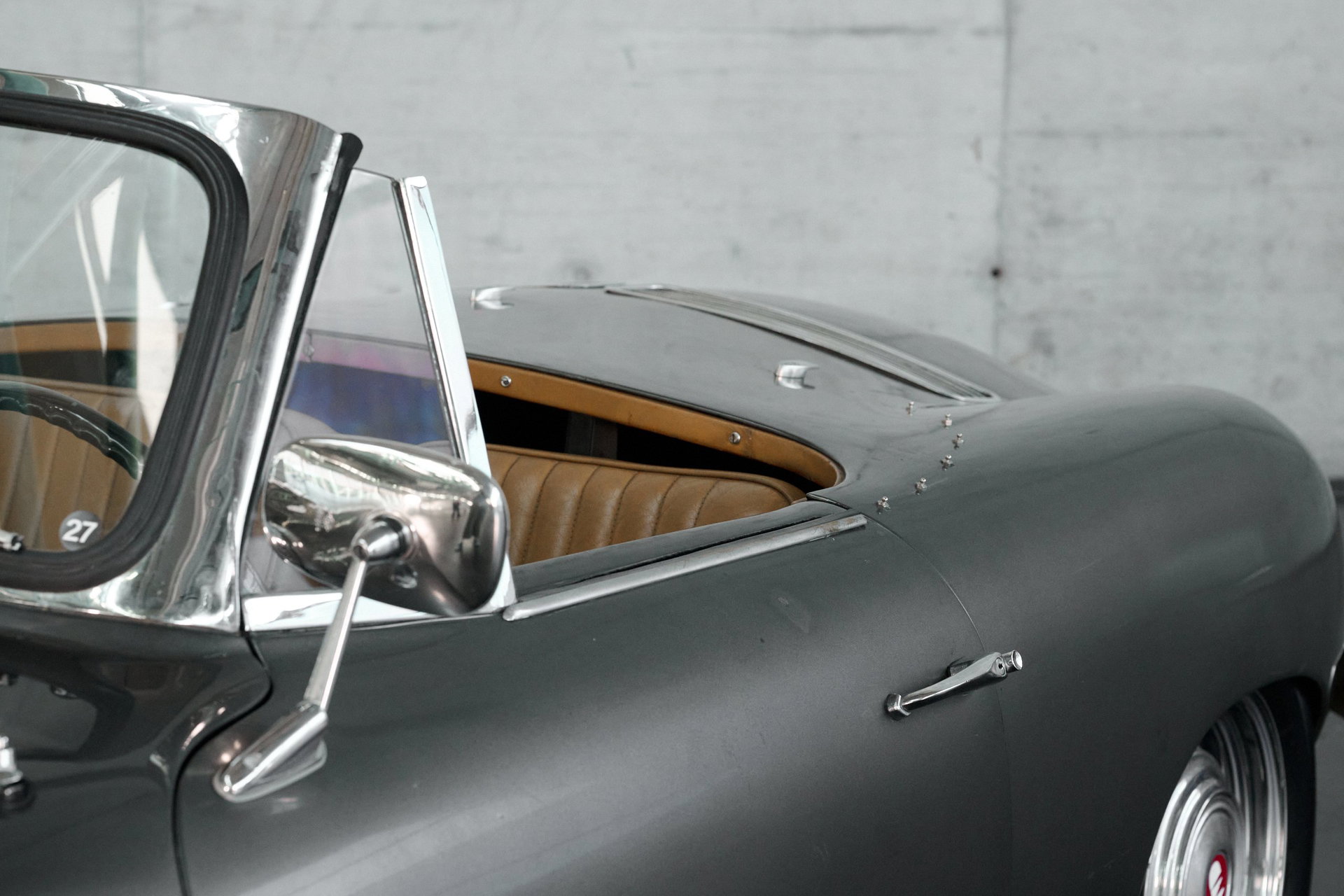
The bodies evolved too. The early synthetic shells were initially followed by steel. For the coachwork, Denzel recruited Rudolf Ramisch, a man who had learned his trade with respected coachbuilders. Aluminium later became the preferred material. Industrial production, however, was out of the question. Small pieces of sheet metal were hammered into shape over wooden bucks, fitted together and then welded. Oxy-acetylene welded, no less. A little too much heat and where there had just been bodywork, there was suddenly a hole.
Every Denzel was therefore slightly different. Not for marketing purposes, but because craftsmanship on this scale inevitably produced individual results. Instruments, wiring looms, engines, axles and gearboxes were assembled in Vienna’s Gumpendorfer Straße. Nor did sports-car production take place in some separate little manufactory full of white coats and polished floors. It was simply part of the normal workshop operation. Customer cars – BMWs among them – were repaired there, and every now and then a sports car emerged in between.
That sounds rather more romantic than it was economical. Denzel was not content merely to combine existing Volkswagen components as cleverly as possible. The engines in particular moved increasingly far away from Wolfsburg. The air-cooled four-cylinder boxer remained the basis, but both capacity and power increased. The 1100 was soon joined by the 1300 and later by 1500s. Cylinder heads and crankshafts were made in-house, connecting rods were produced in light alloy and numerous internal components were modified to Denzel’s own ideas. In some engines, eventually little more than the crankcase was recognisably Volkswagen. What did not exist was designed. What was not strong enough was reinforced. What was too heavy was lightened. A fairly straightforward philosophy – at least as long as nobody asked to see the bill.
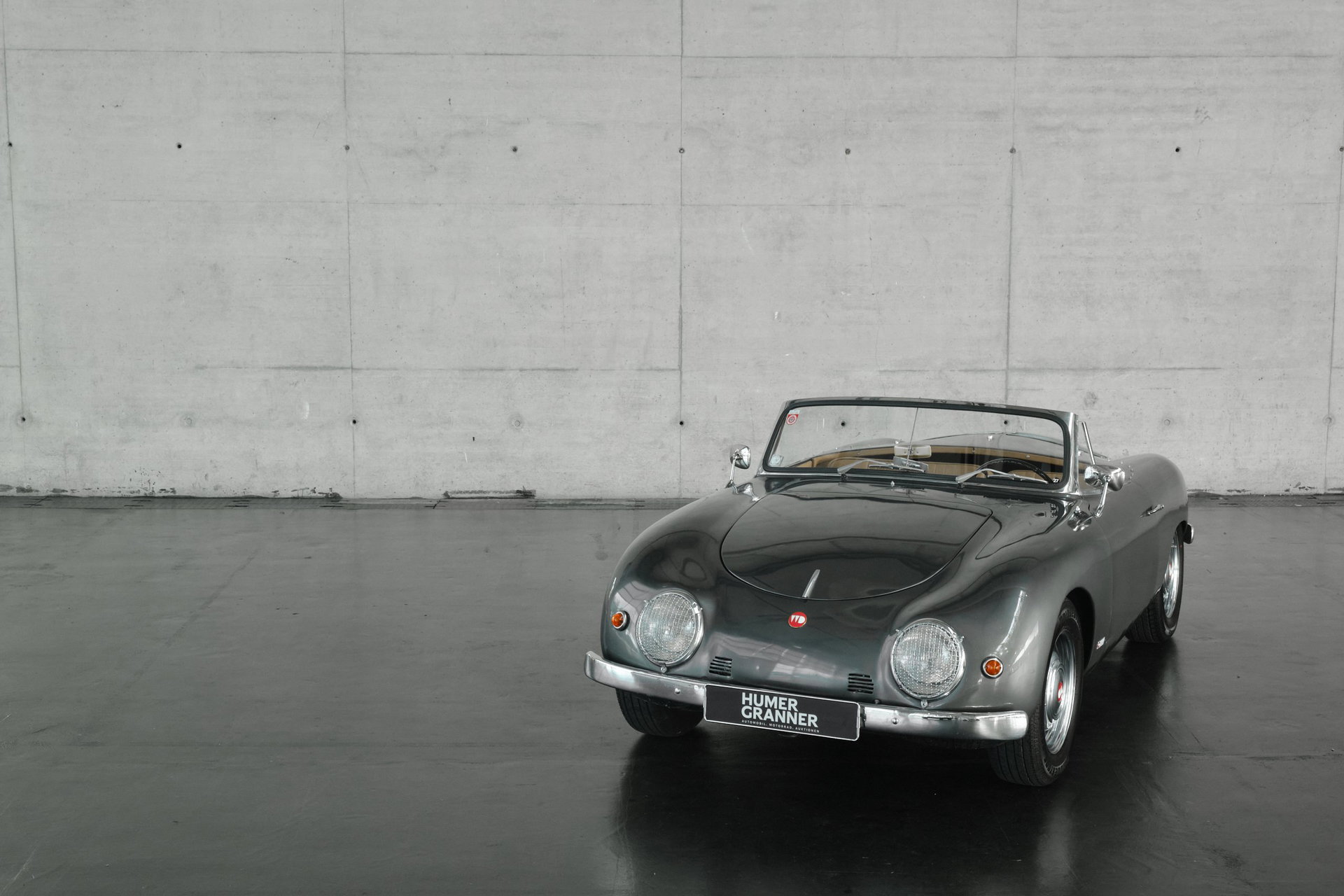
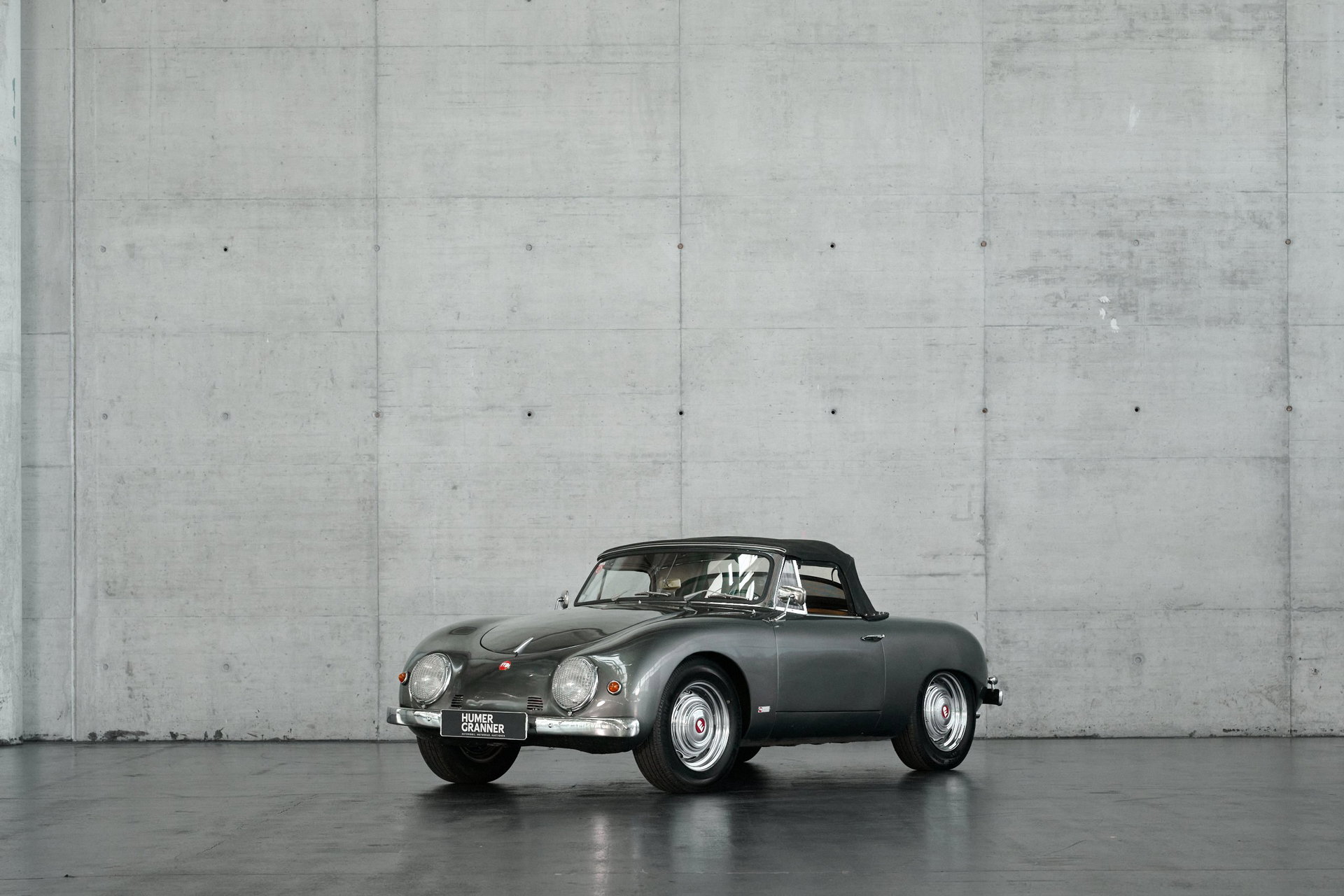
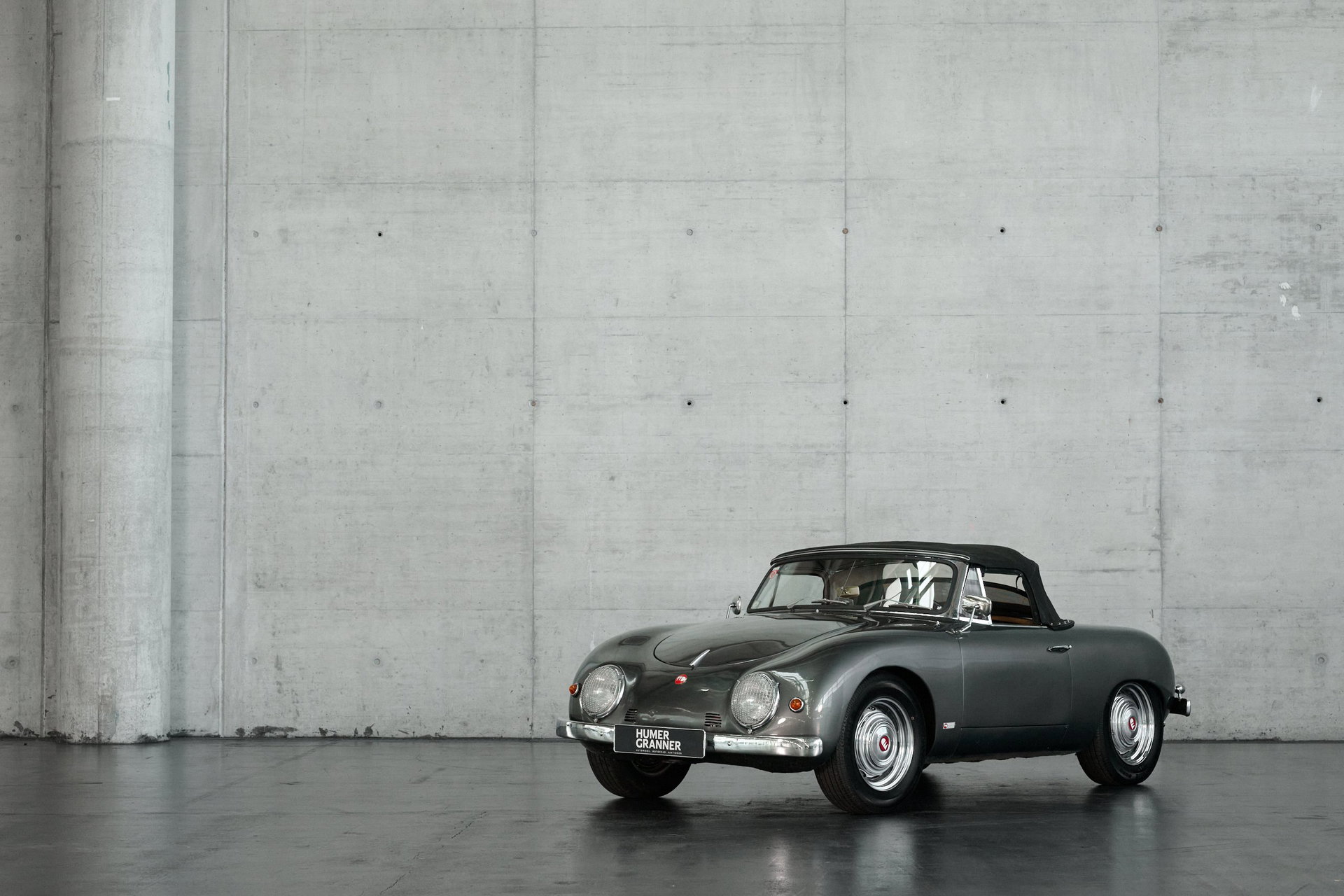
From this development emerged the Denzel Serien Super. Even the name sounds a little as though someone wanted to make absolutely clear that this was no longer merely another modified Volkswagen. And indeed, by then the Serien Super shared little more than its basic mechanical philosophy with the Beetle. The rear engine, air-cooled boxer and elements of the suspension revealed its origins, but the chassis, body, set-up and an ever greater proportion of the engine were pure Denzel.
Weight was the key. Depending on specification, a Denzel weighed only around 600 kilograms. With that little mass, three-figure horsepower was hardly necessary to make rapid progress. A good 1300 produced around 60 bhp, while stronger engines could deliver considerably more. Later and suitably highly tuned 1500s even reached the region of 80 bhp. In a car of this weight, that was anything but modest.
More important still was what the Denzel did with its power. Its short wheelbase, low centre of gravity, lack of weight and immediate steering made it particularly effective where heavier and more powerful cars first had to get their horses organised. On a twisting mountain road, a small Austrian roadster could suddenly become extremely irritating to some very big cars.
Denzel knew it. And he made sure everybody else found out too. The great moment came in 1954 at the International French Alpine Rally, the Critérium International des Alpes. Several thousand kilometres over the most difficult Alpine passes, narrow roads, long stages and a field that included names such as Stirling Moss. Wolfgang Denzel won the overall classification in a WD Denzel Sport 1300. Not the class. Not some special award for particularly courageous little cars. The event.
For a manufacturer whose annual production could comfortably have fitted into an average Viennese garage, it was a remarkable achievement.
Denzel was no motor-sport curiosity occasionally allowed to compete out of patriotic goodwill either. The cars appeared in Alpine rallies, hill climbs and other competitions, later well beyond Austria. Their sporting successes helped sales, particularly abroad. And abroad mattered. Austria alone was difficult territory for such an expensive sports car.
Because a Denzel was not cheap. An example cost around 100,000 schillings in the 1950s. A Volkswagen Beetle could be had for roughly 30,000. The Denzel was therefore not an inexpensive sports car based on Beetle mechanicals, but a properly expensive automobile. In the United States, its price even ventured into Jaguar XK territory. For a product from a Viennese workshop that hardly anyone outside a small circle had heard of, that showed considerable confidence.
When American journalists compared his car with a Porsche Speedster, Denzel’s response is said to have been less than diplomatic. What was there to compare? The Porsche had neither aluminium wheels, an aluminium fuel tank nor an aluminium body. Denzel simply considered his own car better. Modesty would probably not have helped much with customer acquisition anyway.
His confidence was not entirely misplaced. In comparison tests by the American motoring press, the little Denzel acquitted itself superbly. Road & Track compared a 1500 with cars including Porsche and Jaguar, and the Austrian more than held its own. The car also earned recognition in Britain. Racing driver and journalist John Bolster was particularly impressed by its cornering abi