1948 Nardi-Danese Barchetta 6C 2500
1948 · 193 km · Mogador, Surrey, Verenigd Koninkrijk · via Car & Classic
Bekijk op Car & Classic → Open in de app







Gegevens
| Bouwjaar | 1948 |
|---|---|
| Kilometerstand | 193 km (opgegeven in mijlen) |
| Transmissie | Handgeschakeld |
| Brandstof | Benzine |
| Kleur | Red |
| Stuur | Rechts |
| Motor | 2500 cc |
| Locatie | Mogador, Surrey, Verenigd Koninkrijk |
| Verkoper | allAstonMartin.com (handelaar) |
| Bron | Car & Classic |
| gears | 4 |
| Op Oudjes.xyz sinds | 5 oktober 2026 |
| Laatst gezien | 8 oktober 2026, 06:16 |
Beschrijving
In 1948, having parted ways with Ferrari, Nardi and Renato Danese joined forces to establish Nardi-Danese, building race cars, prototypes, and limited-production special designs based on existing chassis in a small hangar Via Vincenzo Lancia behind the Lancia works in Turin.
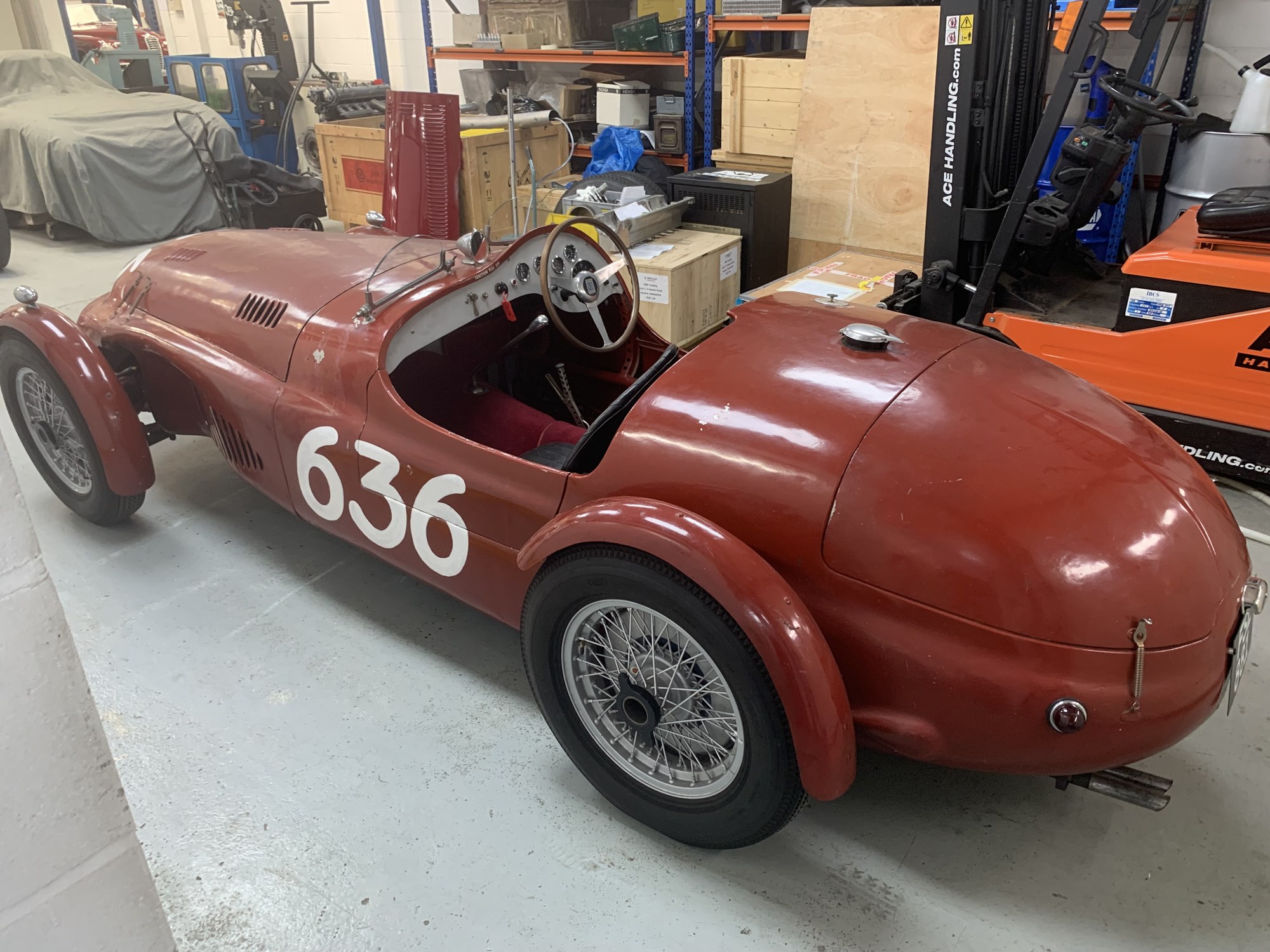
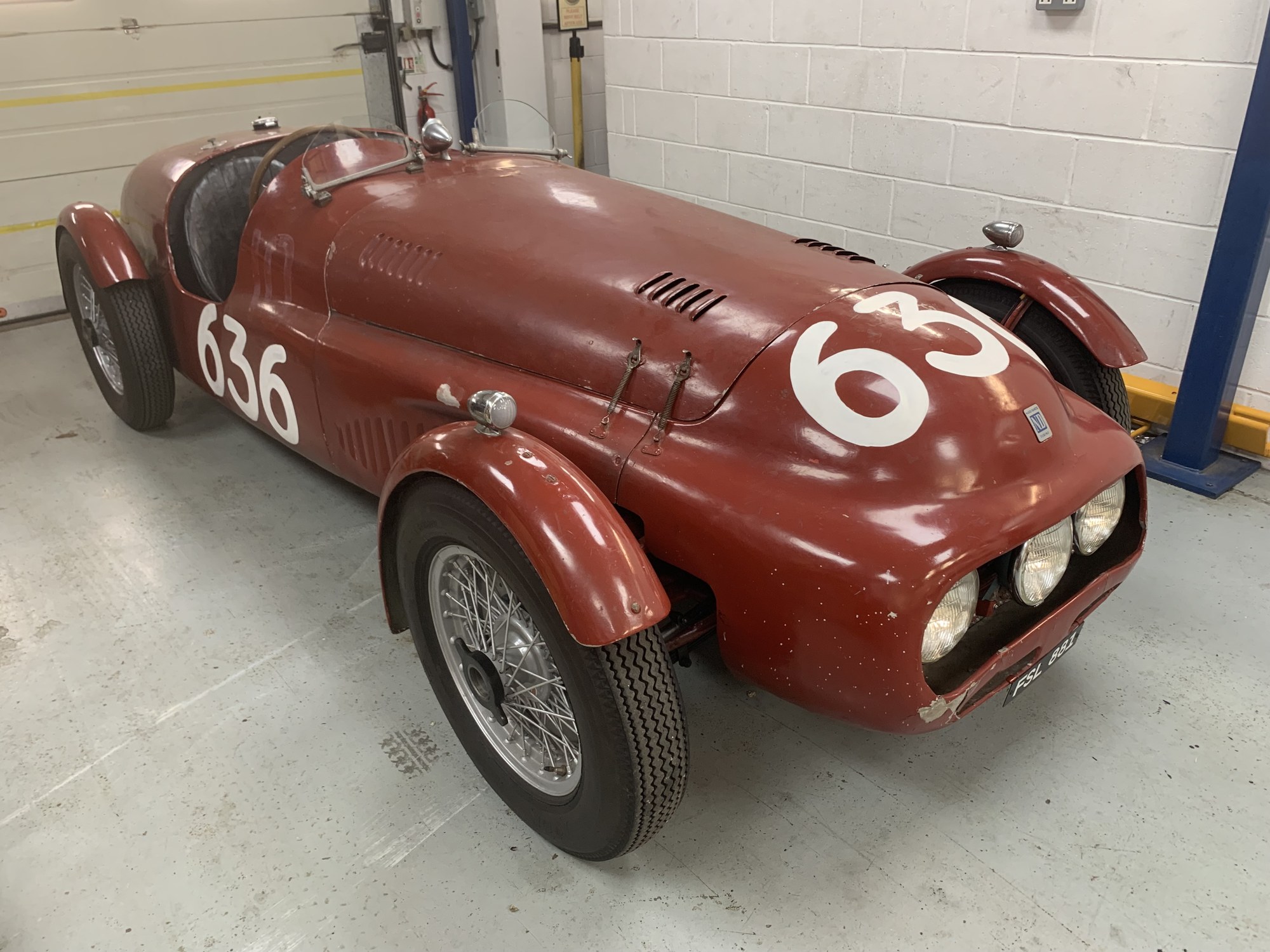
One piece of that legacy is this car, the svelte 1948 Nardi-Danese Barchetta 6C, is the first of only three were ever made.
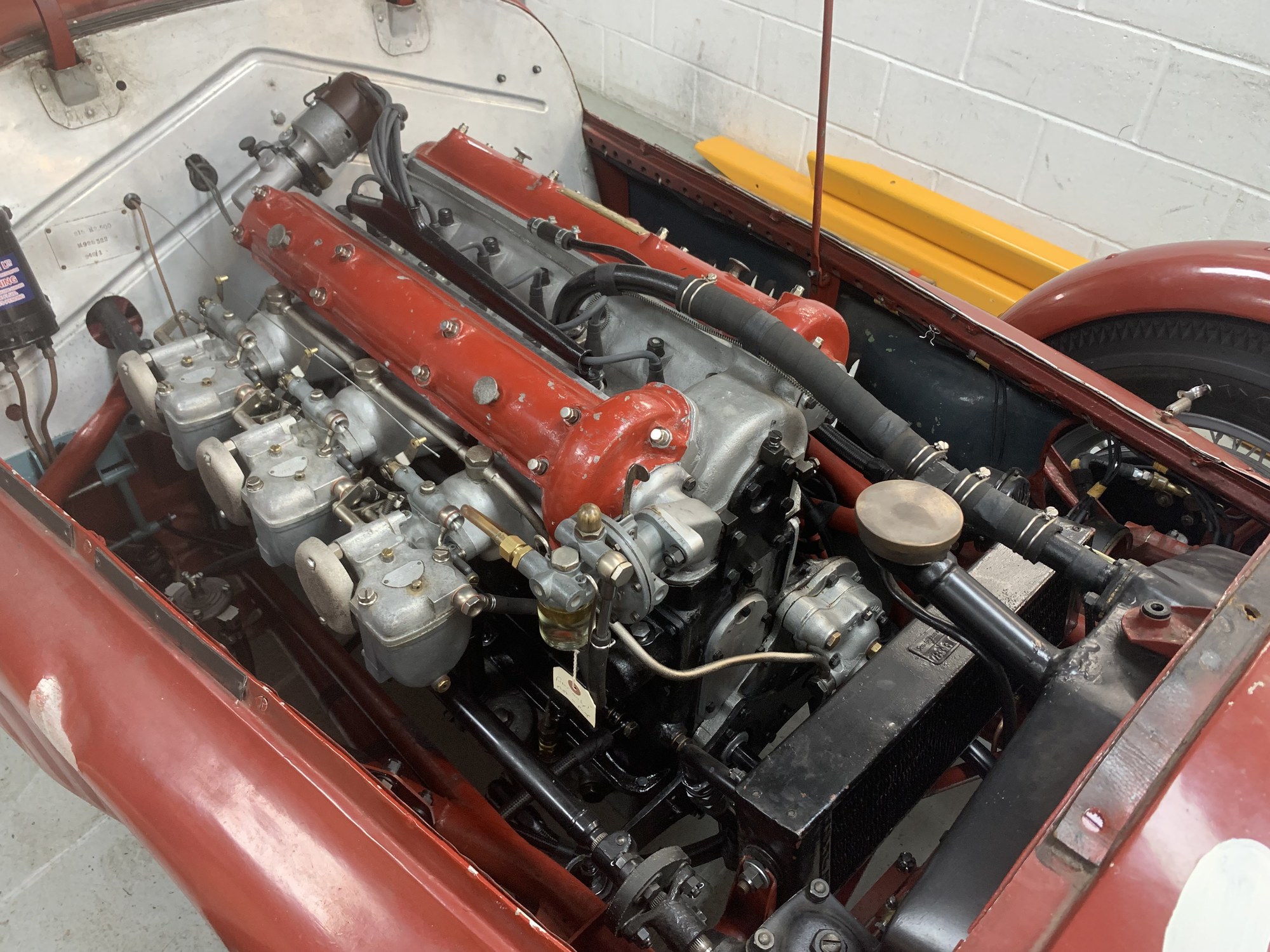
Nardi built the car specifically for the 1948-49 Mille Miglia and Targa Florio and, for power, installed an Alfa Romeo 6C 2500 overhead twin-cam, dry sump marine engine that produces 145 horsepower and torque aplenty. Wrapped around its strong powerplant was a lightweight, handcrafted Corsa-Barchetta body.
The chassis Nardi designed for the new sports car consisted of two side-members with considerable cross-bracing. Each side-member was constructed from two tubes running from the front to the back of the car with vertical and diagonal tubes added for further strength. At the front the chassis was suspended by double wishbones and a transverse leaf-spring that ran under the chassis rails. A live-axle with Bugatti-style reversed quarter-elliptic leaf springs served as the rear end. Massive drum brakes were fitted on each corner.
A dry-sump version of Alfa Romeo's 6C 2500 was mounted low and well back in the chassis. This resulted in a better weight balance than on the 6C engine competition Alfas of the period. Nardi was an engine tuning wizard; his skills were in high demand of both the criminals and law enforcement. After he worked his magic on the 2. 5 litre straight six, it produced around 150 bhp. That was quite an improvement over the (most definitely conservative) 105 bhp Alfa Romeo claimed as the engine's output. The four-speed gearbox found in the 6C 2500 was also used for the Nardi-Danese.
It is obvious that Nardi gave considerable thought to the car's weight distribution. As stated earlier the engine was installed towards the centre of the car. He left enough space in front of the engine for the water and oil radiators to also be fitted within the car's wheelbase. To balance out the mass of the engine, the sizeable fuel tank was mounted on top of the rear suspension. The smaller tank for the dry-sump system was mounted alongside the engine. While most of the components were custom built, Nardi did try to use much more readily available Fiat parts where possible.
Nardi used various local coach-builders for his projects but entrusted the clothing of the Alfa Romeo engined Nardi-Daneses to Rocco Motto. Although not nearly as famous today as some of his contemporaries, Motto had a good reputation for building lightweight bodies in period. He tightly wrapped the Nardi-Danese chassis in an aluminium skin with cycle fenders on all four wheels. The tall engine was mounted so low in the body that the bonnet was barely taller than the front fenders. The headlights were mounted behind the deep grille.
This lovely car was purchased originally by Barone Francesco Beneventano Della Corte who raced the car in the Mille Miglia, Giro di Sicilia and Circuit di Pescara. She was found in Italy in a dismantled condition and documentation shows she was shipped to England, arriving via Dover on 20th April 1965. There is correspondence directly from Enrico Nardi dated 12th July 1965 to a C Weston of Henley upon Thames that has been translated thus; “Thank you for your letter of the 6th inst. And I can confirm that many of the parts of the car were made before the war, and in particular the differential and brakes seem to be of a Fiat 2800 (1938) the steering from a Fiat 1500 (1937). The gearbox which is either a Alfa Romeo or a Lancia Astura, both of which were made before the war.” There is further correspondence from Nardi to a W. A. Liddell dated 31st May 1966. There is an unattributed document headed NARDI but dated September 1971 which is a résumé about reassembly, the next documents are letters dated March 1979 from Grahame Presley to D. Gareth Jones, confirming his purchase. A solicitor’s letter on file shows clarity of ownership title.
This car has been subject to a comprehensive and sympathetic mechanical restoration costing £340, 000 at the Jim Stokes Workshops (- details above) – you won’t find fancy mission statements on the website and if you ask Jim to summarise his philosophy he will reply very simply “NO SHORTCUTS”. And when you consider his background where he was apprenticed in 1970 to Marsh Plant – not to work on heavy machinery but on their 14 racing cars working at circuits around the world running cars from Fuji in Japan to the world famous Le Mans 24 Hours.
Of course, what this car also offers a prospective buyer is the opportunity to enter the 2027 Centenary Mille Miglia
https: //- details above With a car that was an original entrant in both the 1948 and 1949 events, it would indicate a mid-field entry and the Jim Stokes Event Team can offer full support to such an entry for the specially extended 6 day event